Lightning Protection Terms, Explained
By Site Safe Lightning Protection 7 min read
This glossary defines the lightning protection terms you’ll see in quotes, drawings, specifications and inspection reports. Each entry is one or two sentences, with a link to the article that covers it in depth. The terms follow the language of NFPA 780, UL 96A and the Lightning Protection Institute (LPI).
Parts of a lightning protection system
A lightning protection system has five parts: strike termination devices, conductors, grounding electrodes, bonding, and surge protection (LPI). The National Weather Service describes the job the same way: the system intercepts a strike, gives the current a conductive path, and spreads the energy into the ground (NWS).
Air terminal
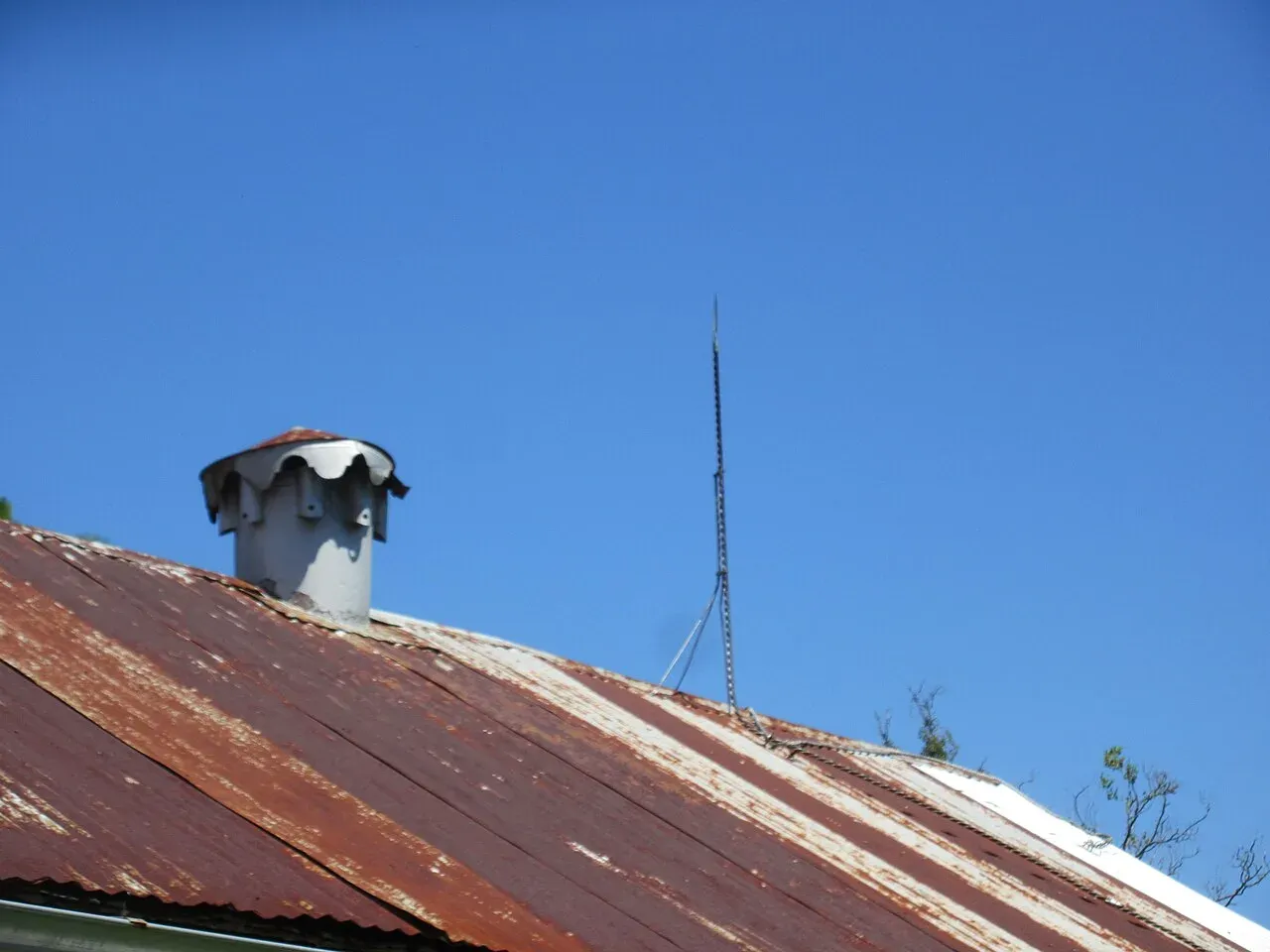
An air terminal is the metal rod mounted on a roof’s high points to take a strike, and it’s what most people call a lightning rod. Under NFPA 780 (2023) the tip must sit at least 10 inches above the object it protects (NFPA 780). See how a lightning rod works.
Strike termination device
A strike termination device is NFPA 780’s general term for anything designed to receive a strike. It includes air terminals, metal masts, overhead ground wires and some permanent metal parts of a building (components guide).
Main conductor and down conductor
The main conductor is the heavy cable that links the air terminals across the roof. Down conductors carry the current from the roof to the grounding electrodes, and every structure needs at least two, spaced an average of no more than 100 feet apart around the perimeter (LPI specification).
Class I and Class II materials
These are the two weights of conductor and terminal in NFPA 780. Class I materials are for structures up to 75 feet tall, and taller structures need the heavier Class II materials (Section 4.1.1) (NFPA 780). See lightning protection design.
Ground rod (grounding electrode)
A ground rod is the metal electrode driven into the soil at the bottom of each down conductor to move the current into the earth. UL’s guide calls for rods at least 8 feet long and 1/2 inch in diameter (UL guide). Ground rings, plates and concrete-encased electrodes are alternatives for some soils (grounding a house).
Ground loop
A ground loop is a buried conductor that ties all the grounding electrodes together around the building. LPI’s model specification requires one on any structure taller than 60 feet (LPI specification).
Surge protective device (SPD)
An SPD is a device on the electrical service, phone, cable or data line that limits the voltage spike a strike sends into the building’s wiring. It protects equipment from surges, and it doesn’t replace the external system that handles a direct strike (surge vs lightning protection).
Lightning arrester
Lightning arrester is an older name for a surge protective device on power or signal lines. It is a different device from a lightning rod (how lightning rods work).
Grounding, bonding and testing
Grounding
Grounding means connecting the system to the earth so that charge spreads freely into it. UL’s guide defines grounded as connected to earth, or to a conductive material connected to earth (UL guide). See grounding vs bonding.
Bonding
Bonding is an electrical connection between the lightning protection system and other metal, such as water pipes, gas lines, gutters, HVAC units and the electrical ground. UL defines its purpose as significantly reducing the voltage differences that lightning current creates (UL guide).
Side flash
A side flash is an arc that jumps from a lightning conductor to nearby metal that isn’t bonded to it. Bonding is what prevents it (grounding vs bonding).
Fall-of-potential test
A fall-of-potential test measures the resistance between a ground electrode and the surrounding earth. The tester drives a known current to a remote stake and measures the voltage at a probe in between, then divides voltage by current (Fluke). See the fall of potential test.
Design and risk terms
Zone of protection
The zone of protection is the space around a structure that a lightning protection system protects from direct strikes. NFPA 780 (2023, Section 4.7.1) allows three ways to define it: terminal placement rules, the angle method and the rolling sphere method (NFPA 780).
Rolling sphere method
The rolling sphere method finds where lightning can reach a building by imagining a ball, 150 feet in radius under NFPA 780, rolled over and around it. Anywhere the ball touches needs a strike termination device, and anywhere it can’t reach is protected (rolling sphere method).
Striking distance
Striking distance is the length of the final jump between a descending lightning leader and the object it hits. It sets the radius of the rolling sphere, which NFPA 780 caps at 150 feet (rolling sphere method).
Stepped leader, upward streamer and return stroke
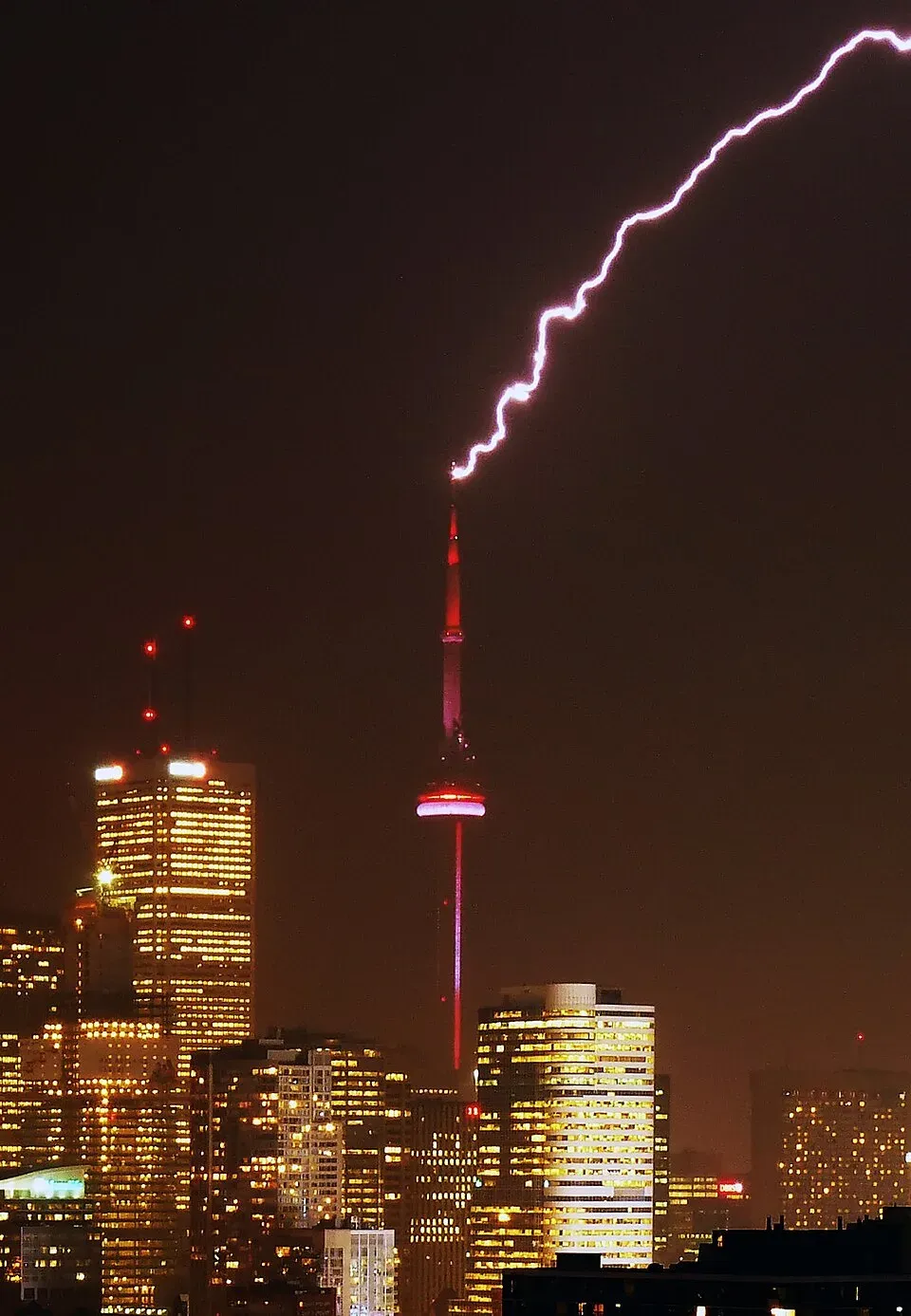
The stepped leader is the channel of charge that works down from the cloud. Upward streamers rise from tall objects to meet it, and the return stroke is the bright flash once they connect (NSSL). See how a lightning rod works.
Flash density
Flash density is the number of cloud-to-ground lightning flashes per square kilometer per year at a location. Colorado averages 4.8 (NWS Pueblo), and NOAA maps of Texas range from roughly 2 in the far west to roughly 10 around Houston (Texas lightning).
Lightning risk assessment
A lightning risk assessment compares how often a structure is expected to be struck with how often it can tolerate a strike. The US method is in NFPA 780 Annex L (lightning risk assessment). Our free lightning risk assessment checklist is a starting point.
Faraday cage
A Faraday cage is a closed conductive shell that carries current around its outside instead of through the inside. A hard-topped metal car works this way, which is why the NWS says its metal shell protects people inside with the windows closed, not the rubber tires (NWS). A metal building is not automatically a complete system and still needs grounding and bonding (do metal roofs attract lightning?).
Early streamer emission (ESE)
ESE devices are air terminals sold with the claim that they launch a streamer early and protect a larger area. NFPA 780 (2023) excludes them from its scope (lightning protection design).
Standards and certification
NFPA 780
NFPA 780 is the US standard for installing lightning protection systems, published by the National Fire Protection Association. The current edition is 2026 (LPI), and NFPA first adopted lightning protection specifications in 1904 (NFPA 780 explained).
UL 96 and UL 96A
UL 96 is the product standard for lightning protection components such as air terminals, conductors and fittings. UL 96A covers how those parts are installed as a system, and UL’s field inspections are done to it (UL Solutions). See UL 96A and the Master Label.
UL Master Label certificate
A UL Master Label certificate shows that the system on one complete structure fully complies with a recognized standard. It’s valid for five years and lapses early if the roof, structure or system changes (UL Solutions). A Letter of Findings is the document UL issues instead for partial or limited-scope installations.
LPI and LPI-175
The Lightning Protection Institute (LPI) is an industry organization that sets guidelines for lightning protection design, installation and inspection, and certifies installers and designers at levels such as Journeyman Installer, Master Installer and Master Installer/Designer (LPI). LPI-175 is its standard of practice, based on NFPA 780 (lightning protection certification).
LPI-IP certificate
LPI-IP is the Lightning Protection Institute’s inspection program, which certifies finished systems with a Master Installation certificate valid for three years (lightning protection certification).
Authority having jurisdiction (AHJ)
The AHJ is whoever has the power to require and approve a lightning protection system on a project. It might be a building department, but for lightning protection it is often the owner, the specification writer or the insurer (lightning protection certification).
Need a term explained on your own quote?
If a proposal or inspection report uses terms that aren’t clear, contact Site Safe Lightning Protection and we’ll walk through what each item means for your building.
Talk to Site Safe Lightning Protection about your property.
Frequently asked questions
What are the main parts of a lightning protection system?
Five parts, as the Lightning Protection Institute lists them: strike termination devices (air terminals), conductors, grounding electrodes, bonding, and surge protection devices. See lightning protection system components.
Is an air terminal the same as a lightning rod?
Yes. Air terminal is the term the standards use for what most people call a lightning rod. NFPA 780 groups air terminals with masts, overhead wires and some permanent metal building parts under the wider name strike termination device.
What is the difference between grounding and bonding?
Grounding connects the system to the earth so the current has somewhere to go. Bonding connects metal objects to each other so they sit at the same voltage and no arc jumps between them.
What does a UL Master Label mean?
It's a UL certificate showing that the lightning protection system on one complete structure complies with a recognized standard such as UL 96A or NFPA 780. It's valid for five years and ends early if the structure or system changes.
Sources
- Lightning Protection Overview (Lightning Protection Institute)
- Lightning Protection Systems model specification (Lightning Protection Institute)
- NFPA 780, Standard for the Installation of Lightning Protection Systems, 2023 edition (NFPA document page, free read-only access)
- Lightning Protection Institute: NFPA-780 Standard (2026 Edition)
- Lightning Protection Marking and Application Guide (UL)
- UL Solutions: Lightning Protection Installer and Master Label Certificate Program
- Lightning Protection Institute: Certifications
- National Weather Service: Lightning Rods and Lightning Protection Systems
- National Weather Service: Lightning Safety and Vehicles
- NOAA NSSL: Severe Weather 101, Lightning Basics
- Fluke: Earth ground resistance, fall of potential testing
- Colorado Lightning Statistics as Compared to Other States (NWS Pueblo)
Image credits
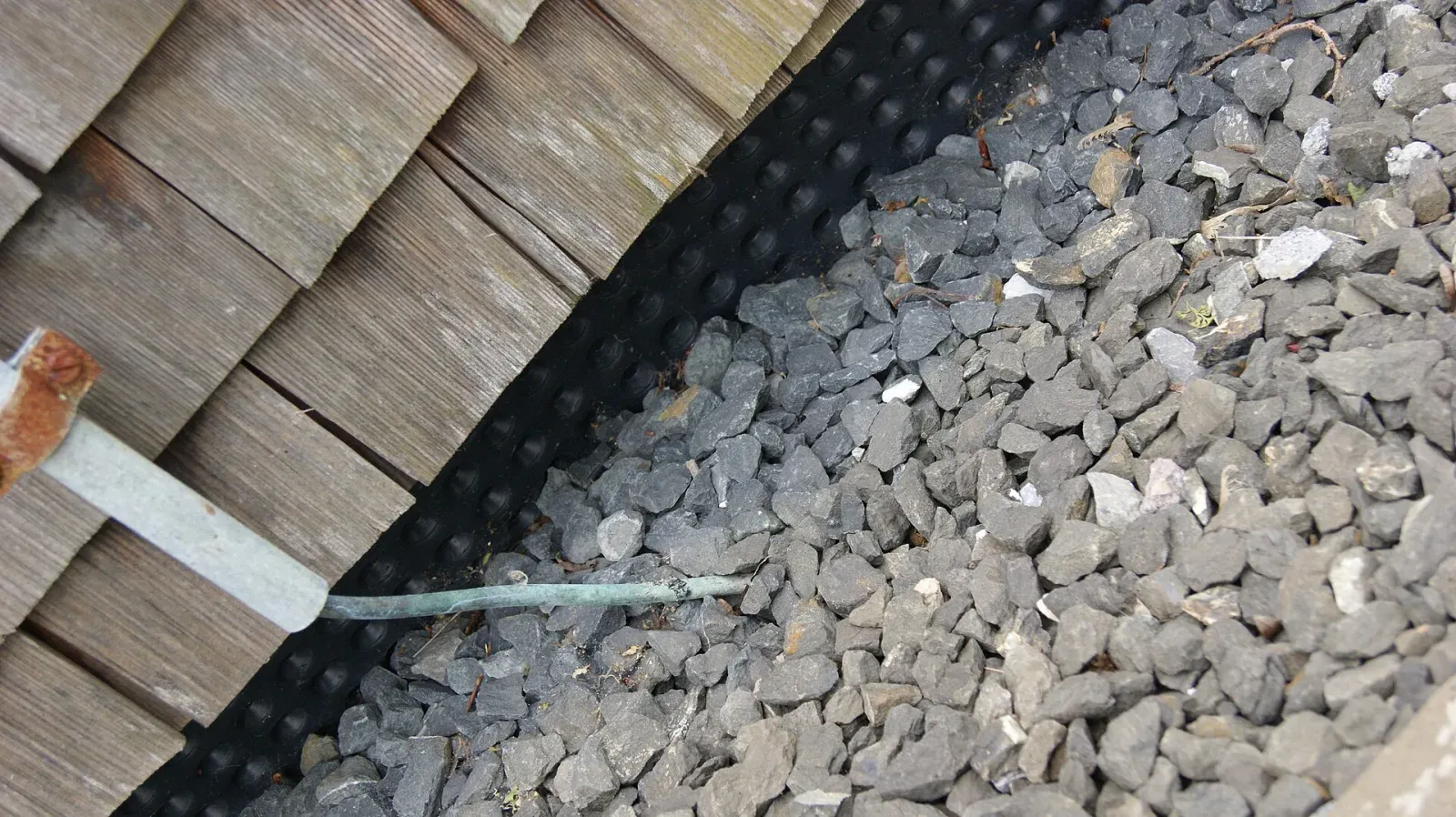
- Copper air terminal and copper conductor on a building roof edge. Photo: Asurnipal / Wikimedia Commons (source), CC BY-SA 4.0, resized.