How Does a Lightning Rod Work? The Science in Plain English
By Site Safe Lightning Protection 8 min read
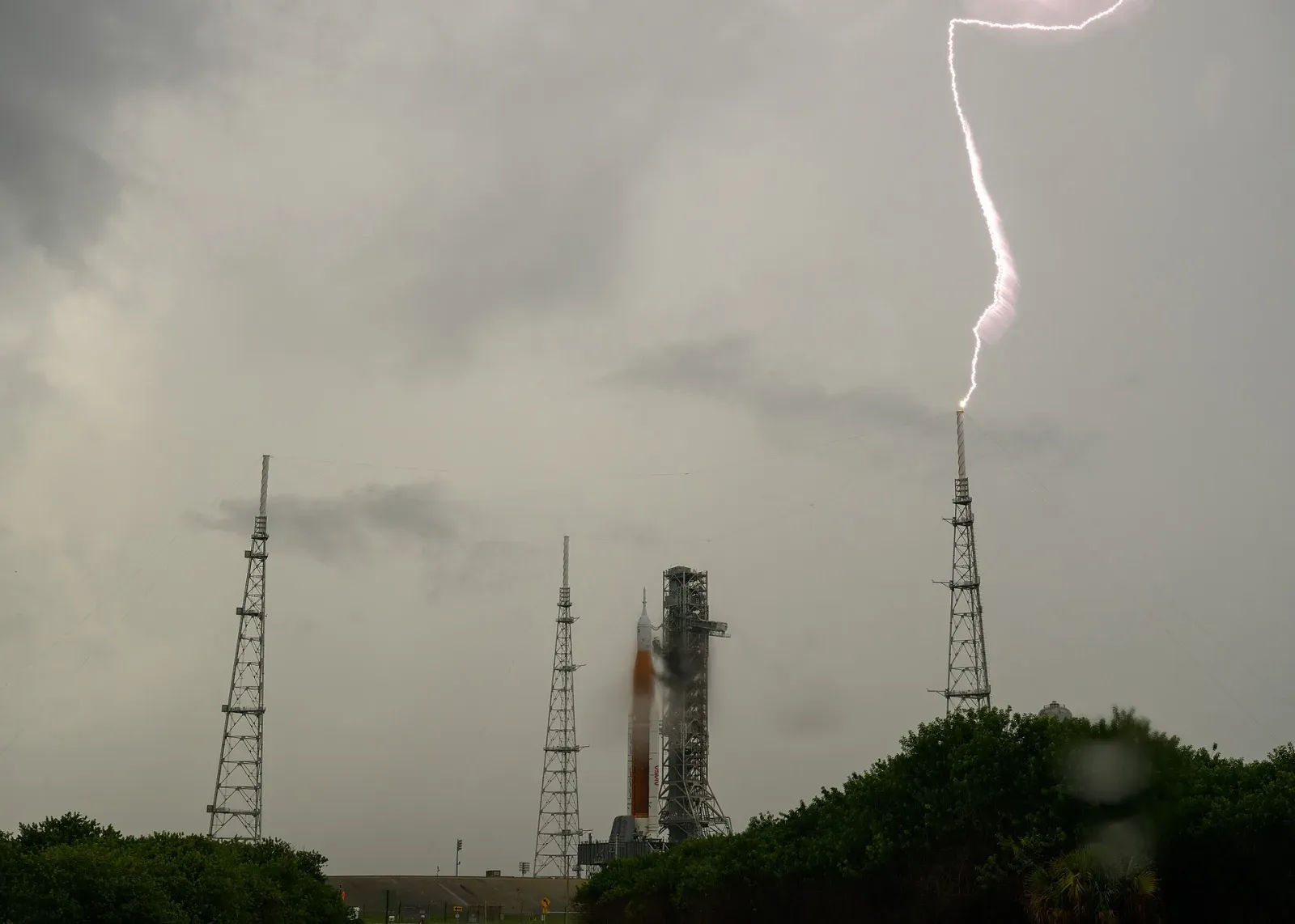
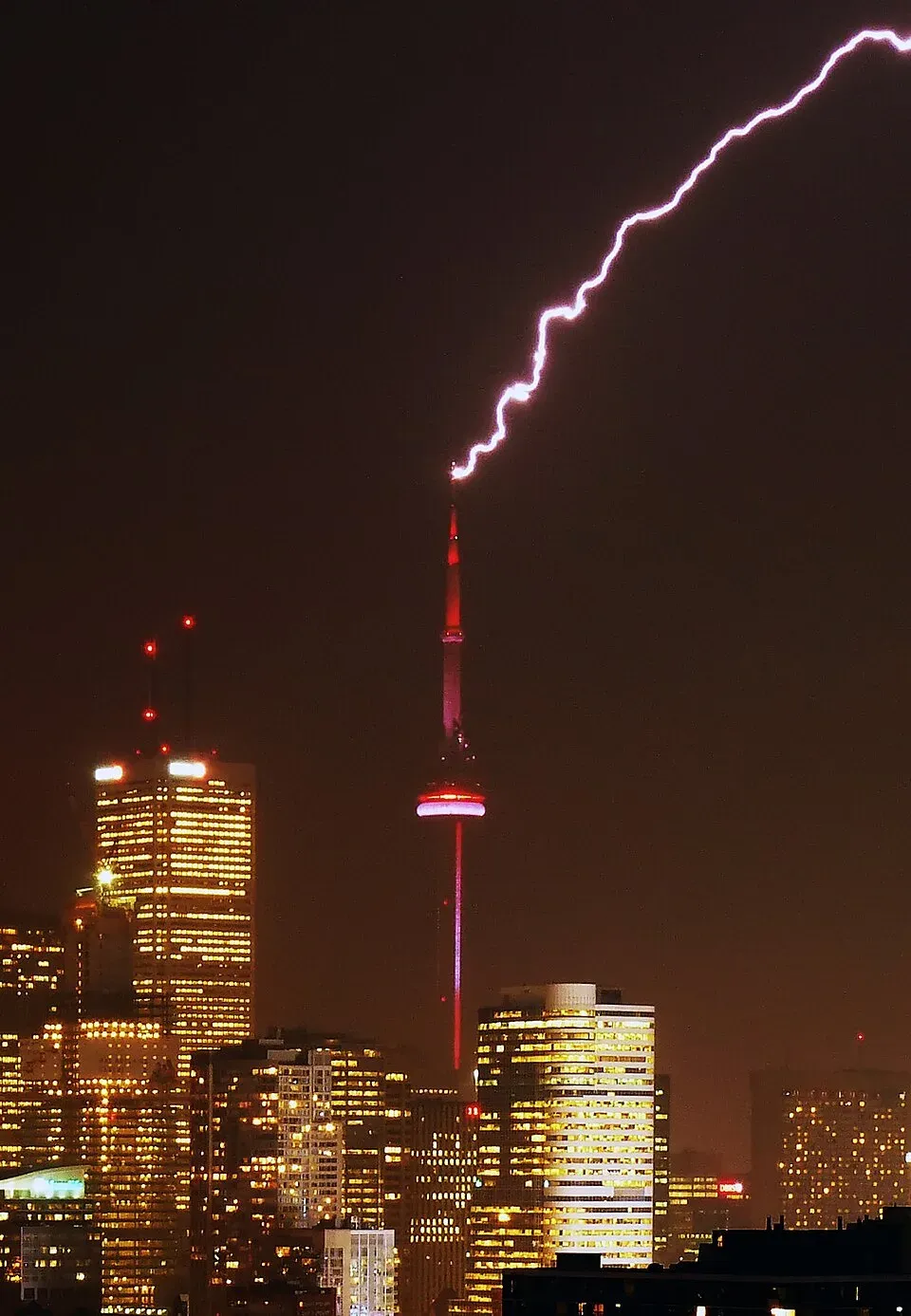
A lightning rod works by giving a lightning strike a better place to land than your roof, then handing the current to a cable that carries it into the ground. It doesn’t stop lightning or soak up the charge in a cloud. The National Weather Service sums it up: a lightning rod system intercepts the strike, gives the current a conductive path, and spreads the energy safely into the ground (NWS).
To see why that works, it helps to know how a strike actually finds a building.
Do lightning rods work?
Yes. Lightning rods work when they’re part of a complete system built to NFPA 780 or UL 96A: air terminals, conductors, at least two paths to ground, grounding electrodes, bonding and surge protection. The system doesn’t stop lightning. It intercepts a strike that was going to hit the building and carries the current to ground outside the structure (NWS).
The evidence is the standards themselves and the bodies that check installations against them:
- NFPA 780. NFPA first adopted lightning protection requirements in 1904, and the standard is still revised on a three-year cycle. The current edition is 2026 (NFPA 780 explained).
- UL 96 and UL 96A. UL lists the components to UL 96 and inspects finished systems to UL 96A. A building that passes gets a Master Label certificate, valid for five years (UL Solutions).
- Building code. The 2024 International Building Code, section 2703.2, says lightning protection systems shall be installed to NFPA 780 or UL 96A (UL Solutions).
- LPI. The Lightning Protection Institute describes a compliant system as one that intercepts the strike and directs it to ground without harm to the structure, the people inside or its contents (LPI FAQ).
The same sources set the limits. LPI warns that ignoring the standards or using unlisted materials can leave a building under-protected, and that a single path to ground isn’t adequate for lightning current (LPI FAQ). A University of North Dakota review notes that no system can claim to be 100% effective (EERC). When a rod “fails”, the usual cause is a partial system: one rod with a wire to a stake, a conductor cut during a re-roof, or unbonded metal inside the walls. That’s why inspection matters as much as installation (UL 96A and the Master Label).
What is a lightning rod?
A lightning rod is a metal rod, usually copper or aluminum, mounted on the highest points of a structure. Installers call it an air terminal or strike termination device. In the US, an air terminal on a building has to stick up at least 10 inches above what it protects (NFPA 780, 2023). That’s why modern rods look short compared with the tall decorative rods on old barns.
The rod alone does almost nothing. The Lightning Protection Institute lists five parts of a working system: strike termination devices, conductors, grounding electrodes, bonding, and surge protection (LPI). The rod is the first of those five. Our glossary of lightning protection terms defines the rest.
How lightning picks a target
Most flashes start inside the cloud. When one heads for the ground, the NWS describes a channel of negative charge called the stepped leader working its way down in jumps of about 150 feet, pausing between steps. Even with the pauses it moves about 200,000 miles per hour, covering the distance to the ground in a fraction of a second (NWS Dr. Lightning guide).
The leader doesn’t “see” the ground at first. As it gets close, the air above taller objects starts to ionize and upward streamers reach up toward it. NOAA’s severe storms lab puts that distance at less than roughly a hundred yards: trees, buildings and other objects start sending up sparks, and when one connects, a huge current surges down the channel to that object (NSSL).
That connection triggers the return stroke, the bright flash we actually see. NSSL notes the lightning channel briefly heats the air to around 50,000°F, which is what makes thunder (NSSL).
So the contest is local and happens in the last moment. Objects that are tall, pointed and isolated tend to send up the winning streamer. The NWS says those three factors dominate where lightning strikes, and that the presence of metal makes no difference (NWS myths).
What a lightning rod does in that last moment
An air terminal sits at the high points of the roof where a streamer is most likely to launch anyway: the ridge ends, the chimney, the top of a dormer. If the building is going to be struck, the goal is for the connection to happen at a terminal instead of at a shingle or a brick.
That’s all the rod does. It doesn’t make a strike more likely, and it doesn’t make one less likely. Our myths article covers the “rods attract lightning” belief in more detail.
Do lightning rods attract lightning?
No. A lightning rod doesn’t attract lightning or make a building more likely to be struck. The NWS says height, pointed shape and isolation decide where lightning strikes, and the presence of metal makes no difference (NWS myths). The Lightning Protection Institute calls the idea a common misconception: a rod only intercepts a strike and gives it a path to ground (LPI FAQ).
The physics explains why. The downward leader only “chooses” a target in roughly the last hundred yards, when upward streamers rise from nearby objects to meet it (NSSL). By then the building is already in play because of its height and position. The rod decides where on the building the strike attaches, not whether the building is struck. Metal roofs work the same way, as our article on whether metal roofs attract lightning explains.
Where the current goes after it hits the rod
Once the strike attaches, everything depends on the rest of the system. Here’s the path in a properly installed system:
- Air terminal. The strike attaches to the tip.
- Main conductor. A heavy braided copper or aluminum cable links all the terminals across the roof.
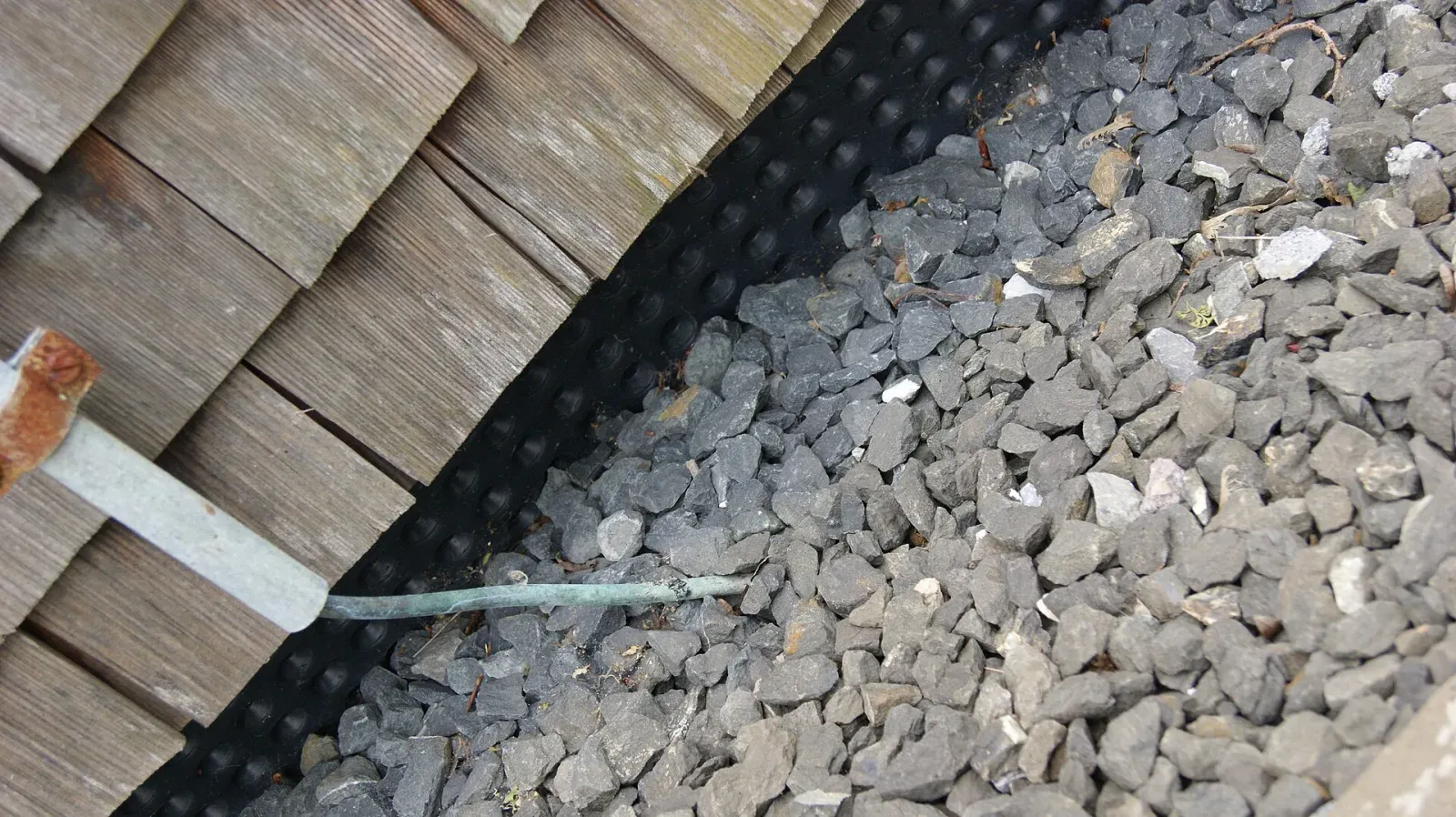
- Down conductors. At least two cables carry the current down the outside or inside of the building, giving it more than one path (LPI).
- Grounding electrodes. Ground rods, plates or a buried ring spread the current into the soil.
- Bonding. Connections tie the lightning system to the building’s other metal systems (electrical ground, water pipe, gas pipe) so they all rise to the same voltage together. The NWS notes the parts must be bonded to minimize the chance of sparks or side flashes (NWS).
- Surge protection. Devices at the service entrance limit the surge that comes in on power, phone and cable lines (LPI).
Skip step 5 and the current can jump from the lightning cable to a water line or electrical cable inside a wall. That’s a side flash, and it’s why a single rod with a wire to a stake can be worse than nothing. We walk through each part on a real home in lightning rods on a house: what a real system looks like.
Why the protected area works the way it does
Installers don’t place terminals by eye. NFPA 780 and LPI use the “rolling sphere” model. Picture a ball with a 150-foot radius rolling over and around the building. Anywhere the ball touches needs a strike termination device, and anywhere it can’t reach is protected (LPI). The 150-foot radius reflects the striking distance described above. That’s also why terminals go no more than 20 feet apart along a ridge and within 24 inches of the ridge ends (NFPA 780, 2023).
Who invented the lightning rod?
Benjamin Franklin. By 1750 he was describing an iron rod 8 to 10 feet long, sharpened to a point, as a way to protect buildings, and his famous kite experiment followed in June 1752 (Franklin Institute).
Franklin’s theory was that pointed rods would “draw the electrical fire” silently out of a cloud before it came close enough to strike. His English critics preferred blunt rods, and the argument turned political: King George III fitted his palace with a blunt rod, while pointed rods became a symbol of the American colonies (Franklin Institute). Franklin’s rods spread quickly, and the Maryland State House carries the largest Franklin-style rod installed in his lifetime.
Franklin got the most important part right: put conductive metal on the high points and connect it to the earth. The idea that a rod quietly drains a cloud didn’t hold up. Today’s NWS guidance says plainly that lightning rods don’t prevent strikes (NWS). NFPA 780 now permits terminal tips to be sharp or blunt.
| Franklin’s lightning rod (1750s) | A modern system (NFPA 780 / LPI) | |
|---|---|---|
| Purpose | Draw charge from the cloud and prevent strikes | Intercept a strike and conduct it safely to ground |
| Terminal | One iron rod, 8 to 10 ft, sharp point | Many short terminals (10 in minimum), sharp or blunt |
| Placement | Highest point | Rolling-sphere layout; 20 ft max spacing on ridges |
| Paths to ground | Usually one | At least two |
| Bonding | Not addressed | Required to building metal systems |
| Surge protection | None | Required at service entrances |
Lightning rod vs lightning arrester
People mix these up. A lightning rod (air terminal) protects the structure from a direct strike. A lightning arrester, or surge protective device, sits on electrical, phone or data lines and limits the voltage spike that travels in on them. A complete system uses both, and the NWS warns that ordinary plug-in surge strips won’t protect equipment from a lightning strike on their own (NWS).
Thinking about lightning rods for your home?
If you’re considering a system or have old rods on the roof that nobody has checked in years, contact Site Safe Lightning Protection. We can explain what your building would need and inspect what’s already there. Learn more about our residential lightning protection services.
Talk to Site Safe Lightning Protection about your property.
Frequently asked questions
What does a lightning rod do?
It gives a lightning strike a metal point to attach to and connects that point, through heavy cables, to grounding electrodes in the soil. The current flows around the building instead of through it.
Do lightning rods attract lightning?
No. The NWS says height, pointed shape and isolation decide where lightning strikes, and metal makes no difference. A rod only gives a strike that was already headed for the building a safe place to land.
Who invented the lightning rod and when?
Benjamin Franklin proposed it around 1750 and promoted pointed iron rods connected to the earth. His kite experiment took place in June 1752.
Do lightning rods still work today?
Yes, as part of a complete system with conductors, at least two paths to ground, grounding electrodes, bonding and surge protection. Modern installations follow NFPA 780 or UL 96A.
What is the difference between a lightning rod and a lightning arrester?
A lightning rod protects the structure from a direct strike. A lightning arrester (surge protective device) protects wiring and equipment from voltage surges coming in on power and data lines.
Sources
- National Weather Service: Lightning Rods
- National Weather Service: Dr. Lightning's Guide to Lightning and Thunder
- NOAA NSSL: Severe Weather 101, Lightning Basics
- National Weather Service: Lightning Myths
- National Weather Service: Lightning Safety When Inside
- The Franklin Institute: Franklin's Lightning Rod
- Lightning Protection Institute: Lightning Protection Overview
- NFPA 780, Standard for the Installation of Lightning Protection Systems, 2023 edition (NFPA document page, free read-only access)
- Lightning Protection Institute: FAQ
- UL Solutions: Lightning Protection Installer and Master Label Certificate Program
- Lightning Protection Scoping Study, final report (UND Energy & Environmental Research Center, revised May 2020)
Image credits
- Lightning striking a lightning protection tower at Launch Pad 39B, showing how a lightning rod takes the strike. Photo: Bill Ingalls / NASA via Wikimedia Commons (source), Public domain (US gov).