What Are Lightning Rods Made Of? Copper vs Aluminum, Class I vs Class II
By Site Safe Lightning Protection 6 min read
Lightning rods, which the standards call air terminals, are made of copper, copper alloys such as bronze, or electrical-grade aluminum. The cables that connect them to ground use the same metals. Stainless steel shows up in fittings and some ground rods. Copper-clad steel is the usual ground rod. Which metal goes where isn’t a style choice. It depends on the roof surface, how tall the building is, and whether the part touches soil or masonry.
UL’s lightning protection guide puts it simply: components must be copper, copper alloy or electrical-grade aluminum unless the UL 96A standard says otherwise. Everything else in this article follows from that rule and the compatibility limits that come with it.
Lightning protection materials at a glance
| Material | Where it’s used | Strengths | Limits |
|---|---|---|---|
| Copper | Air terminals, main and bonding conductors, ground connections | Most conductive, durable, can be buried | Can’t be installed on aluminum or external galvanized steel surfaces. Runoff from copper corrodes aluminum and galvanized metal |
| Copper alloys (bronze, brass) | Fittings, connectors, some terminals | Corrosion resistant, compatible with copper | Same compatibility limits as copper |
| Aluminum (electrical grade) | Air terminals and conductors on aluminum, painted-metal or light-colored roofs | Lighter, and less visible on light-colored roofs | Never in contact with earth. Not embedded in concrete or masonry. Not on copper surfaces or below copper runoff. Not on alkaline paint. Not in wet locations such as inside eaves or downspouts |
| Stainless steel | Bimetallic transition fittings, some ground rods and fasteners | Bridges copper-to-aluminum connections | Used for specific parts, not main conductors |
| Copper-clad steel | Ground rods | Driveable, conductive surface | Below-grade electrodes only |
The National Weather Service describes a residential system as using “UL-listed copper or aluminum cable,” and that matches the table above.
Air terminals: size and shape
UL’s guide sets the basics for air terminals:
- At least 10 inches long, with the tip at least 10 inches above the object it protects.
- Minimum diameter of ⅜ inch for copper. LPI notes the equivalent aluminum terminal is ½ inch, because aluminum carries current slightly less well.
- Terminals taller than 24 inches must be braced at least halfway up.
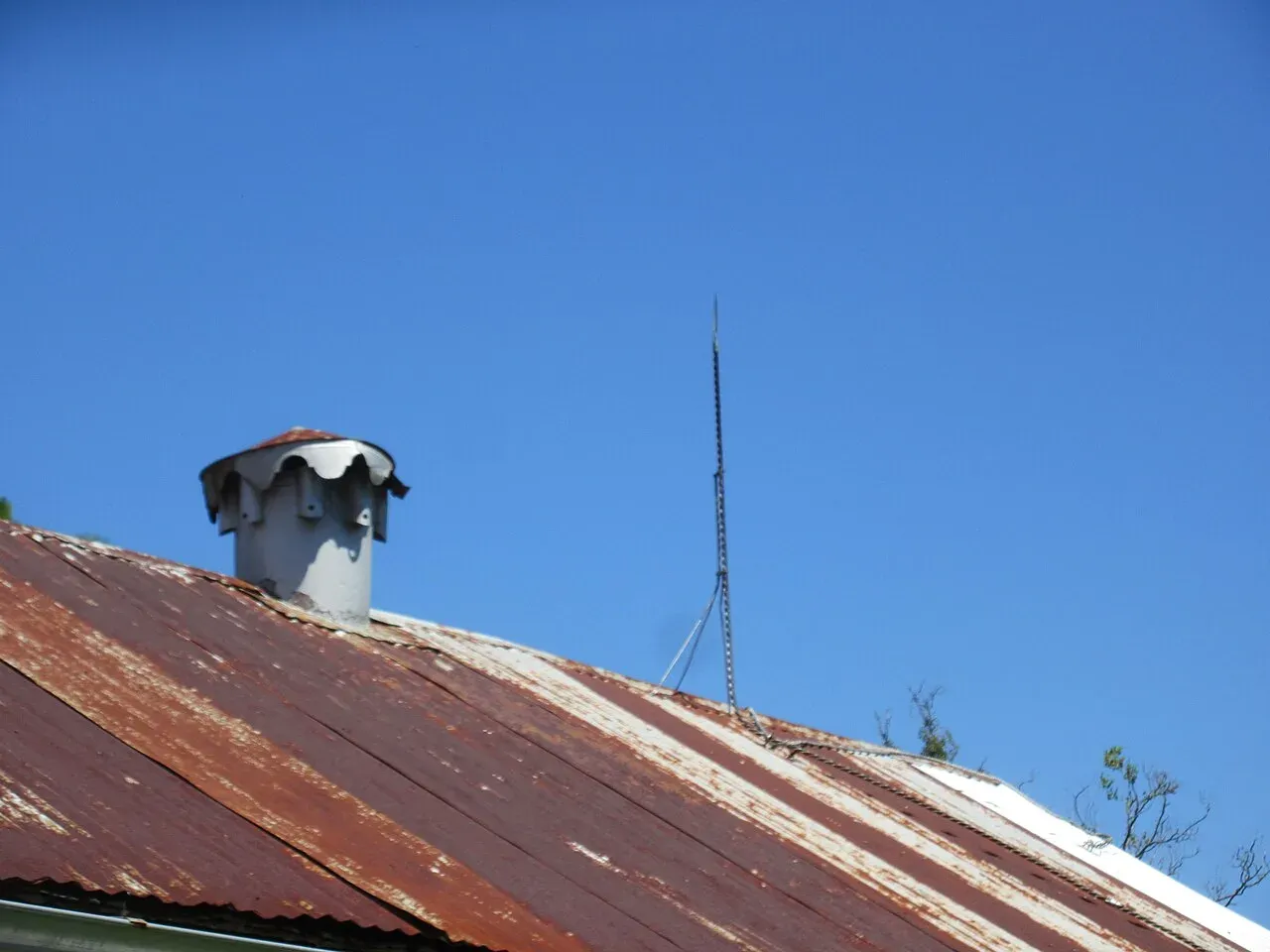
- Decorative ornaments are allowed but can’t exceed 20 square inches in any plane. That’s why weathervanes and balls on old farm rods are kept small.
Pointed and blunt tips both exist. Either way, the terminal only works as part of a continuous path to ground.
Class I vs Class II: it’s about building height
Lightning protection materials come in two classes, set by building height:
- Class I: buildings not more than 75 feet tall. That covers virtually all houses and most commercial buildings.
- Class II: buildings over 75 feet, plus heavy-duty stacks.
Class II parts are heavier, and Class II connectors and splices must be bolted or welded. UL’s guide gives these minimum conductor sizes:
| Conductor | Class I copper | Class I aluminum | Class II copper | Class II aluminum |
|---|---|---|---|---|
| Main conductor | 57,400 cir. mils (187 lb/1,000 ft) | 98,600 cir. mils (95 lb/1,000 ft) | 115,000 cir. mils (375 lb/1,000 ft) | 192,000 cir. mils (190 lb/1,000 ft) |
| Secondary or bonding conductor | 26,240 cir. mils | 41,100 cir. mils | 26,240 cir. mils | 41,100 cir. mils |
Lightning conductors don’t follow normal wire gauges. They’re specified by circular mils and weight per foot, and they’re usually a braided or rope-lay cable rather than solid wire. A spool of #6 house wire from the hardware store is not a lightning conductor.
The compatibility rules that cause the most problems
Most material mistakes come down to copper, aluminum and dirt. From UL’s guide and the LPI model specification:
- Aluminum never touches the earth. Any bimetallic fitting has to sit at least 18 inches above grade. The LPI specification says aluminum conductors must terminate at least 18 inches above grade, where a copper down lead takes over.
- Aluminum isn’t embedded in concrete or masonry and isn’t installed on surfaces coated with alkaline-based paint.
- Copper isn’t installed on aluminum or external galvanized surfaces. Water running off copper will corrode aluminum and galvanized metal below it.
- Copper near chimney exhaust gets tin coating. The LPI specification requires tin-coated copper within 2 feet of chimney exhausts to resist corrosion.
- Fasteners match the conductor. The LPI specification requires fasteners of the same material as the conductor, or an electrolytically compatible one. Galvanized or plated steel fasteners aren’t acceptable.
- Heavy-duty stacks go copper at the top. UL’s guide prohibits aluminum in the upper 25 feet of heavy-duty stacks.
The NWS facility standard (NWSM 30-4106) applies the same logic in reverse: on aluminum roofs, aluminum siding or other aluminum surfaces, aluminum lightning components are the ones to use.
How the roof decides copper or aluminum
| Roof or surface | Usual choice | Why |
|---|---|---|
| Asphalt shingle, tile, wood shake | Copper or aluminum, often by look and budget | Either is compatible |
| Aluminum or painted-aluminum roof, aluminum siding | Aluminum | Copper on aluminum causes galvanic corrosion |
| Copper roof or copper flashing | Copper | Aluminum can’t sit on copper or below its runoff |
| Galvanized steel roof or trim | Aluminum or listed bimetallic transitions | Copper can’t be installed on external galvanized surfaces |
| Masonry chimney | Copper, tin-coated near the flue | Aluminum can’t be embedded in masonry. Flue gases corrode bare copper |
| Below grade | Copper conductor, copper-clad or stainless rods | Aluminum can’t contact soil |
Many systems use both metals: aluminum across an aluminum roof, then a listed bimetallic fitting above the 18-inch line and copper down into the ground.
Listed parts matter
UL’s guide notes that NFPA 780 calls for listed components where a UL 96 listing exists, and that listed parts installed per UL 96A or NFPA 780 are what allow a system to be field-inspected for a UL Master Label certificate. The LPI specification likewise requires all materials to be listed and labeled. On an existing system, unlisted hardware-store clamps or random wire are a sign someone other than a lightning protection installer has worked on it.
What to check on your own system
- Green streaks or white powder where copper meets aluminum, gutters or galvanized trim
- Aluminum cable running all the way into the ground
- Steel screws or plated clamps holding the conductor
- Bare copper corroded near a chimney flue
- Splices made with ordinary electrical connectors
For how the parts fit together, see lightning protection system components and lightning rods on a house.
Talk to us about materials for your building
Site Safe Lightning Protection installs and inspects lightning protection systems for homes, commercial buildings and oil and gas sites. If you’re planning a system and want to talk through copper vs aluminum for your roof, or want an older system’s materials checked, contact Site Safe Lightning Protection. See our residential and commercial pages for more.
Talk to Site Safe Lightning Protection about your property.
Frequently asked questions
What metal are lightning rods made of?
Copper, copper alloys such as bronze, or electrical-grade aluminum. Stainless steel is used for some fittings and ground rods, and ground rods are usually copper-clad steel.
Is copper or aluminum better for lightning rods?
Neither is better everywhere. Copper conducts better and can be used below grade. Aluminum is lighter and is required on aluminum surfaces. The roof material and the rule against aluminum touching soil usually decide it.
What is the difference between Class I and Class II lightning protection?
Class I materials are for buildings up to 75 feet tall. Class II materials are for buildings over 75 feet and heavy-duty stacks. Class II conductors are heavier, for example 115,000 circular mils copper versus 57,400 for Class I.
What is a lightning conductor made of?
A main lightning conductor is a stranded copper or aluminum cable sized by circular mils and weight. For Class I, at least 57,400 circular mils copper or 98,600 circular mils aluminum.
Can I use regular copper wire for a lightning rod?
No. Lightning conductors have specific minimum sizes and listed fittings under UL 96 and UL 96A. Ordinary building wire and electrical connectors don't meet those requirements.
Sources
- Lightning Protection Marking and Application Guide (UL, 2016)
- Lightning Protection Systems Specification (Lightning Protection Institute)
- Lightning Protection Overview (Lightning Protection Institute)
- Lightning Rods and Lightning Protection Systems (National Weather Service)
- NWSM 30-4106 Lightning Protection, Grounding, Bonding, Shielding, and Surge Protection Requirements (National Weather Service, 2017)
Image credits
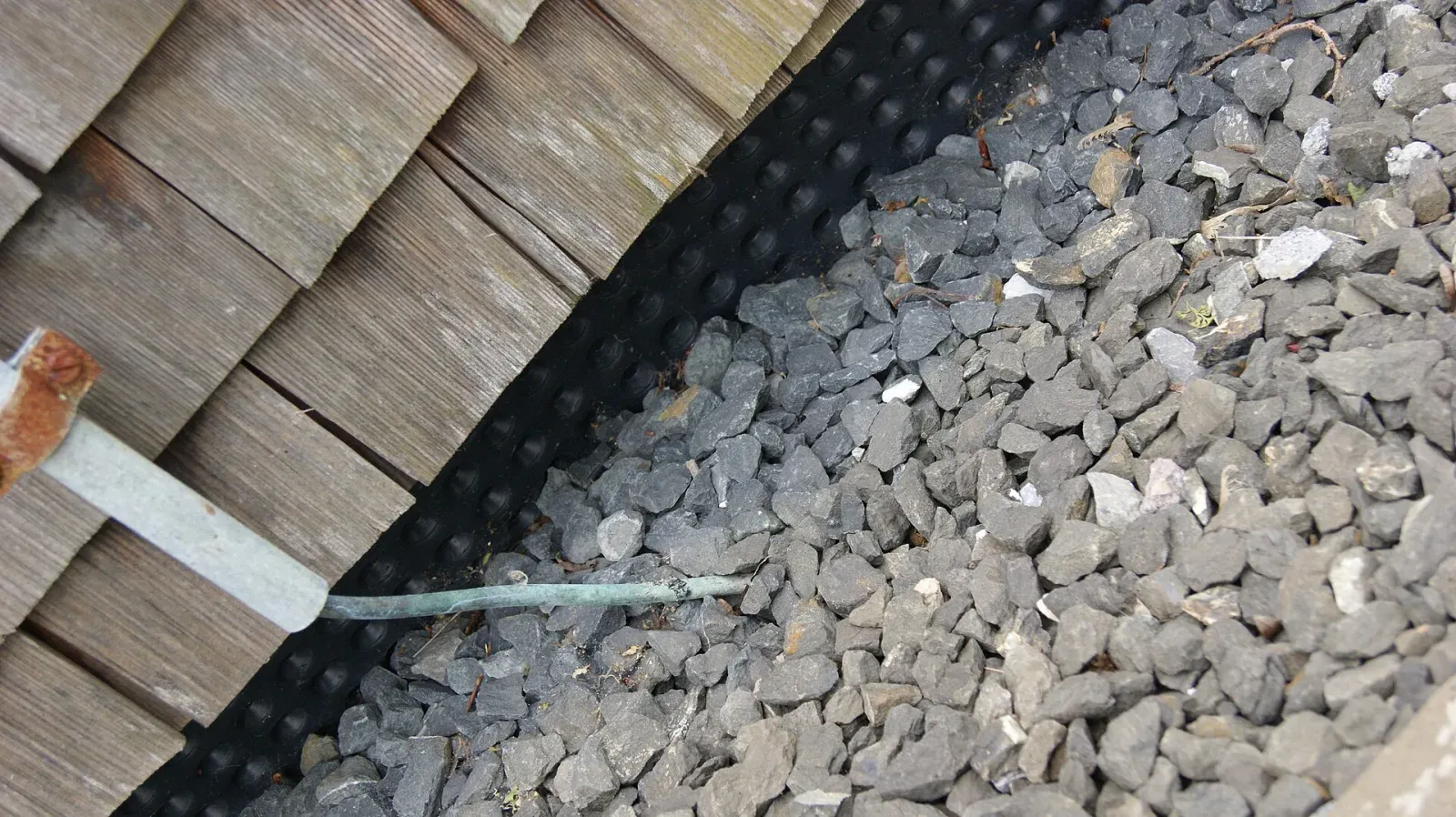
- Copper lightning rod and copper conductor on a building roof edge. Photo: Asurnipal / Wikimedia Commons (source), CC BY-SA 4.0, resized.