NFPA 780 Explained for Building Owners
By Site Safe Lightning Protection 7 min read
NFPA 780 is the US standard for designing and installing lightning protection systems. Its full title is Standard for the Installation of Lightning Protection Systems, and it’s published by the National Fire Protection Association. It sets the rules for where air terminals go, how big conductors must be, how systems are grounded and bonded, and how special structures such as fuel tanks, wind turbines and solar arrays are protected. The current edition is 2026 (LPI). It becomes mandatory when a code, contract or authority having jurisdiction adopts it.
This guide is for owners, facility managers and architects who keep seeing “per NFPA 780” on a spec or a quote and want to know what it actually means.
What NFPA 780 covers
The standard’s scope lists nine kinds of installations (NFPA 780, 2023, 1.1.1):
- Ordinary structures (homes, offices, warehouses, schools, churches)
- Miscellaneous structures and special occupancies
- Heavy-duty stacks
- Structures containing flammable vapors, flammable gases, or liquids that give off flammable vapors
- Structures housing explosive materials
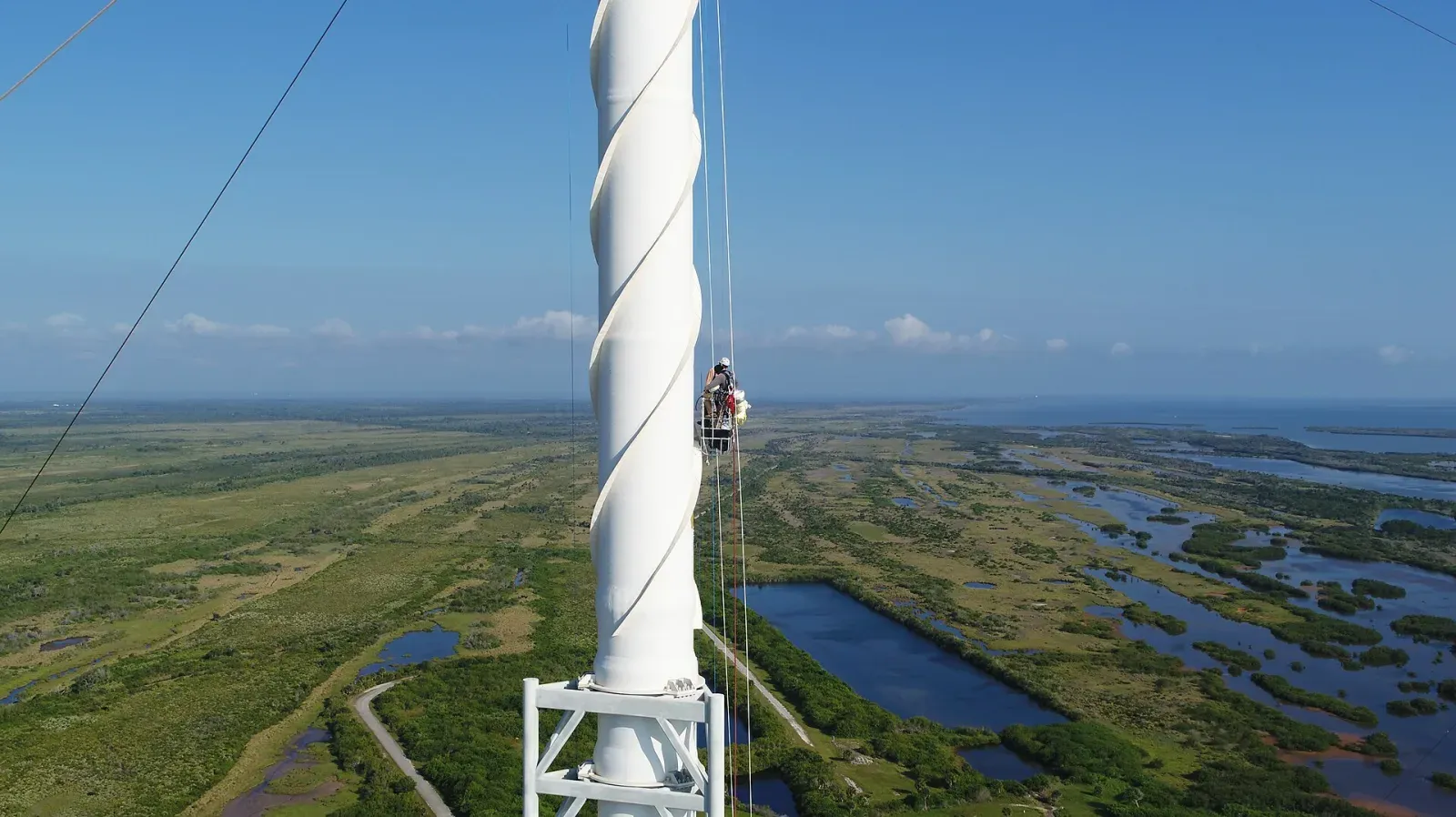
- Wind turbines
- Watercraft
- Airfield lighting circuits
- Solar arrays
Two limits are worth knowing. NFPA 780 protects the structure, and it does not cover electric generating, transmission and distribution equipment except where its wind turbine and solar chapters say so (NFPA 780, 2023). And it does not cover early streamer emission or charge dissipation systems (NFPA 780, 2023). If a vendor pitches an “ESE” terminal that protects a whole building from one mast, it falls outside NFPA 780.
The stated purpose is “the safeguarding of persons and property from hazards arising from exposure to lightning” (NFPA 780, 2023).
A chapter-by-chapter map
The table follows the 2023 edition’s numbering (NFPA 780). The 2026 edition keeps the same overall structure and adds material, including a new section on outdoor athletic scoreboards in Chapter 5 (First Revision report). Confirm section numbers against the edition your project uses.
| Chapter | Topic | What it means for an owner |
|---|---|---|
| 1 | Administration | Scope, retroactivity, workmanship, maintenance and periodic inspection |
| 2–3 | References and definitions | What “listed,” “shall” and “zone of protection” mean |
| 4 | General requirements | The core of most jobs: materials, air terminals, zones of protection, conductors, grounding, bonding, concealed systems, surge protection |
| 5 | Miscellaneous structures | Masts, spires, flagpoles, tanks, silos, helipads, fabric structures |
| 6 | Heavy-duty stacks | Industrial chimneys and stacks |
| 7 | Flammable vapors and liquids | Tanks, operating facilities, and tank batteries (7.8, added in 2023) |
| 8 | Explosives | Magazines and explosives handling facilities |
| 9 | Wind turbines | Turbine-specific protection |
| 10 | Watercraft | Boats |
| 11 | Airfield lighting circuits | Counterpoise systems at airfields |
| 12 | Solar arrays | Rooftop and ground-mount PV |
| Annexes | Guidance (not mandatory unless adopted) | Inspection and maintenance (D), ground testing (E), trees (F), risk assessment (L), nonmetallic tanks (N) |
For a typical commercial building, almost everything that ends up on the drawings comes from Chapter 4. Annex L, the lightning risk assessment, is where you’ll find the method for deciding whether a structure needs protection in the first place.
A few Chapter 4 rules you’ll see on drawings
These are the numbers that show up in shop drawings and inspection reports, from the 2023 text:
- Structures up to 75 feet tall use Class I materials; taller structures use heavier Class II materials (4.1.1.1).
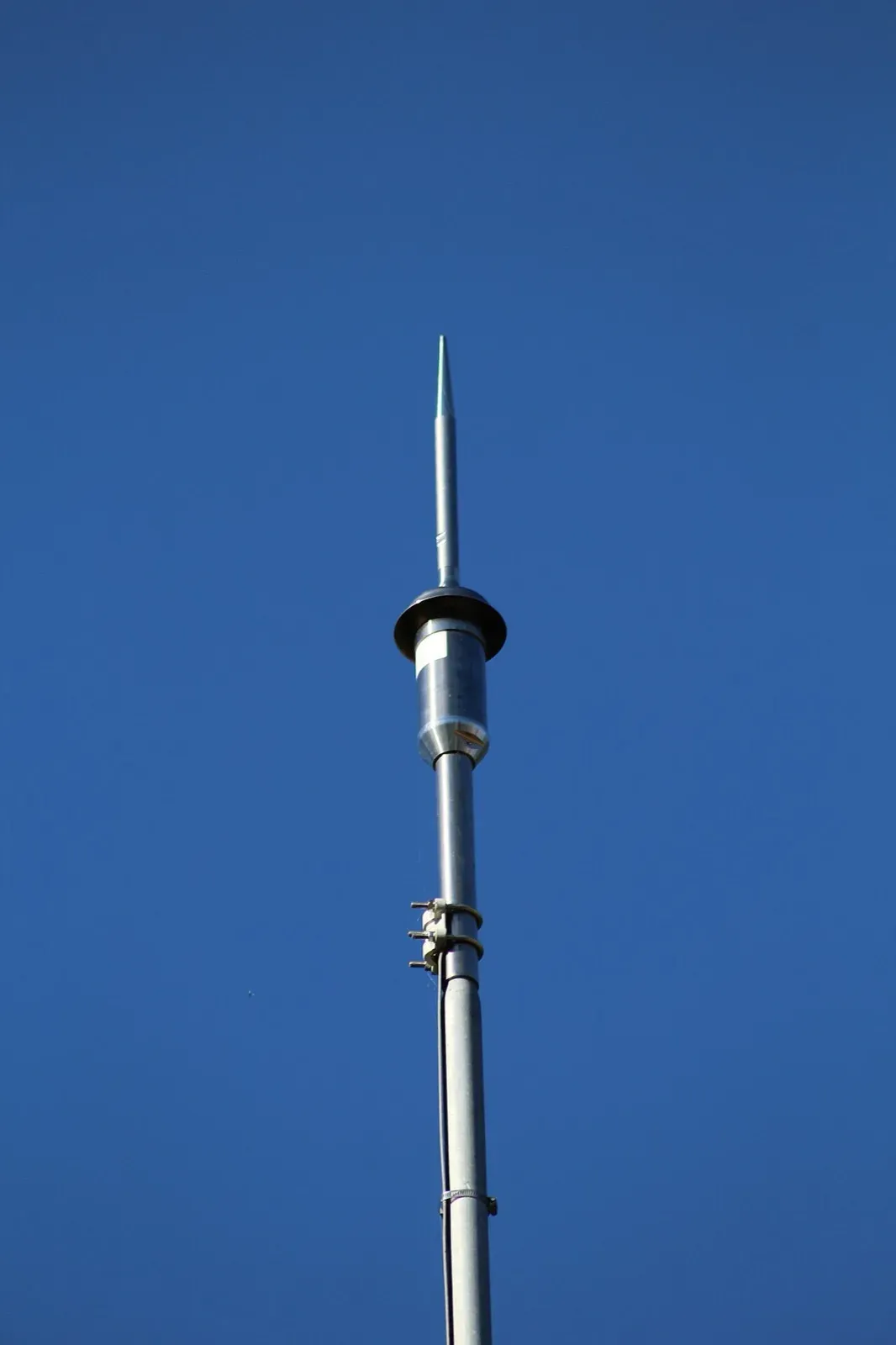
- Air terminal tips stand at least 10 inches above what they protect (NFPA 780, 2023).
- Terminals sit within 24 inches of ridge ends and roof corners and no more than 20 feet apart along ridges and flat-roof perimeters (NFPA 780, 2023).
- Metal on the roof that is 3/16 inch thick or more only needs bonding; thinner metal objects outside a zone of protection need their own air terminals (NFPA 780, 2023).
- Copper parts can’t touch aluminum roofing or siding, and aluminum parts can’t touch copper roofing or sit in runoff from copper (4.2.3 and 4.2.4).
LPI’s overview adds the rolling sphere concept used to map protected zones, based on a 150-foot radius for ordinary structures (LPI).
NFPA 780 vs UL 96A vs LPI-175
Owners often see three documents named on one spec. They overlap, but they do different jobs.
| Document | Publisher | What it is | Where you’ll see it |
|---|---|---|---|
| NFPA 780 | National Fire Protection Association | The consensus installation standard, covering ordinary structures through tanks, explosives and solar | Specs, building codes, insurer requirements |
| UL 96A | UL | Installation requirements used for UL field inspections and the UL Master Label Certificate | Certification and third-party inspection |
| UL 96 | UL | Product standard for lightning protection components (terminals, cable, fittings) | “UL listed” on materials |
| LPI-175 | Lightning Protection Institute | Standard of practice based on NFPA 780 with extra explanatory material for installers and inspectors | LPI certification and LPI-IP inspections |
LPI describes NFPA 780 as the national design guide and LPI-175 as based on it (LPI). UL’s application guide notes that systems can be certified using UL 96A or NFPA 780, built from components listed to UL 96 (UL guide). NFPA 780 itself requires listed components wherever listed versions exist (1.3.1). For how certificates work, see our explainer on UL 96A and the Master Label.
Is NFPA 780 mandatory?
On its own, no. The standard’s front matter says NFPA has no power to police or enforce compliance, and that NFPA doesn’t certify installations (NFPA 780). It becomes mandatory in one of three ways:
- A building code adopts it. UL Solutions notes that the 2024 International Building Code added section 2703.2, which says lightning protection systems “shall be installed in accordance with NFPA 780 or UL 96A” (UL Solutions). Read that carefully: it governs how a system is installed when one is installed. It doesn’t require every building to have one.
- A contract or owner specifies it. Federal and military projects reference documents such as UFC 3-575-01, and owners and insurers often write NFPA 780 into specs.
- The authority having jurisdiction requires it for a particular occupancy, such as explosives or flammable storage.
Colorado, Texas and Oklahoma adopt building codes at the state and local level, and the edition in force varies by city and county. Check with your local building department before you assume which IBC edition, and which NFPA 780 edition, applies to your project.
Retroactivity, maintenance and inspection
Three administrative rules matter after the install:
- Not retroactive by default. Existing systems aren’t automatically required to meet a newer edition, but the authority having jurisdiction can apply parts retroactively where it judges the risk unacceptable (NFPA 780, 2023).
- Maintenance guidance at handover. The installer must give the owner recommended maintenance guidelines when the job is done (1.6). Ask for them in writing.
- Periodic inspection. The 2023 edition leaves inspection intervals to the authority having jurisdiction (1.7). Annex D of the 2026 edition recommends a visual inspection every year and a full inspection with testing every 3 to 5 years, or 1 to 3 years for critical systems (D.1.1.1 and D.1.1.2), and LPI-175 recommends the same. Annex D is informative, so these intervals are recommendations, not code requirements. Your insurer or contract may require more frequent inspections.
NFPA 780 also lets the authority having jurisdiction require that installers be certified and that completed systems be inspected on site by a qualified, impartial organization (NFPA 780, 2023).
How to read NFPA 780 for free
NFPA offers free, read-only online access to its codes and standards, including NFPA 780, once you create an account (NFPA free access). The free version can’t be downloaded or printed. If you need a printed or PDF copy for a project file, buy it from NFPA or a licensed reseller; LPI also resells the 2026 edition (LPI). Be wary of free “NFPA 780 PDF” downloads from unofficial sites. They’re usually old editions and they’re not licensed.
A short history
NFPA first adopted lightning protection specifications in 1904. The document was called NFPA 78 until 1992, when it became NFPA 780, and it took its current title in 1995 (NFPA 780). Since then it has added chapters for explosives and wind turbines (2011), airfield lighting and solar arrays (2014), on-site inspection language (2017), and tank batteries and additions to protected structures (2023).
Questions to ask a contractor who says “per NFPA 780”
- Which edition are you designing to, and does it match what our jurisdiction or spec requires?
- Will you provide drawings showing air terminal locations, conductor routing and grounding?
- Are all components listed to UL 96?
- How will you bond to our electrical, water, gas and communications grounds?
- Who will do the third-party inspection, and what document will we receive at the end?
- What maintenance guidance will you hand over (NFPA 780, 1.6)?
Get help applying NFPA 780 to your building
If you manage a commercial, industrial or oil and gas property and need a design reviewed, a new system installed, or an existing system inspected, contact Site Safe Lightning Protection. See our commercial lightning protection services and the full list of services. Homeowners can start with our guide to lightning rods on a house.
Talk to Site Safe Lightning Protection about your property.
Frequently asked questions
What is the NFPA 780 standard?
NFPA 780 is the National Fire Protection Association's Standard for the Installation of Lightning Protection Systems. It covers how to protect ordinary buildings plus special structures such as stacks, flammable-liquid tanks, explosives facilities, wind turbines, watercraft, airfield lighting circuits and solar arrays.
What is the current version of NFPA 780?
The 2026 edition is the current edition. The 2023 edition is still the one adopted by many specs and jurisdictions, so confirm which edition your project requires.
Is NFPA 780 mandatory?
Only when it's adopted by a building code, written into a contract or specification, or required by the authority having jurisdiction. The 2024 IBC (2703.2) requires that lightning protection systems, where installed, follow NFPA 780 or UL 96A.
What is the difference between UL 96A and NFPA 780?
NFPA 780 is the consensus installation standard. UL 96A is UL's installation requirements standard, which UL uses for field inspections that lead to a Master Label Certificate. Both rely on components listed to UL 96.
Can I get NFPA 780 as a free PDF?
NFPA provides free read-only access online with an account, but not a free downloadable PDF. Printed and PDF copies are sold by NFPA and licensed resellers.
Sources
- LPI-175, Standard for the Design, Installation and Inspection of Lightning Protection Systems (Lightning Protection Institute)
- NFPA 780, Standard for the Installation of Lightning Protection Systems, 2023 edition (NFPA document page, free read-only access)
- NFPA 780 (A2025 cycle) First Revision report
- Lightning Protection Institute: NFPA-780 Standard (2026 Edition)
- Lightning Protection Institute: Lightning Protection Overview
- UL Solutions: Lightning Protection Installer and Master Label Certificate Program
- UL: Lightning Protection Marking and Application Guide
- NFPA free access to codes and standards
Image credits
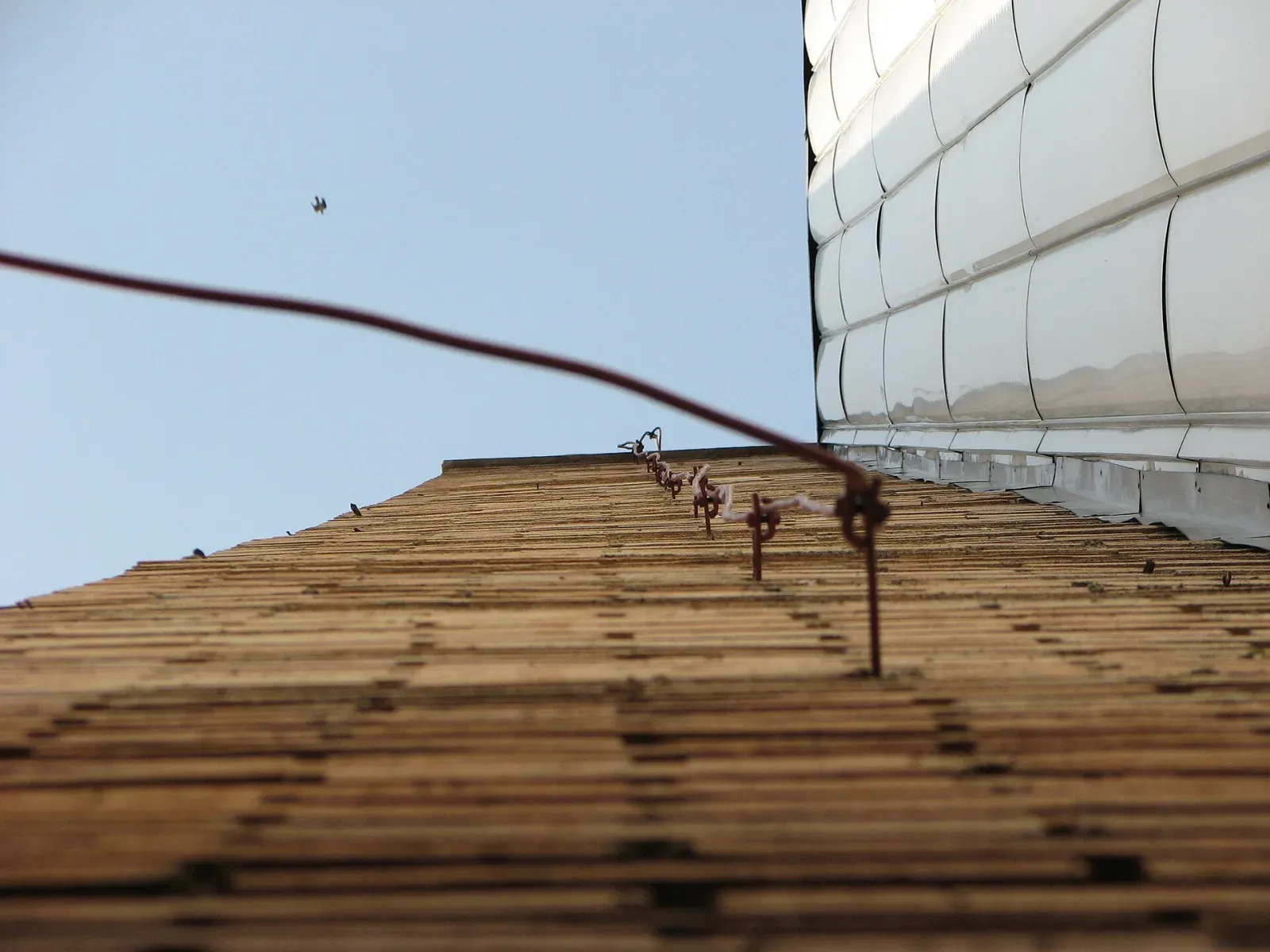
- Air terminal on a brick chimney with a conductor running along the roof, the kind of layout NFPA 780 governs. Photo: HTO / Wikimedia Commons (source), Public domain.