Lightning Protection Certification: What LPI, UL and LPI-IP Credentials Actually Mean
By Site Safe Lightning Protection 8 min read
Lightning protection certification comes in two kinds, and people mix them up all the time. One kind certifies a person: the installer or designer passed exams from the Lightning Protection Institute (LPI). The other kind certifies a finished system on one specific building: a UL Master Label certificate or an LPI-IP Master Installation certificate. A good project usually involves both, and knowing which piece of paper proves what will save you from paying for a system nobody can vouch for.
This guide walks through each credential, what it does and doesn’t tell you, and the questions worth asking before you sign a contract.
Why certification matters more in this trade than most
Your city’s building inspector probably won’t look at your lightning protection system. East Coast Lightning Equipment, a component manufacturer, puts it plainly: inspection of these systems “often falls outside the jurisdiction of local building code enforcement officials.” That leaves owners relying on third-party programs instead of a permit sign-off.
NFPA 780, the national installation standard, anticipates this. The 2023 edition says the people responsible for the installation must be certified for fitness on the standard’s requirements by the authority having jurisdiction. It also says that where the authority requires it, the finished installation gets a physical on-site inspection by a qualified, impartial organization. In practice that “authority” is often the owner, the architect’s specification, or the insurer, not a city office.
The LPI’s own FAQ is blunt about who should do the work. It says design and installation fall outside the expertise of homeowners, electricians, general contractors and roofers, and should go to trained specialists. The National Weather Service says the same thing in fewer words: any system should follow the standards of LPI, NFPA and UL.
Installer credentials: the LPI certification ladder
The Lightning Protection Institute runs a tiered exam series for people who install systems:
- Journeyman Installer (JI): the entry level, requiring field experience and a passed exam.
- Master Installer (MI): the next level, with more prerequisites and a longer exam.
- Master Installer/Designer (MID): the top of the installer series, adding design.
There’s a separate Designer Inspector (DI) track for members of LPI’s Professional Division, aimed at people who review designs and inspect systems. According to LPI, each installer-series exam allows two hours (the Master Installer exam allows two and a half), and the Designer Inspector series is two 2-hour exams.
What an individual credential tells you: someone on the crew has studied the standard and passed a test on it. What it doesn’t tell you: that the system on your roof was built right. A certified foreman can still have a bad day, and a certified person may not be the one on your job. That’s why the second kind of certification exists.
System certificates: UL Master Label vs. LPI-IP
UL Master Label certificate
UL runs a program for listed lightning protection installers. Only listed firms can request a UL inspection, through a secured portal, and UL publishes the list of listed installers. When UL inspects a completed system, three outcomes are possible, according to UL’s own program brochure:
- A Master Label certificate for a structure that fully complies with a recognized standard (UL 96A, NFPA 780 and others). It’s valid for five years. It only counts if it’s published in UL’s online directory, which owners, insurers and code officials can check.
- A Letter of Findings when the scope is limited or there are intentional exceptions. It doesn’t expire, but it isn’t published and it isn’t a Master Label.
- A noncompliance report when the system fails. The installer can fix it and reapply.
One detail owners miss: a Master Label certificate expires early if anything changes. UL lists modifications to the structure, its electrical, mechanical or communication systems, the lightning protection system itself, or the roofing or coping. Damage to the system also ends it. A re-roof, a new rooftop unit or a solar array can quietly void the paperwork you paid for.
Each application covers one independent structure, and a representative of the listed installer has to be on site for the inspection.
LPI-IP Master Installation certificate
The Lightning Protection Institute Inspection Program (LPI-IP) started in 2011. ECLE describes it as a lower-cost alternative to UL’s inspection service. In a 2018 release LPI listed four services: Master Installation Certificate, Extended Master Installation Certificate, Reconditioned Master Installation Certificate, and Limited Scope inspections. Certification can be to LPI 175, NFPA 780, UL 96A or military specifications.
The process, as ECLE summarizes it, has three steps. Third-party sign-offs are collected at two points during construction: the grounding system and the rooftop network. Those sign-offs go to LPI-IP with as-built drawings and an application, and LPI-IP decides whether an on-site inspection is needed (owners can ask for one). Any deviations found must be corrected within two weeks before the certificate is issued. To take part, a firm needs at least one employee certified as an LPI Master Installer.
The LPI-IP certificate carries a three-year expiration, which LPI says lines up with NFPA 780’s three-year revision cycle.
The grounding sign-off matters. Ground rods and concealed conductors get buried or covered, so a final inspection can’t see them. LPI’s release says the program documents concealed components and verifies grounding as part of the review.
The comparison table
| Credential | Who or what it covers | Who issues it | How long it lasts | How to check it |
|---|---|---|---|---|
| LPI Journeyman Installer | An individual | Lightning Protection Institute | Per LPI membership rules | Ask for the card; check with LPI |
| LPI Master Installer | An individual | Lightning Protection Institute | Per LPI membership rules | Ask for the card; check with LPI |
| LPI Master Installer/Designer | An individual (install + design) | Lightning Protection Institute | Per LPI membership rules | Ask for the card; check with LPI |
| UL listed installer | A company | UL Solutions | While the listing is maintained | UL’s published installer list |
| UL Master Label certificate | One finished building | UL Solutions, after inspection | 5 years, or until the building or system changes | UL’s online certificate directory |
| UL Letter of Findings | Part of a system, or a system with stated exceptions | UL Solutions | No expiration | Paper copy only (not published) |
| LPI-IP Master Installation certificate | One finished building | LPI Inspection Program | 3 years | Request the certificate and the inspection report |
What a credential doesn’t prove
None of these documents is a warranty, and none replaces your own contract terms. A few things to keep straight:
- A person’s card is not a system certificate. If your spec, insurer or campus standard calls for a certified system, you need the UL or LPI-IP document for your building, not a photo of someone’s wallet card.
- A Letter of Findings is not a Master Label. It’s useful, but it records exceptions.
- Certificates go stale. Five years for UL, three for LPI-IP, and sooner if the roof, the structure or the system changes.
- Component listings are a separate thing. UL 96 covers the parts themselves. ECLE notes that products listed for building electrical systems are not acceptable substitutes for lightning protection components.
Eight questions to ask before you hire
Use these on any bid, residential or commercial:
- Who on the crew holds an LPI certification, and at what level? Will that person be on my job?
- Is your firm a UL listed lightning protection installer, a participant in LPI-IP, or both?
- Which certificate will I receive at the end: UL Master Label, LPI-IP Master Installation, or none?
- Which standard and edition will the design follow (NFPA 780, UL 96A, LPI 175)?
- Who documents the grounding and concealed conductors before they’re covered? Will I get photos?
- Will I get as-built drawings and the maintenance guidelines that NFPA 780 Section 1.6 says the owner should receive?
- If a roofer or solar installer works on the building later, what has to be re-inspected to keep the certificate valid?
- What does an inspection cost when the certificate comes up for renewal?
A contractor who answers these without hesitation is usually one who does this work every week. Our guide to choosing a commercial lightning protection company covers the business side of the decision: references, scope and schedule.
How to verify a certificate
For a UL Master Label, look it up in UL’s online lightning protection directory. If it isn’t published, it isn’t valid. For LPI-IP, ask for the certificate and the inspection report from the installer, and confirm the dates. For individual LPI credentials, ask for the certification number and check with LPI.
Then do a sanity check on the building itself. If the certificate predates a re-roof or a new rooftop unit, plan on a re-inspection. Our article on what is tested during a lightning protection inspection explains what an inspector looks at.
Talk to Site Safe Lightning Protection
If you’re comparing bids, planning a new building, or holding an old certificate you aren’t sure about, contact Site Safe Lightning Protection. We can walk through your building, explain what kind of documentation your project actually needs, and give you a clear scope for commercial lightning protection or a residential system. Get in touch here.
Talk to Site Safe Lightning Protection about your property.
Frequently asked questions
Do you need to be certified to install lightning protection?
Licensing rules vary by state and city, so check locally. NFPA 780 (2023) expects installers to be certified for fitness by the authority having jurisdiction, and specifications often require LPI-certified installers or UL listed firms. Check your contract documents and with your local building department.
Can an electrician install lightning protection?
The Lightning Protection Institute says design and installation fall outside the expertise of electricians, roofers and general contractors. Electricians do play a part, because the lightning protection system has to be bonded to the electrical service ground and surge protection goes on incoming lines.
How long is a UL Master Label certificate good for?
Five years from the inspection, according to UL's program brochure. It ends sooner if the structure, its building systems, the roofing or the lightning protection system are modified or damaged.
What's the difference between a UL Master Label and an LPI-IP certificate?
Both certify a finished system on one building after third-party review. UL's certificate lasts five years and is published in UL's online directory. LPI-IP's lasts three years and uses construction-phase sign-offs on grounding and rooftop work, with on-site inspection when the program calls for it.
Is LPI certification the same as being an LPI member?
No. Membership is a company or individual joining the institute. Certification means an individual passed the exams for a specific level, such as Master Installer.
Sources
- Lightning Protection Institute: Certifications
- Lightning Protection Institute: FAQ
- LPI: Lightning Protection Inspection Program Expands Services (April 9, 2018)
- UL: Lightning Protection Certificate Services (client brochure, PDF)
- East Coast Lightning Equipment: Certification and Inspection
- NFPA 780, Standard for the Installation of Lightning Protection Systems, 2023 edition (NFPA document page, free read-only access)
- National Weather Service: Lightning Rods and Lightning Protection Systems
Image credits
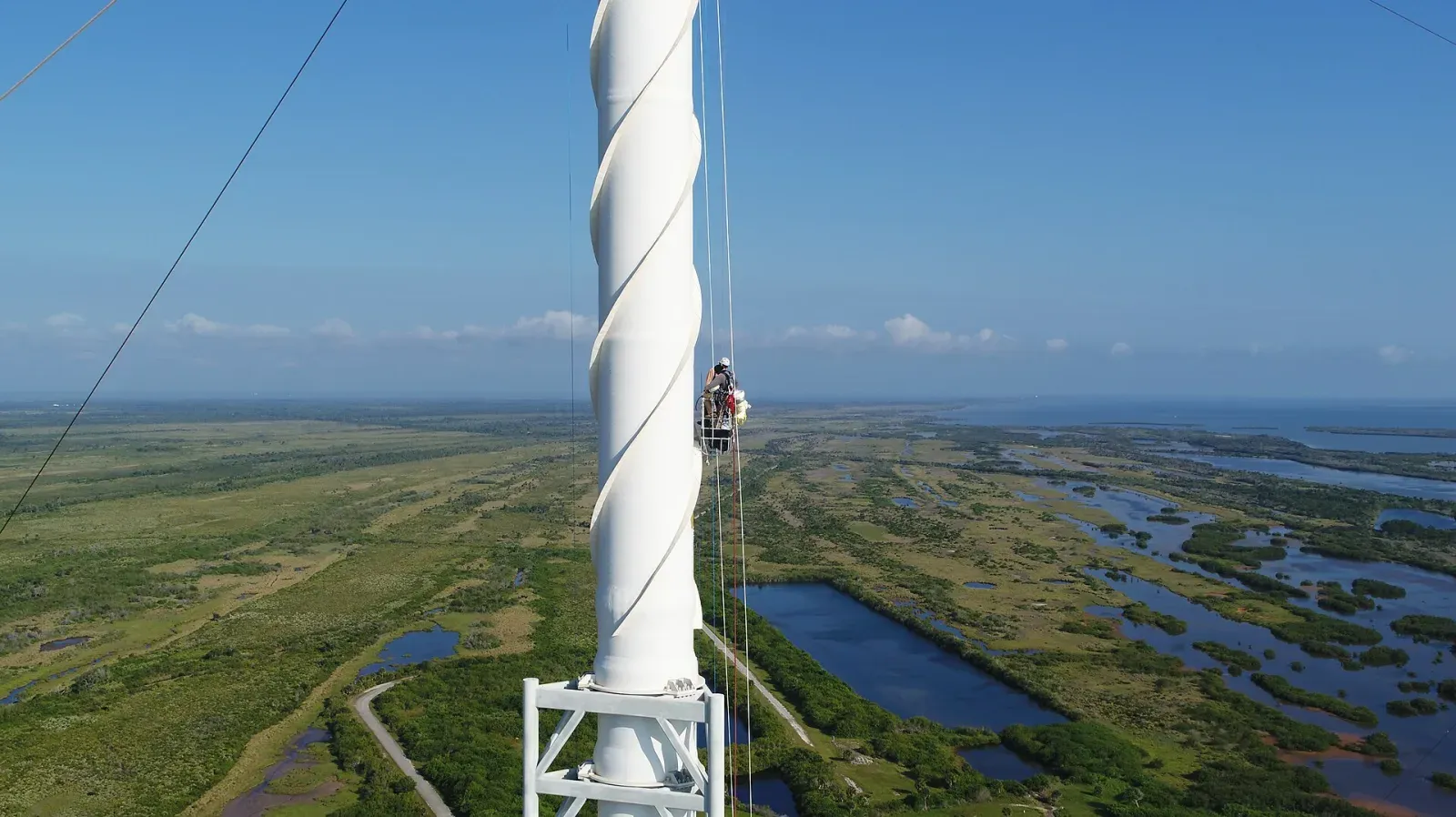
- Worker on a rope at the top of a tall white lightning protection tower during maintenance. Photo: NASA/Jamie Peer (source), Public domain (US gov).