Lightning Protection System Components: The Five Parts Every System Needs
By Site Safe Lightning Protection 6 min read
A lightning protection system has five components: strike termination devices (air terminals) on top, conductors that carry the current, grounding electrodes that put it into the earth, bonding that ties nearby metal into the system, and surge protection where utilities enter the building. The Lightning Protection Institute lists all five, and leaving one out is how a system that looks complete still lets a strike cause a fire.
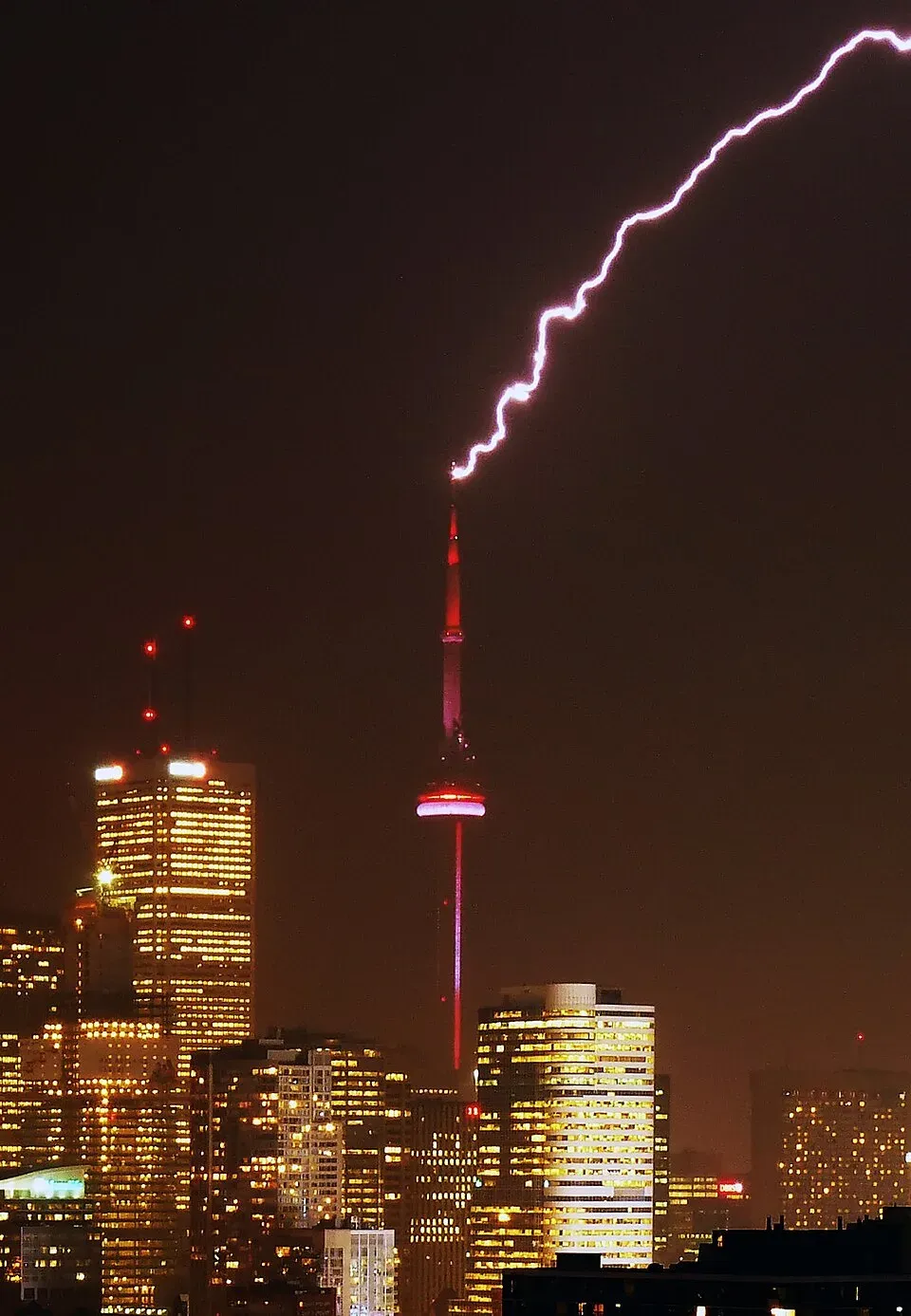
The National Weather Service describes the job the same way: the system doesn’t stop lightning from hitting the building. It intercepts the strike, gives it a conductive path, and spreads the energy safely into the ground.
Here’s each component, what it does, and how it typically fails.
1. Strike termination devices (air terminals)
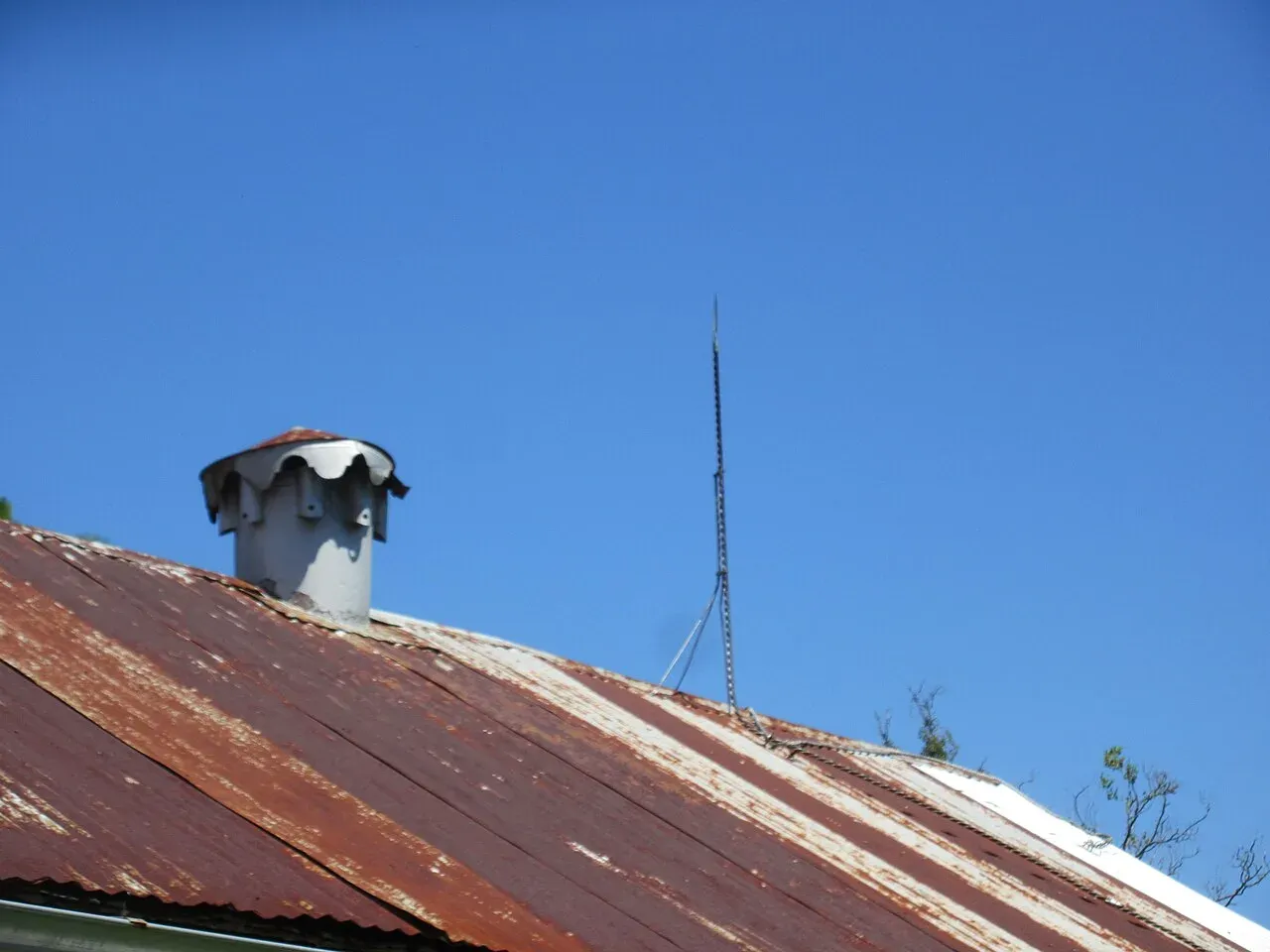
These are the “lightning rods”: the points on ridges, roof edges, chimneys and rooftop equipment that are meant to take the strike before it reaches roofing, framing or masonry. NFPA 780 also counts metal masts, overhead ground wires and some permanent metal parts of the building as strike termination devices.
The rules that matter most:
- The tip has to sit at least 10 in. above the object or area it protects (NFPA 780, 2023).
- Terminals taller than 24 in. need a brace at no less than half their height (Section 4.5.2.2.2).
- Along ridges and roof edges, terminals go no more than 20 ft apart, or 25 ft if they’re 24 in. or taller (NFPA 780, 2023).
- Large flat roofs over 50 ft wide or long need more terminals in the middle at intervals of no more than 50 ft (NFPA 780, 2023).
Terminals can be sharp or blunt; the standard allows both.
2. Conductors
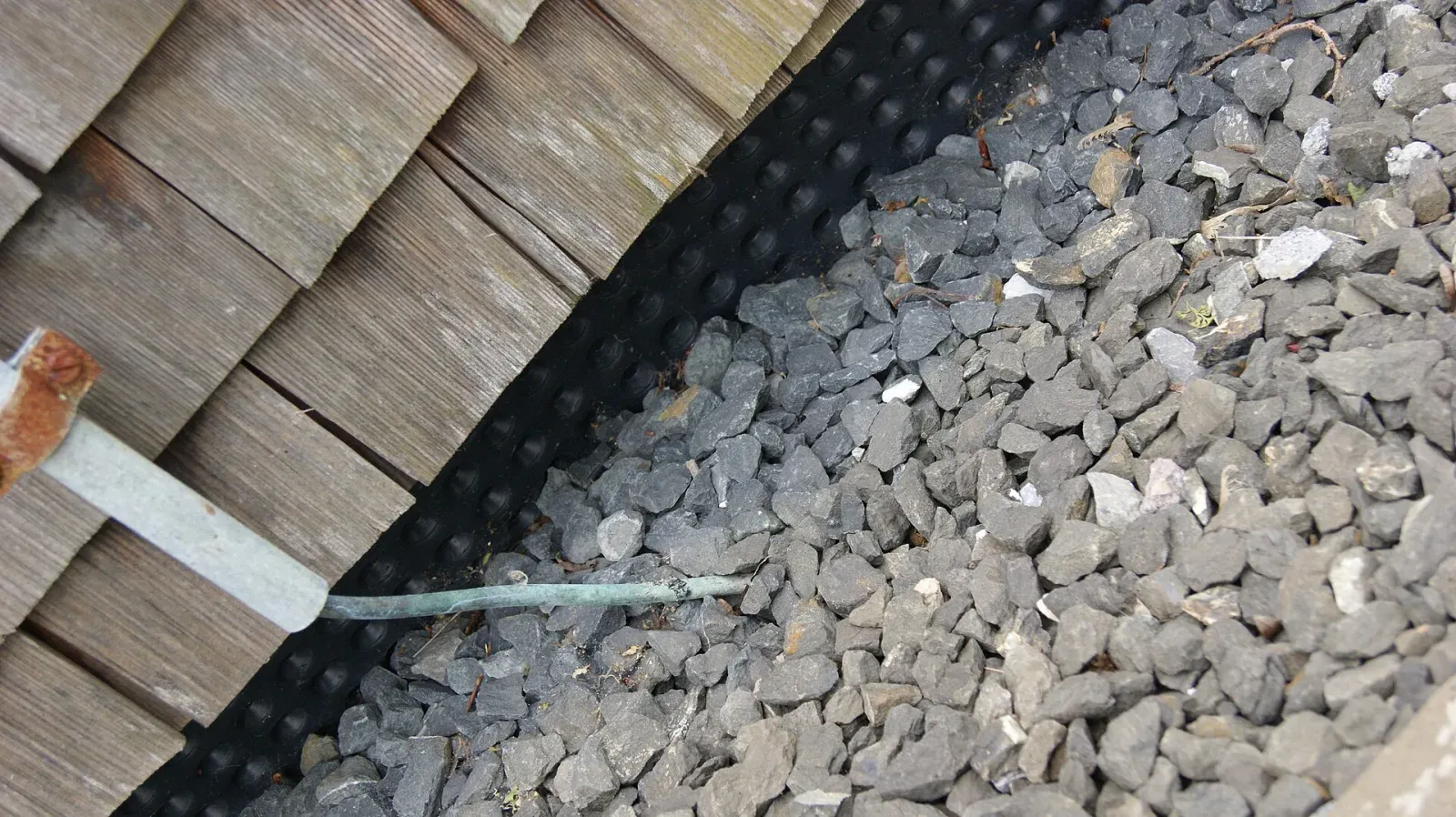
Conductors connect every air terminal and carry the current down to ground. Roof conductors run along ridges and edges; down conductors run from the roof to the grounding electrodes. LPI’s description is that they route current over and through the building, without damage, from the strike terminations at the top to the grounding system at the bottom.
Material choice is regulated:
- Buildings up to 75 ft tall use Class I materials; taller buildings use heavier Class II materials (Section 4.1.1).
- Copper can’t be installed on or against aluminum roofing, siding or other aluminum surfaces (Section 4.2.3).
- Aluminum can’t be installed on copper surfaces or where copper runoff reaches it (Section 4.2.4).
- Aluminum can’t be attached to alkaline-painted surfaces, embedded in concrete or masonry, or used where it stays wet (Section 4.3.3).
- Copper parts within 24 in. of the top of a chimney or vent that emits corrosive gases need a hot-dipped lead or tin coating (Section 4.3.2).
- Where copper meets aluminum, bimetallic connectors are required (Section 4.3.4.2).
The NWS notes that cable should be UL-listed copper or aluminum. ECLE adds that the choice often comes down to cost, appearance and the surface it’s mounted on.
3. Grounding electrodes
Grounding electrodes are where the current leaves the system and enters the earth: ground rods, ground rings, plates or concrete-encased electrodes, at the base of each down conductor. LPI calls this the part that moves lightning to its final destination away from the structure and its contents.
For farm and general buildings, Extension Foundation guidance calls for at least two ground connections for most buildings, using copper-clad steel or solid copper rods driven at least 8 ft into the ground. Site conditions such as shallow soil or rock change the approach, and NFPA 780 includes provisions for those cases.
4. Bonding
Bonding connects the lightning protection system to other grounded metal: the electrical service ground, telecom grounds, water and gas piping, metal roofing, gutters, HVAC equipment. Without it, a strike traveling down a conductor can jump (side-flash) to nearby metal through a wall or attic, which can start a fire or damage equipment.
LPI says bonding has to eliminate the opportunity for lightning to sideflash internally. NFPA 780 (2023) covers it in sections on common bonding of grounded systems, potential equalization and bonding of metal bodies. ECLE explains the purpose: interconnections equalize electrical potential throughout the structure so current doesn’t arc between systems.
5. Surge protection
Lightning doesn’t only arrive through the roof. It comes in on power, phone, cable and data lines. LPI says surge protection devices must be installed at every service entrance to stop lightning from utility lines. The NWS adds that a complete system includes surge protection for incoming power, data and communication lines, plus protection for vulnerable appliances. NFPA 780 (2023) covers this too.
We cover how surge devices fit in, and their limits, in the difference between surge protection and lightning protection.
The component table
| Component | Its job | Common failure | NFPA 780 (2023) reference |
|---|---|---|---|
| Air terminals | Take the strike before it hits the building | Knocked over by roofers or wind, missing from new rooftop equipment | NFPA 780 (2023) |
| Roof and down conductors | Carry current from terminals to ground | Broken or loose clips, cut cables, sharp bends, wrong metal against roofing | 4.1–4.3, 4.8–4.9 |
| Grounding electrodes | Put current into the earth | Corroded clamps, rods disturbed by excavation, connections buried or paved over | NFPA 780 (2023) |
| Bonding | Equalize potential, stop side flash | New piping, antennas or equipment never bonded | NFPA 780 (2023) |
| Surge protection | Stop surges entering on utility lines | Missing on phone, data or solar circuits; spent devices never replaced | NFPA 780 (2023) |
For what inspectors actually find in the field, see common problems found during lightning protection inspections.
Residential vs. commercial systems
The five parts are the same; the scale and details change.
| Typical home | Typical commercial building | |
|---|---|---|
| Roof type | Pitched, with ridges, chimneys and dormers | Often flat or low slope with rooftop units |
| Air terminal layout | Along ridges at the spacing above, plus chimneys and dormers | Perimeter terminals plus terminals in the field of the roof every 50 ft or less |
| Down conductors | At least two, often at opposite corners, sometimes concealed | Several, spaced around the perimeter, sometimes using structural steel where the standard permits |
| Materials | Class I copper or aluminum | Class I or Class II depending on height (75 ft threshold) |
| Bonding | Electrical service, gas, water, metal roof, gutters | All of that plus rooftop mechanical units, roof-mounted equipment, and building steel |
| Paperwork | Often none unless requested | Drawings, third-party certificate (UL or LPI-IP), maintenance guidelines |
Homeowners can read more on our residential lightning protection page. For larger buildings, our services page covers design, installation and inspection.
Why “just a rod” doesn’t work
A single rod on a roof with one wire to a stake in the yard has two of the five components at best. It has no bonding to the electrical and plumbing systems, so a strike can side-flash into the house. It has no surge protection, so the strike’s energy reaches the wiring. And it usually has one ground with no backup. That’s not a smaller version of a system. It’s a different, and riskier, thing.
Get a system that’s complete
Whether you have a home, a commercial building or an industrial site, Site Safe Lightning Protection can check what you have against these five parts or design a new system from scratch. Contact Site Safe Lightning Protection to talk through your building.
Talk to Site Safe Lightning Protection about your property.
Frequently asked questions
What are the five main components of a lightning protection system?
Strike termination devices (air terminals), conductors, grounding electrodes, bonding, and surge protection devices.
What is an air terminal?
An air terminal is the modern term for a lightning rod: a metal point on the roof meant to take a lightning strike. NFPA 780 requires its tip to be at least 10 in. above the object it protects.
What is a down conductor?
A down conductor is the cable that carries lightning current from the roof conductors down the side of the building to a grounding electrode. Most buildings have at least two.
Can copper and aluminum be mixed in a lightning protection system?
Only with care. NFPA 780 bars copper against aluminum surfaces and aluminum against copper surfaces, and requires bimetallic connectors where the two metals are joined.
Is surge protection part of a lightning protection system?
Yes. LPI lists surge protection at every service entrance as one of the five components, and the NWS says a complete system includes it.
Sources
- Lightning Protection Institute: Lightning Protection Overview
- NFPA 780, Standard for the Installation of Lightning Protection Systems, 2023 edition (NFPA document page, free read-only access)
- National Weather Service: Lightning Rods and Lightning Protection Systems
- Safety, Health and Wellness in Agriculture (Extension Foundation): Lightning Protection Systems
- East Coast Lightning Equipment: Lightning Protection System Elements
Image credits
- Lightning rod air terminal mounted on the metal roof of Woodland Plantation House in LaPlace, Louisiana, one of the lightning protection system components. Photo: Infrogmation of New Orleans / Wikimedia Commons (source), CC BY-SA 4.0, resized.