Lightning Rods on a House: What a Real System Looks Like
By Site Safe Lightning Protection 8 min read
A lightning rod on a house is only the visible tip of a system. Done properly, a residential system has short rods (air terminals) along the ridge and on every chimney, a heavy cable linking them, at least two cables running down to ground rods, and bonds that tie the whole thing to the home’s electrical, water and gas grounds. One rod with a single wire to a stake in the yard is not a lightning protection system, and it can make things worse.
Below is the walk-around we’d give a homeowner standing in the driveway, with the standard behind each piece.
What a lightning rod on a house actually does
A lightning rod doesn’t stop lightning or pull it out of the sky. The National Weather Service puts it plainly: the system’s job is to intercept a strike, give the current a conductive path, and spread the energy safely into the ground (NWS).
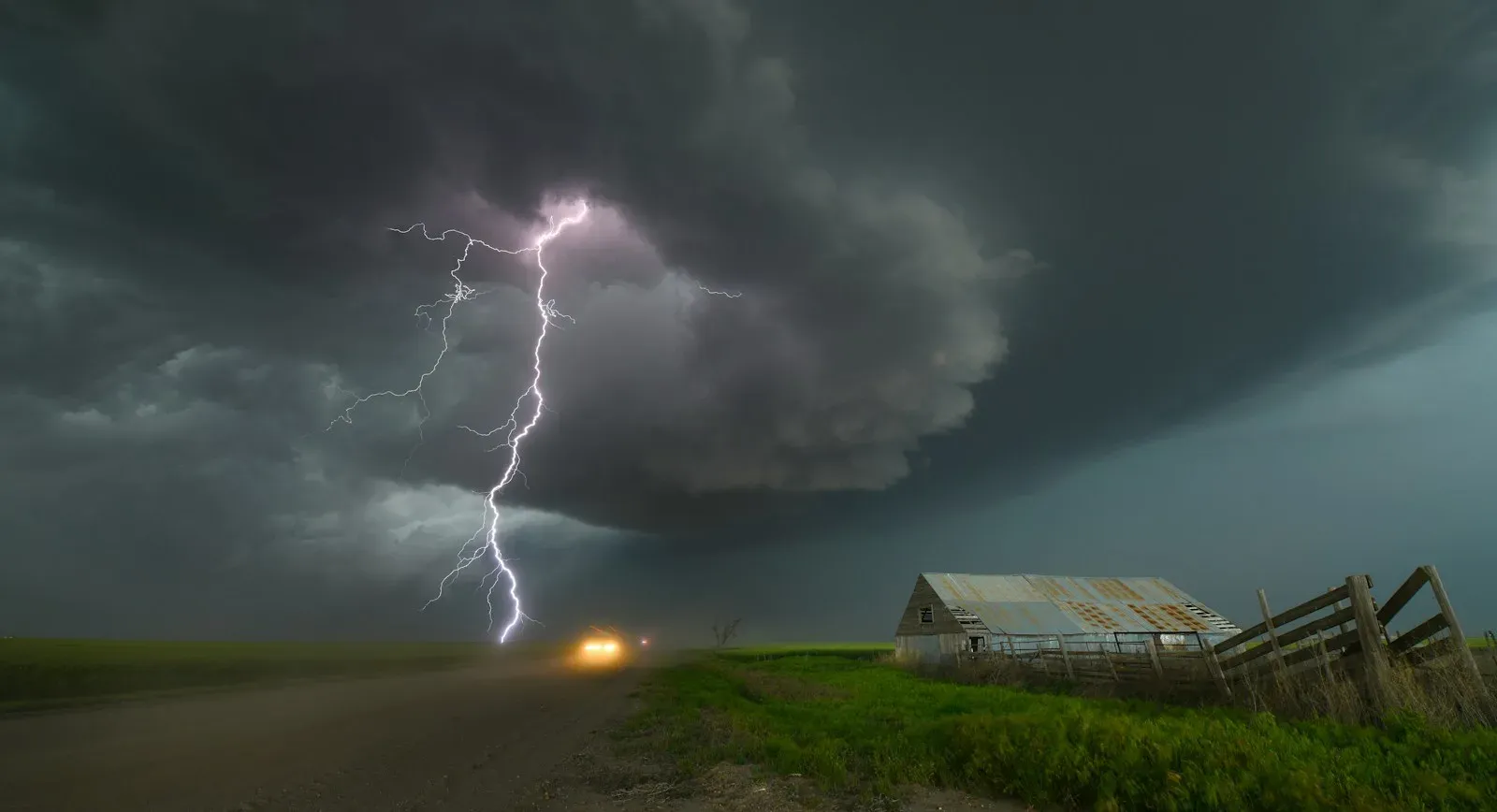
That interception works because of how a ground flash finishes. NOAA’s National Severe Storms Laboratory explains that as the downward channel gets within roughly a hundred yards of the ground, trees, buildings and other objects start sending up sparks to meet it, and the one that connects takes the current (NSSL). An air terminal on your ridge is meant to be the object that makes that connection, so the current lands on copper or aluminum instead of shingles, sheathing and attic wiring.
Walking the roof: where the air terminals go
Most homeowners picture one tall rod. A real layout uses several short ones, placed by rule. The standard most US installers design to is NFPA 780. The points below come from its 2023 edition (NFPA 780); the 2026 edition is now out, so ask your installer which edition they design to.
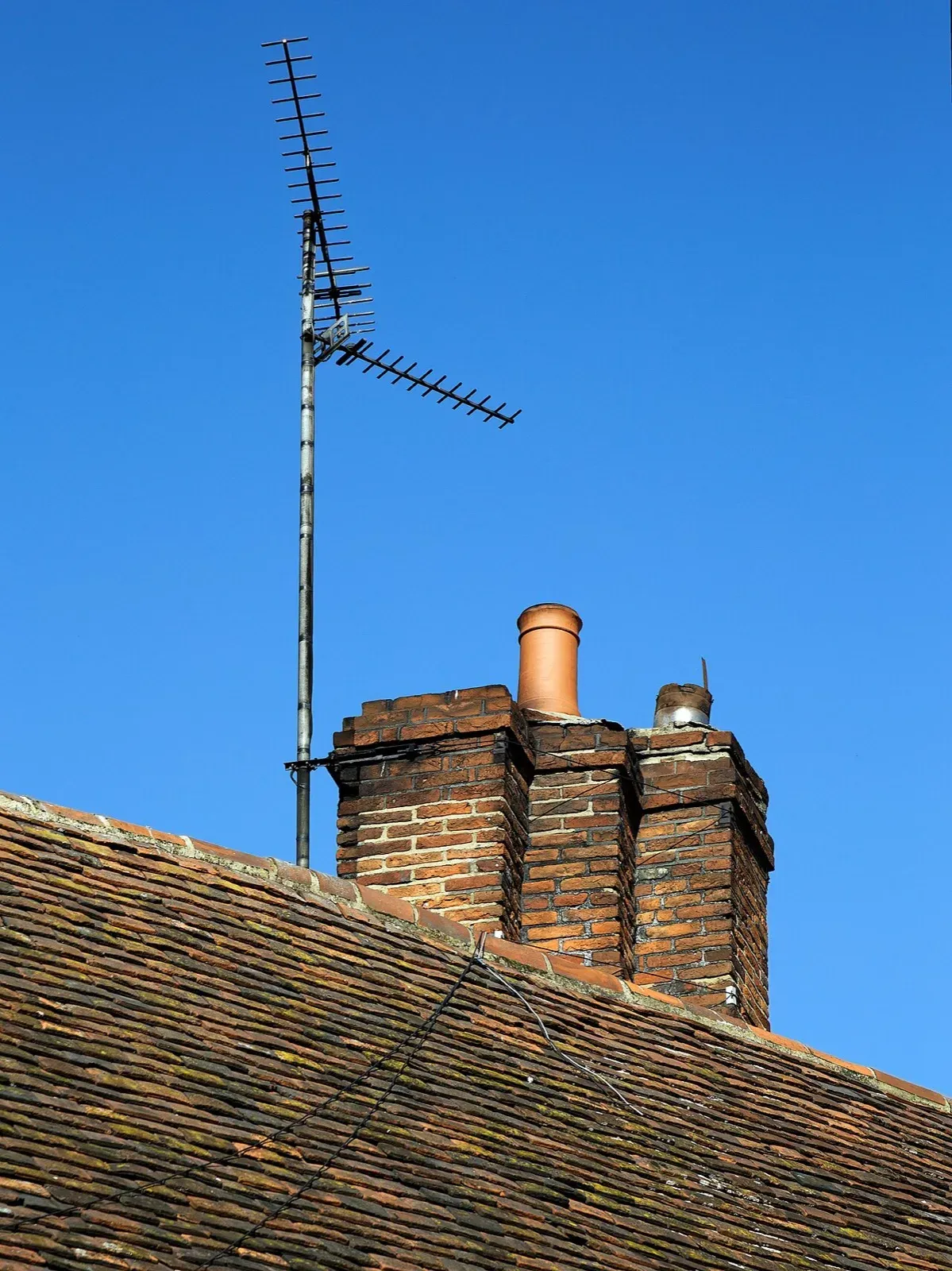
- Height. Each air terminal tip must stand at least 10 inches above the thing it protects (NFPA 780, 2023).
- Ridge ends. A terminal has to sit within 24 inches of each end of a ridge (NFPA 780, 2023).
- Spacing. Along ridges, terminals go no more than 20 feet apart. Taller terminals (24 inches or more) can stretch that to 25 feet (NFPA 780, 2023).
- Chimneys, vents and dormers. Anything on the roof that sits outside the zone of protection needs its own terminal (NFPA 780, 2023). That includes thin metal objects: sheet-metal vents and housings under 3/16 inch thick get terminals, while heavier metal parts only need a bonded connection (NFPA 780, 2023).
So a 60-foot ridge with a brick chimney might carry four or five terminals before anyone counts the garage or a dormer. That’s why a quote that lists “two rods” for a two-story house deserves a question.
Conductors and down conductors
The terminals are joined by a main conductor, a braided copper or aluminum cable that’s much heavier than household wire. The Lightning Protection Institute notes that conductors must give at least two paths to ground (LPI), and a University of North Dakota review of the standards summarizes NFPA 780 as keeping the average spacing between down conductors at no more than about 30 meters (100 feet) around the perimeter (EERC). On most houses that means down conductors at opposite corners, often tucked behind a downspout or run inside a wall.
Materials matter more than people expect. UL’s application guide lists rules a good crew follows without thinking about it (UL guide):
- Copper parts are never mounted on aluminum or on galvanized steel surfaces.
- Aluminum never touches the earth, and the copper-to-aluminum transition fitting sits at least 18 inches above grade.
- Cable bends at corners keep at least an 8-inch radius, because lightning current doesn’t like sharp turns.
- Cable is fastened at least every 3 feet.
Houses fall under “Class I” materials because they’re under 75 feet tall (NFPA 780, 4.1.1.1.1). Taller structures need heavier Class II components.
Ground rods and bonding: the part you can’t see
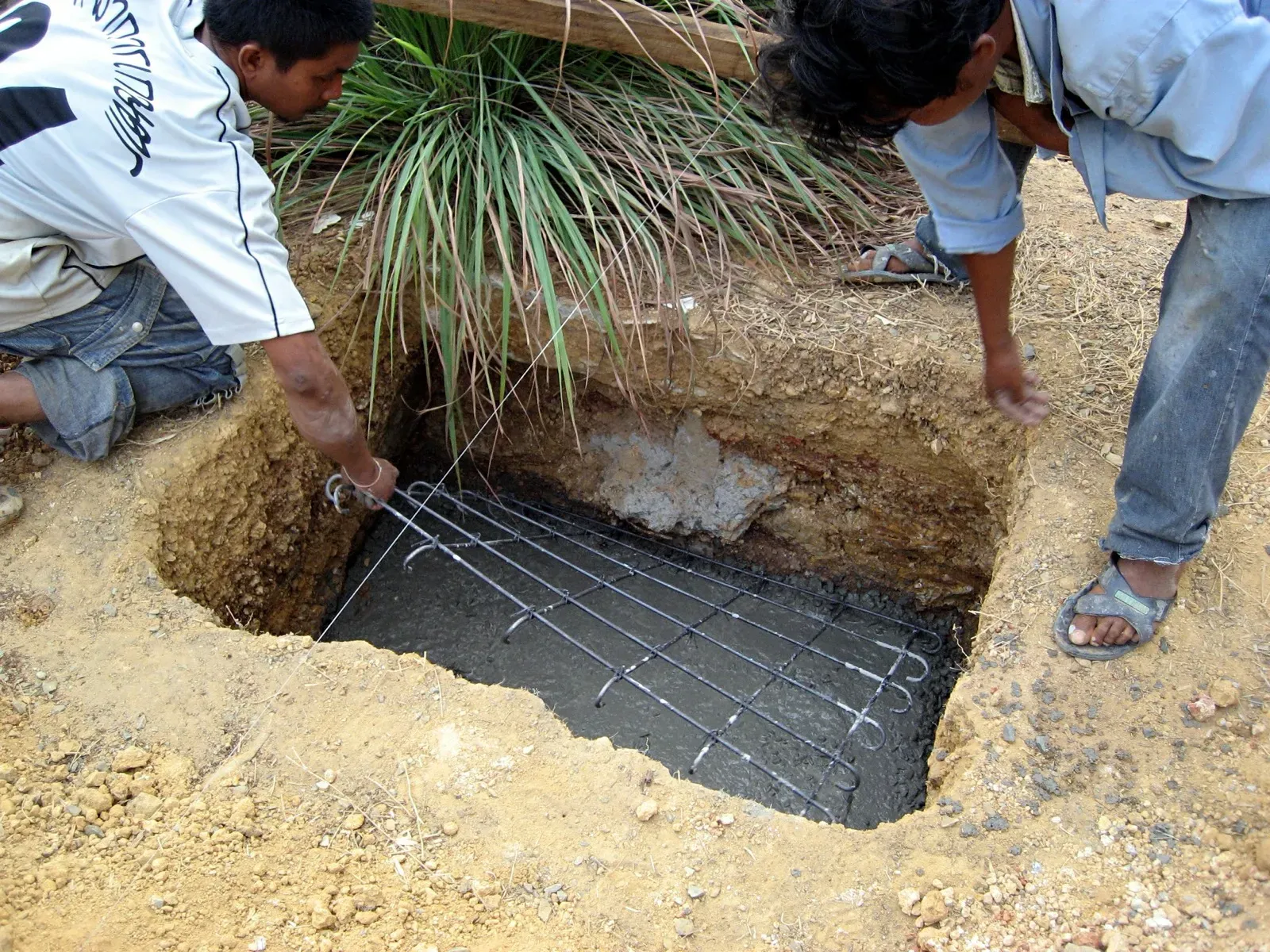
Each down conductor ends at a grounding electrode. UL’s guide describes the typical ground rod as at least 8 feet long and at least 1/2 inch in diameter, with plates, concrete-encased electrodes and ground rings allowed where soil calls for them (UL guide). LPI says ground connections are best placed at building corners and along exterior walls (LPI).
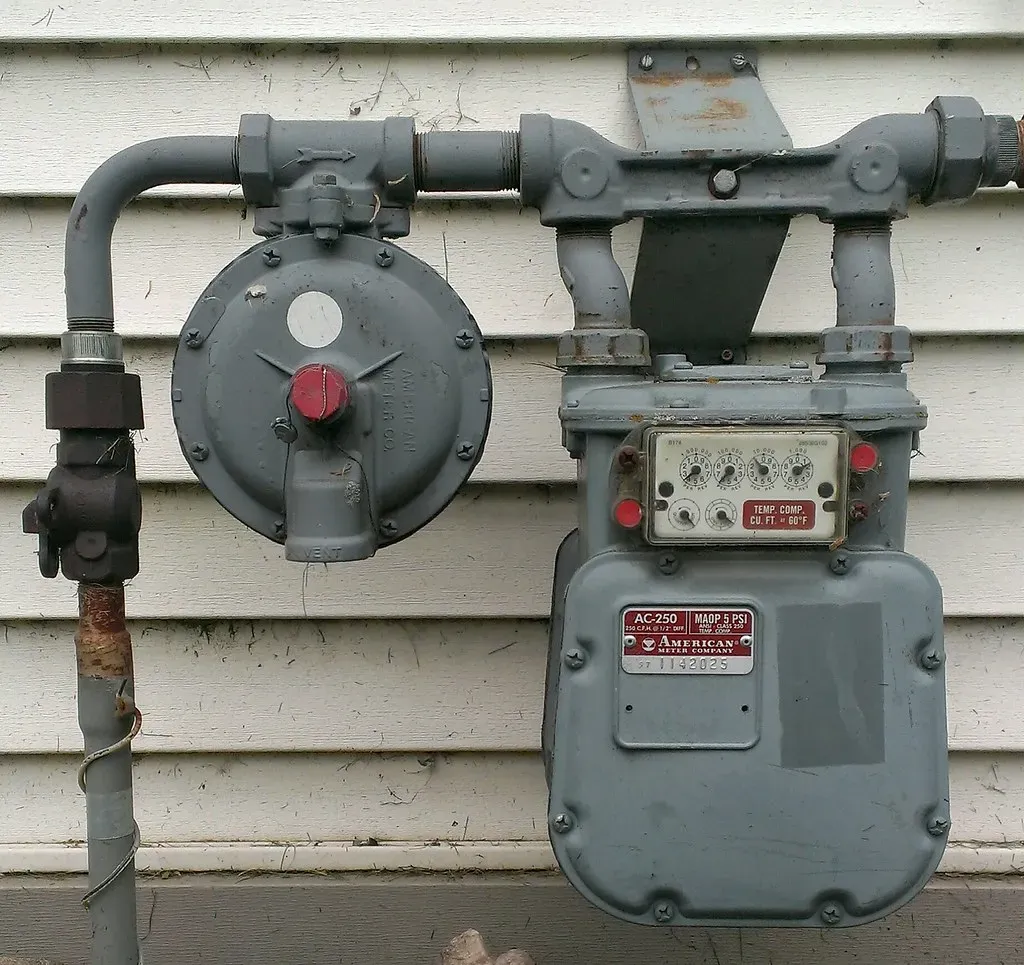
Bonding is where cheap installs fall apart. The lightning system’s grounds must be tied to the electrical service ground, the phone and cable grounds, antenna grounds and underground metal piping, including water service and gas piping (on the customer side of the meter), plus any well casing within 25 feet of the house (UL guide). The NWS stresses the same point: the parts have to be bonded to minimize the chance of sparks or side flashes (NWS). Without those bonds, a strike can jump from the lightning cable to a water line or electrical cable inside a wall.
The last piece is surge protection at the service entrance. LPI lists surge protective devices at every service entrance as one of the five parts of a complete system (LPI). Note that the NWS warns that typical plug-in surge strips will not protect equipment from a lightning strike (NWS indoors).
A residential system at a glance
| Component | Where it is on a house | What it does | Reference |
|---|---|---|---|
| Air terminals | Ridge, ridge ends, chimneys, dormers, vents | Gives the strike a metal attachment point | NFPA 780 (2023) |
| Main conductor | Along the ridge and roof edges, or in the attic | Links terminals into one network | NFPA 780 4.8; UL 96A |
| Down conductors | At least two, usually opposite corners | Carries current to ground by two or more paths | LPI overview; NFPA 780 |
| Grounding electrodes | At the base of each down conductor | Spreads current into soil | UL guide (8 ft × 1/2 in rod) |
| Bonds | Electrical service, water, gas, phone/cable, well casing | Keeps all metal at the same potential to prevent side flash | NFPA 780 (2023); UL guide |
| Surge protection | Main electrical panel and other service entrances | Limits surges coming in on utility lines | LPI overview; NFPA 780 (2023) |
Concealed or exposed: what you’ll see from the street
You don’t have to live with a roof that looks like a porcupine. LPI notes that parts of a system can be concealed inside the building below roof level (LPI), and NFPA 780 (2023) has a section on concealed systems. During new construction or a re-roof, crews can run the main conductor through the attic and the down conductors inside walls, leaving only short terminals visible on the ridge. On a finished house, most down conductors are run on the exterior in a color matched to the trim or hidden behind downspouts.
Ask how the installer handles roof penetrations. Through-roof connections need proper flashing, and a lightning crew should coordinate with your roofer if the roof is under warranty.
Why one rod on the roof isn’t a system
We still see the hardware-store version: a single rod on the chimney, one wire down the side of the house and a short stake in the flower bed. It fails the basics on several counts. It offers one path to ground instead of two. It probably isn’t bonded to the electrical or water grounds, which sets up the side flash the NWS warns about. The ground stake is often too short. And it leaves the rest of the ridge, the far chimney and the dormers unprotected.
A partial system can also give false confidence. If you own a house with old rods from a previous owner, have the whole system inspected before you count on it. Read our myths article for more on what rods do and don’t do.
What breaks a residential system later
A system that was right on install day can be compromised by later work:
- Re-roofing. Roofers often pull terminals and cable and don’t reinstall them correctly, or reinstall them without restoring the bonds.
- Solar panels. A new array sits on the roof surface and changes what needs protection. NFPA 780 has a dedicated chapter for solar arrays (Chapter 12 in the 2023 edition).
- Additions. The 2023 edition added requirements for additions to a protected structure (NFPA 780).
- Satellite dishes, antennas and new gas lines. Each new metal body near the system may need bonding.
NFPA 780 leaves the periodic inspection interval to the authority having jurisdiction (section 1.7). For homes, a sensible habit is to have the system checked after any roof work, after a known strike, and when you buy the house.
Do you need lightning rods on your house?
It depends on exposure and what’s at stake. Height, pointed shape and isolation are what decide where lightning strikes, says the NWS, and metal makes no difference (NWS myths). A two-story house on a ridge or open acreage is more exposed than a one-story house among taller trees and neighbors. The cost of being wrong keeps rising, too: the Insurance Information Institute reports the average US homeowners lightning claim was $26,616 in 2025, and $60,382 in Texas (III).
If you want a price range before you call anyone, see our guide to lightning rod installation cost.
Talk to Site Safe Lightning Protection
If you’re weighing lightning rods for your home, or you’ve inherited an older system and don’t know what shape it’s in, contact Site Safe Lightning Protection. We can walk the roof with you, explain what a complete layout would include for your house, and inspect an existing system. Learn more about our residential lightning protection services.
Talk to Site Safe Lightning Protection about your property.
Frequently asked questions
Do lightning rods on houses really work?
A complete system gives a strike a low-resistance path to ground so the current doesn't travel through the structure. The NWS describes the system's role as intercepting the strike and dispersing the energy into the ground. It works only when terminals, conductors, grounds and bonds are all in place.
Why don't more houses have lightning rods anymore?
Many older farmhouse systems were removed during re-roofing and never replaced, and many newer homes were built without them because most residential codes don't require them. They remain an option for any house, and a modern system can be largely concealed.
Can I install a lightning rod on my house myself?
A single DIY rod usually lacks the second path to ground and the bonding to your electrical, water and gas grounds, which is what prevents side flash. NFPA 780 also lets the authority having jurisdiction require that installers be certified. Hire a trained installer and ask which standard they design to.
Do lightning rods attract lightning to a house?
No. The NWS says height, shape and isolation decide where lightning strikes, and metal makes no difference. The rods give a strike that was already going to hit your house a safe place to land.
How many lightning rods does a house need?
It depends on the roof. NFPA 780 calls for terminals within 24 inches of ridge ends and no more than 20 feet apart along ridges, plus terminals on chimneys and other roof objects. Most homes need more than two.
Sources
- National Weather Service: Lightning Rods
- NOAA NSSL: Severe Weather 101, Lightning Basics
- Lightning Protection Institute: Lightning Protection Overview
- NFPA 780, Standard for the Installation of Lightning Protection Systems, 2023 edition (NFPA document page, free read-only access)
- UL: Lightning Protection Marking and Application Guide
- UND Energy & Environmental Research Center: Lightning Protection Scoping Study (2020)
- National Weather Service: Lightning Safety When Inside
- Insurance Information Institute: Facts + Statistics, Lightning
Image credits
- Lightning bolt striking near a rural farm building and road under a dark storm cloud. Photo: Greg Johnson / Unsplash (source), Unsplash License.