Types of Lightning Protection Systems: Integral, Mast, Catenary and More
By Site Safe Lightning Protection 8 min read
Most lightning protection in the US falls into three types: integral systems mounted on the building, separate masts, and overhead wires strung between masts (catenary systems). A metallic or Faraday-like cage is used where the contents are sensitive enough to need it, such as explosives, and some thick steel structures need no added air terminals at all. Early streamer emission and charge dissipation devices are sold as alternatives, but they sit outside the US standards, and federal criteria prohibit them on Department of Defense facilities (UFC 3-575-01, 3-2).
None of these types stops lightning from striking. The National Weather Service says lightning protection systems “do not prevent lightning from striking the structure.” What they do is intercept the strike, carry the current on a conductive path and disperse it into a grounding network (NWS). The types differ in where the interception happens and how close the current comes to the building.
The types of lightning protection systems compared
| Type | How it works | Where you’ll see it | US reference |
|---|---|---|---|
| Integral (conventional) | Air terminals, conductors and grounding mounted on the structure itself | Homes, offices, schools, churches, warehouses | NFPA 780, UL 96A, LPI-175 |
| Mast | One or more freestanding masts beside the structure, tall enough to put it inside their zone of protection | Small structures, explosives storage, equipment that can’t carry roof hardware | NFPA 780; UFC 3-575-01, 3-2.2 |
| Overhead wire (catenary) | Grounded wires strung between masts above the structure | Explosives areas, launch pads, antenna and weapons-system sites | NFPA 780 4.5.4.4 and Chapter 8 |
| Metallic (Faraday-like) cage | A grounded, continuously conductive enclosure around the structure | Explosives facilities needing the highest protection | NFPA 780 8.3.2 |
| Self-protecting metal structure | Steel thick enough to take the strike, grounded and bonded | Welded steel tanks | NFPA 780 B.2.3 |
| Nonconventional (ESE, dissipation arrays) | Claims to strike earlier, farther out, or to prevent strikes | Sold mainly outside US standards | Prohibited on DoD facilities by UFC 3-575-01 |
Section numbers follow the 2026 revision text in NFPA’s First Revision report unless the table says otherwise.
Many online guides sort systems as “Franklin rod, meshed cage, ESE.” That grouping comes from European practice. A US building owner deals with NFPA 780 and UL 96A, so this guide follows the US split.
1. Integral lightning protection systems
This is the system most people picture: air terminals along the ridge, roof edges and chimneys, conductors running across the roof and down the walls, and grounding electrodes at the base. It’s called integral because every part is fastened to the structure it protects. The Lightning Protection Institute lists five parts that have to be in place: strike termination devices, conductors, grounding electrodes, bonding and surge protection (LPI). We walk through each of them in our guide to lightning protection system components.
Integral systems come in two material classes. Structures under 75 ft use Class I materials. Structures 75 ft and taller use the heavier Class II materials, and where only part of a building reaches 75 ft, such as a steeple, the Class II rules apply to that part (NFPA 780 First Revision report, 4.1.1.2).
It suits almost any ordinary building, it can be concealed on new construction, and contractors and inspectors know it well. The drawback is that the current comes down the outside of the building itself, so bonding of nearby metal (gutters, vents, piping, antennas) has to be done right to prevent side flashes.
2. Mast systems
A mast system moves the strike point off the building. One or more masts stand beside the structure, and their height and spacing put the whole structure inside the zone of protection. Lightning that would have hit the roof attaches to the mast and goes to ground without touching the building.
The DoD criteria give some practical rules. Masts up to 40 ft must be a single-section design. A metal mast thinner than 3/16 in needs its own down conductors, run on the outside of the mast and bonded to it (UFC 3-575-01, 3-2.2). Masts also have to be designed for wind and ice loads, which a roof air terminal never sees.
Masts make sense where roof hardware would be a problem: small explosives magazines, equipment pads, fuel-handling areas or structures that can’t be drilled. Our lightning mast guide covers zone-of-protection math and separation distances in more detail.
3. Overhead wire (catenary) systems
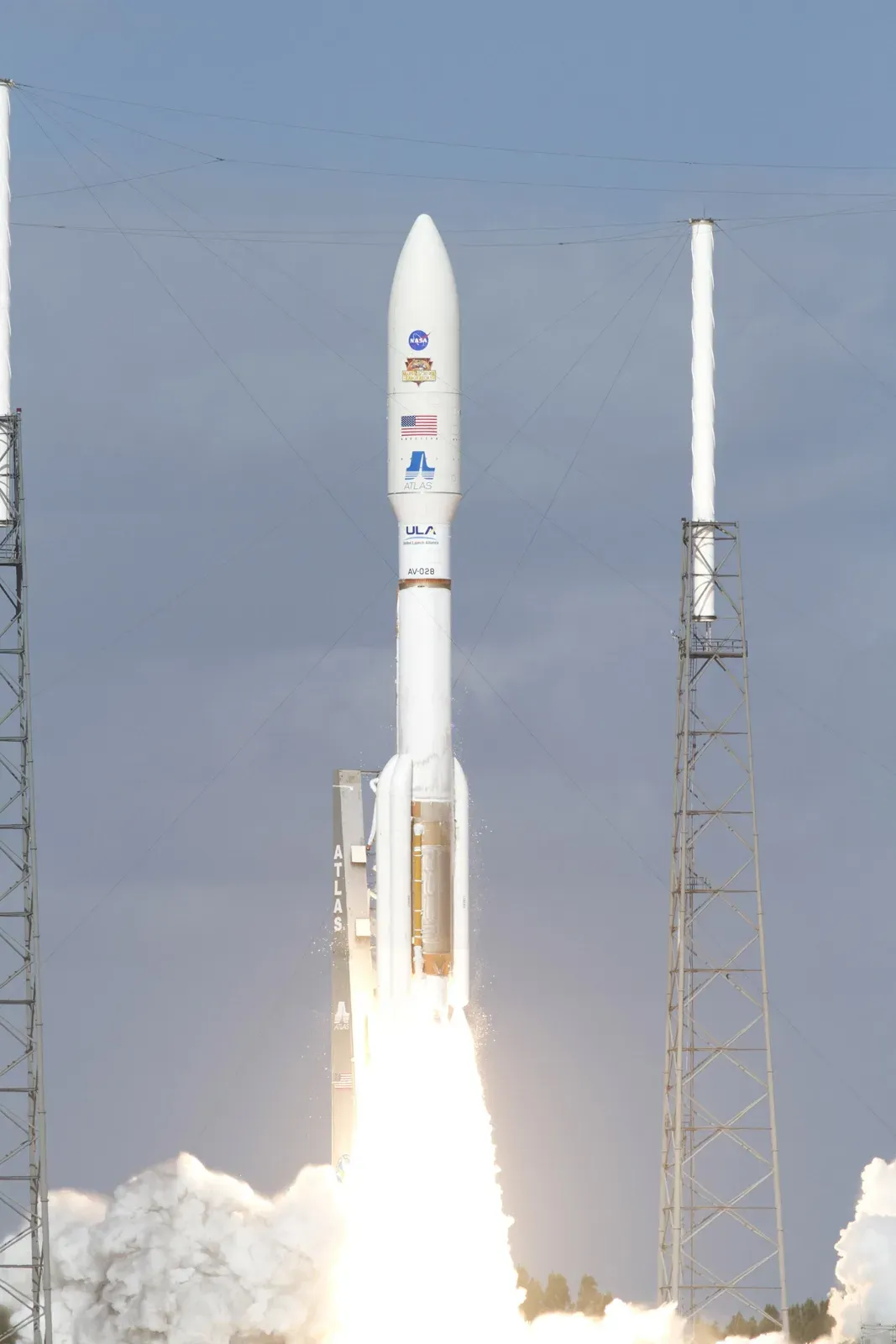
A catenary system strings grounded wires between two or more masts so the wires form a protective canopy over the structure. That covers a larger area than masts alone, which is why it shows up over explosives areas and launch pads. The photo above shows the towers and overhead wires at Space Launch Complex 41 at Cape Canaveral.
The wire has to hold its shape. The 2026 revision text says overhead ground wires shall be self-supporting and able to maintain their calculated sag, so the intended zone of protection is preserved under all conditions (4.5.4.4). UFC 3-575-01 adds that masts in a catenary system must be rated for transmission or distribution line use, because the wires pull on the mast tops, and that a separate ground ring for a catenary system goes at least 3 ft beyond the inner ring with the two rings bonded together in at least two places.
The Air Force prefers this approach for maintenance reasons. Its stated goal is to use mast and catenary systems in place of air terminals to cut maintenance, testing, repair and storm damage by up to 90% (UFC 3-575-01, 3-2.1).
4. Metallic (Faraday-like) cage systems
A Faraday-like cage wraps the structure in a grounded, continuously conductive enclosure. Besides taking the strike, the enclosure shields what’s inside from the electromagnetic pulse of a nearby strike, which can induce dangerous voltages in wiring and devices.
NFPA 780 uses it where the contents justify it. For structures housing explosives, the 2026 revision text calls for a metallic cage where optimum protection is required, such as protection from electromagnetic coupling or induced potentials (8.3.2). Where electromagnetic coupling is a concern but a cage isn’t required, a mast or overhead wire system shall be installed (8.2.2). The committee’s note says the need for a cage depends on how sensitive the explosives operations are, and that in some cases the separation a mast or catenary system gives is enough (First Revision report).
IEC 62305, the international standard, describes zones of protection by radius, angle or mesh spacing, which is where the “meshed cage” in European vendor pages comes from (Guthrie, VanSickle and Morgan, ATIS PEG 2022). A mesh of roof conductors is a design method within an integral system. It isn’t the same as the sealed metal enclosure NFPA 780 means by a Faraday-like cage.
5. Structures that protect themselves
Some structures already are the lightning protection system. NFPA 780 says steel shells 3/16 in (4.8 mm) thick or more that are electrically continuous might not need air terminals and down conductors (B.2.3 in the First Revision report). Welded steel tanks are the usual example. They still need grounding and bonding, and anything thinner, attached electronics, or vapor openings need their own attention.
6. Nonconventional systems: ESE and dissipation arrays
Early streamer emission (ESE) air terminals claim to launch an upward streamer sooner than a plain rod and so protect a much wider radius from a single terminal. Dissipation arrays claim to bleed charge off the cloud and stop strikes. A NIST review of ESE systems concluded that the scientific basis for the improved performance “is far from certain” (Van Brunt, Nelson and Stricklett, NIST, 2000).
UFC 3-575-01 is blunt: nonconventional systems, including dissipation arrays and ESE-type air terminals, are prohibited on DoD facilities. If you get an ESE quote for a commercial building, read our guide to ESE lightning protection before you sign.
Which type fits your building
| Building or site | Usual choice | Why |
|---|---|---|
| House, garage, barn | Integral, Class I | Standard parts; can be concealed on new construction |
| Office, school, church, warehouse | Integral, Class I or II by height | Covers flat and pitched roofs; Class II at 75 ft and up |
| Explosives or ammunition storage | Mast, catenary or Faraday-like cage | Keeps current off the structure; cage where induced voltages matter |
| Fuel and process areas with vapor releases | Mast or catenary, or integral with terminals kept clear of vents | UFC 3-575-01 sets air terminals at least 60 in above equipment exhausting hazardous vapors |
| Welded steel tanks | Self-protecting shell plus grounding and bonding | B.2.3, with every attached fitting bonded |
| Antenna fields, launch pads, large outdoor areas | Catenary | One canopy over a large area with no hardware on the equipment |
Whatever the type, the system needs grounding, bonding and surge protection to work. LPI says surge protection devices must be installed at every service entrance (LPI), and the NWS points to surge protection on incoming power, data and communication lines as part of a complete system (NWS). Which type a code or contract requires depends on the edition adopted and the authority having jurisdiction, so check with your local building department or the facility’s engineer of record.
Choosing a system with Site Safe Lightning Protection
Site Safe Lightning Protection installs lightning protection systems for homes, commercial buildings and oil and gas facilities, and inspects and maintains existing ones. If you’re weighing an integral system against masts or overhead wires for a site, contact Site Safe Lightning Protection and we’ll look at the structure, its contents and what your code or insurer asks for.
Talk to Site Safe Lightning Protection about your property.
Frequently asked questions
What are the main types of lightning protection systems?
In US practice: integral systems mounted on the building, freestanding masts, overhead wire (catenary) systems strung between masts, and metallic Faraday-like cages for the most sensitive contents such as explosives. Thick welded steel structures can protect themselves if grounded and bonded. ESE and dissipation devices sit outside the US standards.
What is an integral lightning protection system?
It's the conventional system fastened to the structure itself: air terminals on the roof, conductors across the roof and down the walls, grounding electrodes at the base, bonding of nearby metal, and surge protection. Most homes and commercial buildings in the US use one.
Is a Faraday cage a lightning protection system?
Yes. NFPA 780 calls for a grounded, continuously conductive metallic (Faraday-like) cage where structures housing explosives need optimum protection, including from electromagnetic coupling and induced voltages. Ordinary buildings rarely need one.
Which lightning protection system is best?
It depends on the structure. An integral system suits most homes and commercial buildings. Masts or catenary systems keep current off explosives storage, vapor areas and large outdoor sites. A code, contract or authority having jurisdiction may decide it for you.
Are ESE lightning protection systems allowed in the US?
They are sold in the US but aren't part of NFPA 780 or UL 96A. UFC 3-575-01 prohibits ESE air terminals and dissipation arrays on Department of Defense facilities, and a NIST review found their claimed advantage far from certain.
Sources
- National Weather Service: Lightning Rods and Lightning Protection Systems
- Lightning Protection Institute: Lightning Protection Overview
- NFPA 780 (A2025 cycle) First Revision report
- UFC 3-575-01 Lightning and Static Electricity Protection Systems, with Change 1 (2021), WBDG
- NIST: Van Brunt, Nelson, Stricklett, Early streamer emission lightning protection systems: an overview (IEEE Electrical Insulation Magazine, 2000)
- Guthrie, VanSickle, Morgan: The Application of NFPA 780 and IEC 62305 in the United States (ATIS PEG, 2022)
Image credits
- Atlas V rocket launching between two lightning towers with overhead protection wires strung above the pad. Photo: NASA/George Roberts / Wikimedia Commons (source), Public domain (US gov).