Oklahoma Lightning: Storm Season, Strike Density and Protecting Property
By Site Safe Lightning Protection 5 min read
Oklahoma is one of the most lightning-heavy states in the country. In 2025 it ranked second in the US for lightning density, with 253 lightning events per square mile, behind only Florida. Shady Grove, Oklahoma was named the nation’s lightning capital for the year at 3,005 events per square mile. That’s from Vaisala’s 2025 annual lightning report. Thunderstorms show up 45 to 60 days a year depending on where you are in the state, with the peak in late spring and early summer.
For anyone who owns a house, a barn, a shop or a production site in Oklahoma, that adds up to a lot of exposure. This article puts the numbers in one place and then covers what each kind of property needs.
Oklahoma lightning by the numbers
| Measure | Figure | Source |
|---|---|---|
| Lightning density, 2025 | 253 events per sq mi, 2nd in the US | Vaisala 2025 report |
| 2025 US lightning capital | Shady Grove, OK, 3,005 events per sq mi | Vaisala 2025 report |
| US total lightning, 2025 | 252 million events, an eight-year high and 20% above 2024 | Vaisala 2025 report |
| Thunderstorm days, eastern Oklahoma | About 55 per year | Oklahoma Climatological Survey |
| Thunderstorm days, southwest Oklahoma | About 45 per year | Oklahoma Climatological Survey |
| Thunderstorm days, far western Panhandle | Near 60 per year | Oklahoma Climatological Survey |
| Peak thunderstorm season | Late spring and early summer | Oklahoma Climatological Survey |
For long-term patterns, the Oklahoma Mesonet publishes a map of average cloud-to-ground lightning density over the state for 1996–2016. Dr. Kristin Calhoun of NOAA’s National Severe Storms Laboratory and CIMMS built it from National Lightning Detection Network data. It lets you compare counties, which is a better guide for a specific property than any statewide average.
Vaisala’s 2025 figures count “lightning events,” and a single year can swing a lot. Use them as a snapshot of how active the state can get, not as a fixed rate for your site.
When Oklahoma’s lightning season peaks
The Oklahoma Climatological Survey identifies late spring and early summer as the peak thunderstorm season. Three-quarters of the state’s tornadoes come in April, May and June, with May the most active month. The same storm systems that produce hail and tornadoes, from squall lines to supercells, produce lightning. Storms keep coming through the summer, and lightning can strike well outside the heavy rain. ReadyOK notes that thunder carries only about 10 miles, so if you can hear it, you’re within reach.
For property owners, the practical window is clear. Inspections, repairs and new installs should be done before April.
Personal safety and structure protection are two different jobs
Most Oklahoma lightning content is about people: get indoors and stay off the water. That advice is right, and ReadyOK covers it well. Buildings need something else. A building can’t go indoors, so it needs a planned path to ground for the strike.
A lightning protection system does that with five parts: strike termination devices on the high points, conductors, grounding electrodes, bonding of the building’s metal systems, and surge protection where utilities enter. The Lightning Protection Institute describes the approach as accepting the lightning and sending it to ground. The rest of this article looks at what that means for the three kinds of property most common in Oklahoma.
Homes
Oklahoma homes take the same hits as homes anywhere: the chimney, the ridge, a tall tree beside the house, and surges through power, cable and phone lines. What makes Oklahoma different is the number of storm days, which gives every weak point more chances to fail.
- A full residential system covers the roof high points, has at least two paths to ground, and ties into the electrical service ground.
- Surge protection at the service entrance handles strikes on nearby lines. It doesn’t replace the external system.
- After a strike or major storm damage, have the system inspected. If the roof is replaced after hail, LPI calls for the system to be reviewed.
See our residential lightning protection page.
Ranches, barns and shops
Rural buildings are often the tallest thing for a long way, and they hold hay, fuel, equipment and animals.
- Barns and hay storage. Dry feed and wood framing make ignition the main concern. Protection covers the ridge, cupolas and any metal vents.
- Metal buildings. A steel shop isn’t automatically protected. It still needs proper grounding and bonding, and attention to what’s attached to it: doors, conduits, wiring and anything mounted on the roof.
- Livestock. The National Weather Service explains that ground current, spreading out from a strike, causes the most lightning casualties overall. Large farm animals are especially vulnerable because of their wide body span. Animals bunched under a lone tree or along a wire fence are the classic losses. Fence grounding and tree placement matter as much as the barn.
- Wells and water systems. Well pumps run on power lines that can carry surges into the building. UL’s lightning protection guide requires well casings within 25 feet of a protected structure to be bonded to its grounding system.
Oil and gas production sites
Oklahoma’s oil and gas sites put tanks, vents and piping holding flammable vapor out in open country. Lightning is a known ignition source for tank fires. A 2009 industry paper by Joseph Lanzoni of Lightning Eliminators & Consultants describes a 2007 lightning-caused fire on a floating roof tank in Wynnewood, Oklahoma. The same paper cites a review attributing about one-third of reported tank fires worldwide to lightning.
For production sites, the priorities are:
- Bonding tanks, piping, separators and treaters into a common grounding system
- Thief hatches, vents and gauging points that won’t spark during a strike
- Grounding that suits the soil, tested and documented
- Inspection after storms and after any equipment change
Our articles on tank battery lightning protection and floating roof tanks and lightning go into detail. Our oil and gas lightning protection page covers the services side.
How Oklahoma compares
Oklahoma isn’t the only high-lightning state in the region. Texas recorded the most total lightning of any state in 2025, 47 million events, mostly because of its size. Florida remains the density leader. For the state-by-state picture, see the US lightning capital.
Talk to us about your Oklahoma property
Site Safe Lightning Protection works on lightning protection systems and inspections for homes, commercial buildings and oil and gas facilities. Coverage for specific Oklahoma locations should be confirmed directly, so contact Site Safe Lightning Protection to ask about your area and your property.
Talk to Site Safe Lightning Protection about your property.
Frequently asked questions
Is Oklahoma the lightning capital of the US?
By density in 2025, Oklahoma ranked second behind Florida, at 253 events per square mile. Shady Grove, Oklahoma was named the 2025 lightning capital, at 3,005 events per square mile (Vaisala).
When is lightning season in Oklahoma?
Thunderstorms peak in late spring and early summer according to the Oklahoma Climatological Survey, and continue through the summer. Have systems inspected before April.
How many thunderstorm days does Oklahoma get?
About 55 a year in eastern Oklahoma, about 45 in the southwest, and near 60 in the far western Panhandle.
Where can I see a lightning map for Oklahoma?
The Oklahoma Mesonet publishes a 1996–2016 cloud-to-ground lightning density map for the state. For live strikes, weather apps and NWS radar show current activity.
Do metal barns need lightning protection in Oklahoma?
A metal building still needs a proper grounding system and bonding of everything attached to it. Whether it needs full protection depends on its contents, size and exposure, so it's worth an assessment for barns holding hay, fuel or livestock.
Sources
- Vaisala Xweather Annual Lightning Report 2025: U.S. lightning hits eight-year high (Vaisala, January 2026)
- Oklahoma Climate (Oklahoma Climatological Survey, University of Oklahoma)
- Yearly Lightning Density 1996–2016 (Oklahoma Mesonet)
- Lightning (Oklahoma Department of Emergency Management, ReadyOK)
- How Lightning Strikes People: ground current and livestock (National Weather Service)
- Improving Lightning Safety of Petroleum Storage Tanks (J. Lanzoni, Lightning Eliminators & Consultants, 2009)
- Lightning Protection Overview (Lightning Protection Institute)
- Lightning Protection Marking and Application Guide (UL, 2016)
Image credits
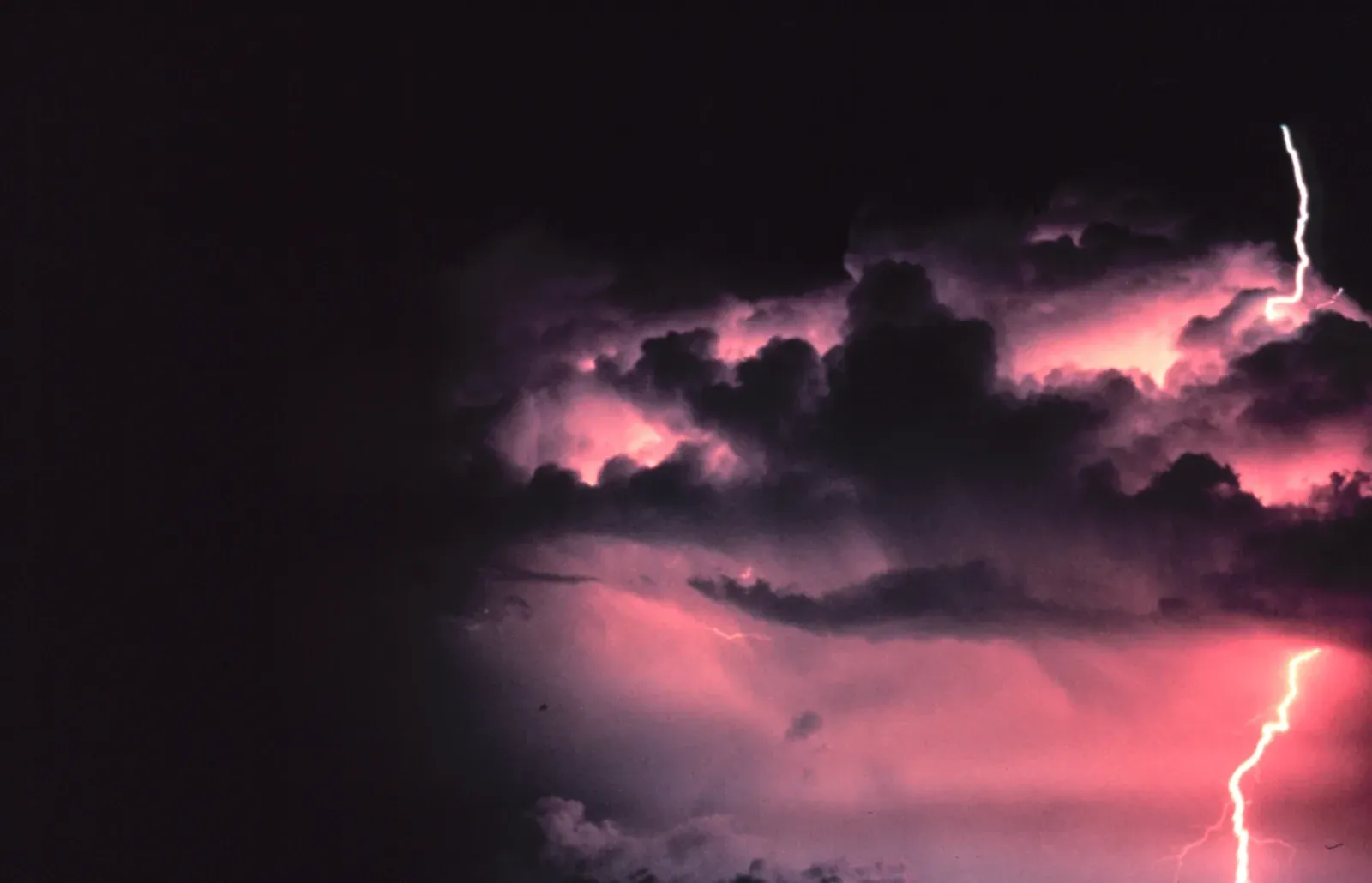
- Cloud-to-ground lightning stroke from a high-based storm near Norman, Oklahoma. Photo: NOAA Photo Library, NOAA Central Library; OAR/ERL/National Severe Storms Laboratory (NSSL) (source), Public domain (US gov).