The US Lightning Capital Is Now Oklahoma, Depending on Who's Counting
By Site Safe Lightning Protection 6 min read
In 2025, Oklahoma took the title of US lightning capital in one major report. AEM, which runs the Earth Networks lightning network, measured about 73 flashes per square mile in Oklahoma against 72.9 in Florida (AEM). Vaisala’s 2025 report, from a different detection network, still ranks Florida first for density, with Oklahoma second. But it named Shady Grove, Oklahoma as the single most lightning-dense place in the country (Vaisala). Texas, meanwhile, recorded the most lightning in total in both reports.
So the honest answer to “which state has the most lightning strikes” depends on what you measure. Here’s how to read the numbers, and why they matter if you own a building in Oklahoma, Texas or Colorado.
Two reports, two answers
Both reports came out on January 5, 2026, and both are built on national lightning detection networks. They count different things.
| AEM (Earth Networks) 2025 | Vaisala Xweather 2025 | |
|---|---|---|
| Unit | Lightning flashes | Lightning events |
| US total | 88.4 million flashes (about 430 million pulses), up 9.8% | 252 million events, up 20% |
| Top state for density | Oklahoma, about 73 flashes/sq mi | Florida, 305 events/sq mi |
| Florida / Oklahoma | Florida 72.9 flashes/sq mi | Oklahoma 253 events/sq mi |
| Hottest local spot | Kay County, OK: 123.4 flashes/sq mi | Shady Grove, OK: 3,005 events/sq mi |
| Texas | More than 13 million flashes, 1.3 million above its average | 47 million events, most of any state |
Sources: AEM report, AEM press release, Vaisala.
A flash is a whole lightning discharge, which can contain several strokes and pulses. That’s why Vaisala’s “event” counts run several times higher than AEM’s “flash” counts. Don’t compare a number from one report with a number from the other. Compare rankings within each report.
Read that way, both reports agree on the big picture. Oklahoma and Florida are neck and neck for density, and in AEM’s data the gap was a tenth of a flash per square mile. Oklahoma has the hottest single spot in both. Texas gets the most lightning overall because it’s so big. Vaisala notes that once you adjust for area, Texas drops out of the top five for density.
Why Oklahoma pulled even with Florida in 2025
AEM’s lightning scientist put it down to the weather pattern: Florida had a drier year, with most Atlantic hurricanes staying away from the US, while Oklahoma had an active severe-weather season (AEM press release). AEM also reported that the six core Great Plains states produced more than a third of all US lightning flashes in 2025, about 2.6 million above their four-year average (AEM).
Vaisala noted that the year’s busiest single day came early. On April 5, 2025, storms produced more than 3 million lightning events in the contiguous US, weeks ahead of the usual May-to-September season (Vaisala).
One year doesn’t make a trend. AEM itself describes Florida as the state that has traditionally dominated the ranking, and with a margin this thin it could easily be back on top in 2026.
Texas: the most lightning, and the most expensive
Texas leads on total volume. AEM also ranked it first for storm intensity, with 9,103 Dangerous Thunderstorm Alerts in 2025, more than twice as many as the next state (Oklahoma) (AEM). Dallas–Fort Worth International logged 17,754 flashes in 2025, more than Atlanta or Chicago O’Hare among the nation’s busiest airports.
The insurance numbers follow. Texas was third in homeowners lightning claims in 2025 with 4,188, but its average claim was $60,382, the highest of the top ten states, for total losses of about $252.9 million (III). For Texas by month and by region, see Texas lightning: when, where and how often it strikes.
Colorado: fewer flashes, more deaths
Colorado doesn’t show up near the top of the density charts, and it’s a mistake to read that as low risk. NWS Pueblo’s figures (NWS Pueblo):
- Colorado ranks 19th in the nation for cloud-to-ground flashes and 32nd for flash density (2009–2018), averaging 4.8 flashes per square kilometer.
- About 500,000 lightning flashes strike the ground in Colorado in an average year.
- Colorado ranks 3rd in lightning deaths for 2006–2024. Only Texas and Florida had more.
- Since 1980, lightning has caused an average of 2 deaths and 12 injuries a year in Colorado, and El Paso County has the most casualties.
Our read of the gap between flash rank and death rank is exposure: much of Colorado is high, open country where people hike, ranch and work outdoors during summer storms. Denver International still logged 6,039 flashes in 2025 (AEM).
Density vs total vs deaths in one table
| State | Density rank 2025 | Total lightning | Lightning deaths | Lightning claims (2025) |
|---|---|---|---|---|
| Oklahoma | 1st (AEM), 2nd (Vaisala) | Not a top-ten claims state | Not reported in these sources | Not in top 10 |
| Florida | 2nd (AEM), 1st (Vaisala) | Not reported in these sources | Most fatalities (III) | 1st by count (5,167) |
| Texas | Outside Vaisala’s top 5 | 1st in both reports | Top two, 2006–2024 (NWS Pueblo) | 3rd by count; highest average ($60,382) |
| Colorado | 32nd (NWS, 2009–2018) | 19th (NWS, 2009–2018) | 3rd, 2006–2024 (NWS Pueblo) | Not in top 10 |
Sources: AEM, Vaisala, NWS Pueblo, III.
What about the lightning capital of the world?
Both companies also map global lightning, but the US title is what drives most searches. Vaisala’s network detected over 2 billion lightning events worldwide in 2025 (Vaisala). For the world’s top hot spots, see the global maps that come with each company’s report.
What the rankings mean for your building
State rankings are averages over huge areas. For any one building, local exposure matters more. The NWS says height, pointed shape and isolation decide where lightning strikes (NWS). A metal shop on open Oklahoma prairie, a tall warehouse in North Texas and a house on a Colorado ridgeline all stand out from their surroundings, whatever their state’s rank.
Some practical takeaways:
- Oklahoma and the southern Plains. Expect a long, active season. Ranches, barns and oil and gas sites are often the tallest thing for miles. Our article on tank battery lightning protection covers production sites.
- Texas. High volume and the highest average claim. Commercial buildings, churches, schools and warehouses carry a lot of value under one roof. See our commercial lightning protection page.
- Colorado. Don’t read a 32nd-place density rank as low risk. Elevation, open terrain and summer storms add up. Our post on commercial lightning protection for Colorado businesses goes further.
Talk to Site Safe Lightning Protection
Site Safe Lightning Protection works on homes, commercial buildings and oil and gas facilities. If you’d like a risk assessment or an inspection of an existing system, contact Site Safe Lightning Protection to ask about your area and your building. For production sites, see our oil and gas facility lightning protection page.
Talk to Site Safe Lightning Protection about your property.
Frequently asked questions
What is the lightning capital of the US?
For 2025, it depends on the report. AEM named Oklahoma the state with the highest lightning concentration (about 73 flashes per square mile, just ahead of Florida's 72.9). Vaisala ranked Florida first for density but named Shady Grove, Oklahoma the most lightning-dense place in the country.
Which state has the most lightning strikes?
Texas, by total count. Vaisala recorded 47 million lightning events in Texas in 2025, and AEM recorded more than 13 million flashes. Texas is so large that it ranks lower once you adjust for area.
Is Florida still the lightning capital?
Florida led Vaisala's 2025 density ranking at 305 events per square mile, and AEM describes it as the traditional leader. In AEM's 2025 report it finished a hair behind Oklahoma.
Does Colorado get a lot of lightning?
About 500,000 flashes hit the ground in Colorado in an average year. The state ranks only 32nd for flash density but 3rd for lightning deaths (2006–2024), according to NWS Pueblo.
Where in Oklahoma gets the most lightning?
In 2025, Vaisala named Shady Grove the most lightning-dense location in the US at 3,005 events per square mile, and AEM named Kay County the top county at 123.4 flashes per square mile.
Sources
- AEM: 2025 United States Lightning Report
- AEM press release: Oklahoma Dethrones Florida as America's Lightning Concentration Capital (Business Wire, Jan 5 2026)
- Vaisala Xweather Annual Lightning Report 2025: U.S. lightning hits eight-year high (Jan 5 2026)
- NWS Pueblo: Colorado Lightning Statistics as Compared to Other States
- Insurance Information Institute: Facts + Statistics, Lightning
- National Weather Service: Lightning Myths
Image credits
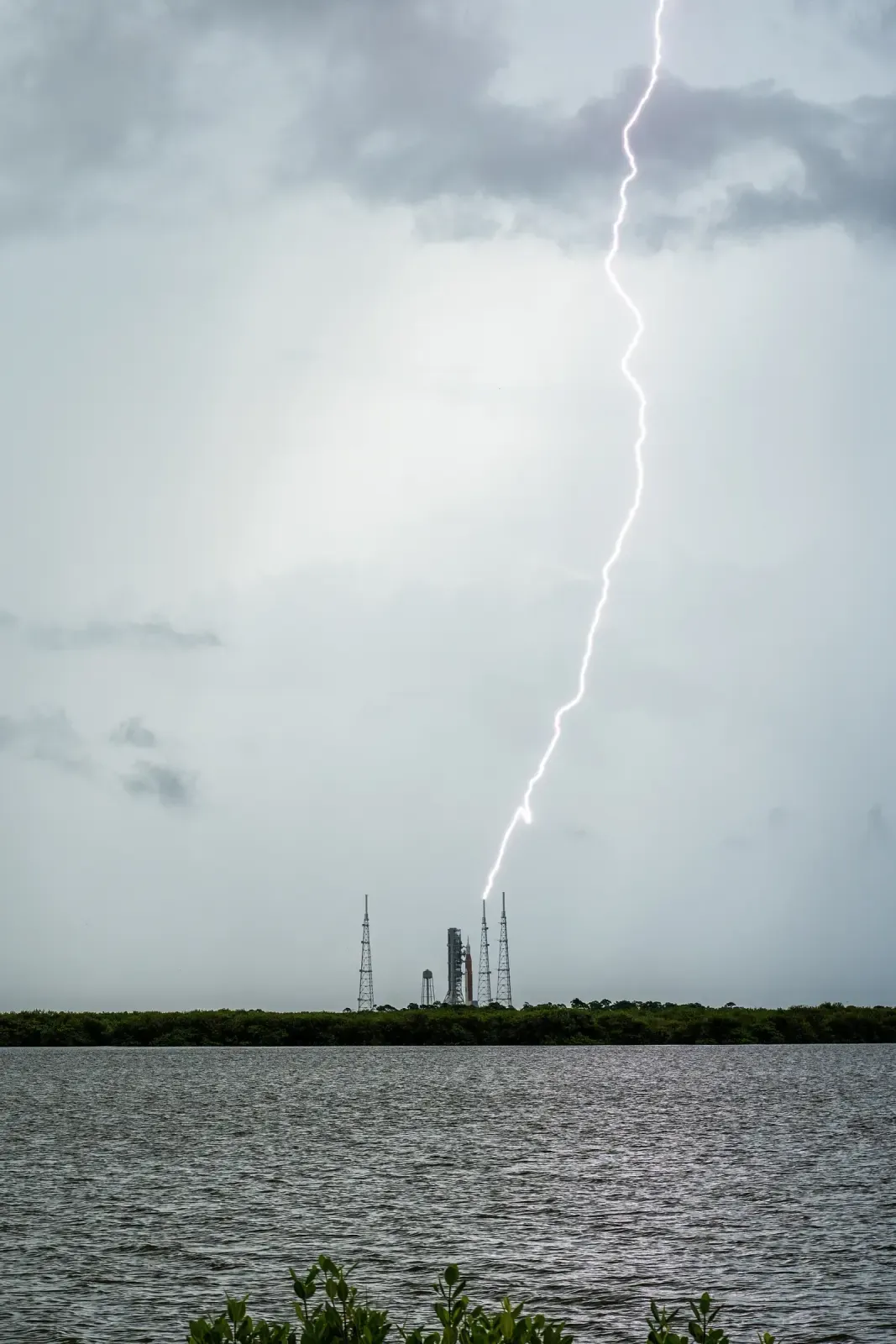
- Cloud-to-ground lightning over Launch Pad 39B at Kennedy Space Center, Florida. Photo: Keegan Barber / NASA via Wikimedia Commons (source), Public domain (US gov).