Do Houses Have Lightning Rods? Why Most Don't, and Which Ones Should
By Site Safe Lightning Protection 8 min read
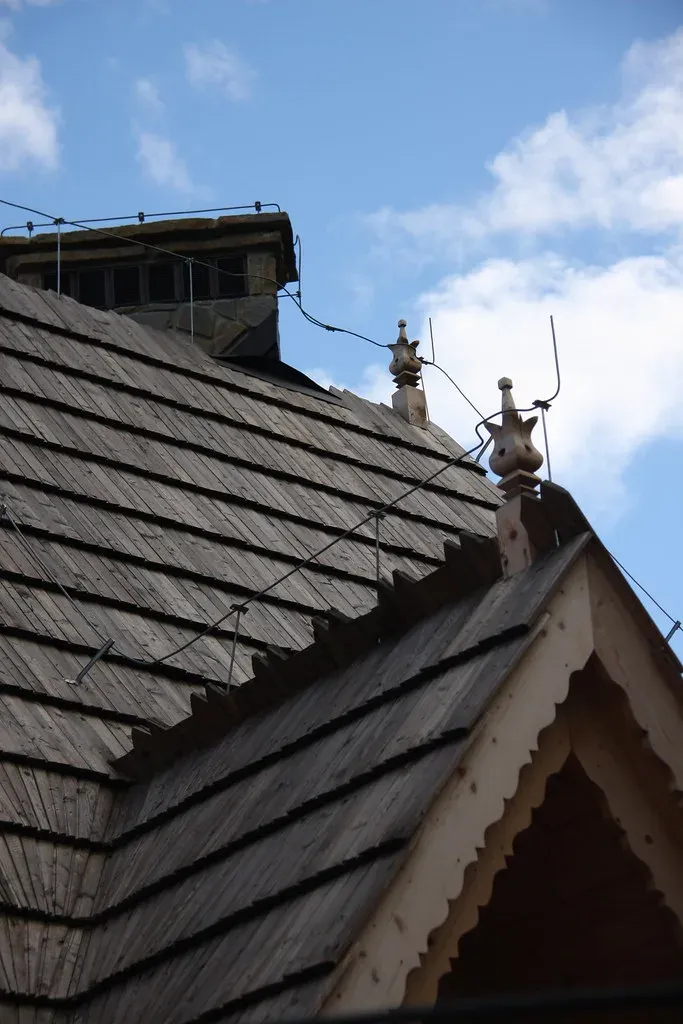
Most houses in the US don’t have lightning rods. Some do: old farmhouses, homes on ridgelines and hilltops, large custom homes, and houses whose owners have already been through a strike. No code requires a system on an ordinary house (is lightning protection required by code?), so a new home only gets one when the owner asks for it. The rods still work. The National Weather Service describes a lightning protection system as protection for a house against a direct strike and the fire that can follow (NWS). Rods faded from houses for reasons of history and habit, and plenty of houses have rods you’ve never noticed.
Why don’t houses have lightning rods anymore?
The lightning-rod salesmen gave them a bad name
In the late 1800s, rods were mostly sold by traveling agents working rural back roads, and enough of them were crooks that the whole trade got a reputation. John Phin, who wrote a book on erecting lightning rods, said in 1879 that the business was a favorite field for “the swindling fraternity.” The common trick was the contract. One 1904 business guide described an agent changing a price of 7 cents a foot to 57 cents after the farmer signed, then adding points and vanes until a job the farmer expected to cost about $28 came to $185. In 1888 a Michigan paper reported two men posing as inspectors sent by an insurance company, who found every rod they “tested” defective and sold replacements at two or three times their value (Ann Arbor Chronicle).
The damage outlasted the salesmen. In January 1921 the NFPA Quarterly reported a Bureau of Standards estimate that no more than 15 or 20 percent of US buildings liable to lightning damage had any protection, and blamed the gap largely on the swindling rod agents of 30 or 40 years earlier (Ann Arbor Chronicle). A North Dakota history piece makes the same point: distrust of the salesmen spread to the rods themselves, even though state fire marshals recommended them. In 1916, unrodded buildings in North Dakota suffered nearly $100,000 in lightning losses while rodded buildings reported none (Prairie Public).
Rods were a farm product, and Americans moved to town
Rods made the most obvious sense on barns and farmhouses that stood taller than anything around them, often miles from a fire company (Prairie Public). As more people moved into towns and suburbs, with neighbors and trees around every house, the risk felt smaller and the habit faded. Trees don’t actually shield a house, though. The Lightning Protection Institute warns that lightning can side-flash from a tree to a nearby building, or follow the roots and jump onto phone, cable and power lines (LPI FAQ).
People assume the electrical system covers it
Some electrical contractors’ pages suggest that grounded outlets and whole-home surge protectors do the job rods used to do. LPI disagrees. It explains that the electrical ground an electrician installs is there for everyday electricity use and was never designed to carry a lightning strike, which LPI says can pack 200 kA. It also says surge protection devices alone aren’t enough, because surge protection is one part of a complete lightning protection system (LPI FAQ). The NWS makes the same point from the other side: a rod by itself doesn’t stop surges coming in on wires, so a complete system needs both (NWS).
Modern rods are hard to spot
Part of the answer is that you don’t notice them. East Coast Lightning Equipment, a US manufacturer, says a typical modern rod is about 12 in tall and 3/8 in in diameter, barely visible from the ground on most roofs. On new construction everything except the rooftop terminals can be run inside the structure (ECLE FAQ). The same manufacturer says more systems are installed now than ever before, partly because buildings now hold so much sensitive electronic equipment.
How often does lightning damage a house?
Not often for any one house, but the total adds up. Insurers paid $1.65 billion on 61,986 lightning claims from US homeowners in 2025, according to the Insurance Information Institute (III).
| Year | Homeowners lightning claims | Value of claims | Average per claim |
|---|---|---|---|
| 2021 | 60,851 | $1.31 billion | $21,578 |
| 2022 | 62,189 | $950 million | $15,280 |
| 2023 | 70,787 | $1.24 billion | $17,513 |
| 2024 | 55,537 | $1.04 billion | $18,641 |
| 2025 | 61,986 | $1.65 billion | $26,616 |
Source: Insurance Information Institute and State Farm.
Texas stands out. It had the third most claims in 2025 (4,188), and its average claim was $60,382, more than twice the national figure (III).
Fire is the expensive outcome. NFPA estimated that from 2004 to 2008, US fire departments responded to about 24,600 lightning-started fires a year, which killed an average of 12 civilians and caused $407 million in direct property damage annually. Only 18% of those fires were in homes, but home fires caused most of the losses (NFPA, Evarts 2010).
Do lightning rods work on houses?
Yes, as part of a full system. A rod doesn’t attract lightning. LPI’s FAQ says the rods intercept a strike that was coming anyway and give it a path to ground through conductors made for the job (LPI FAQ). A real system has air terminals on the roof, conductors with at least two paths down, ground electrodes, bonding to the home’s other metal systems, and surge protection. Our article on how lightning rods work covers the physics.
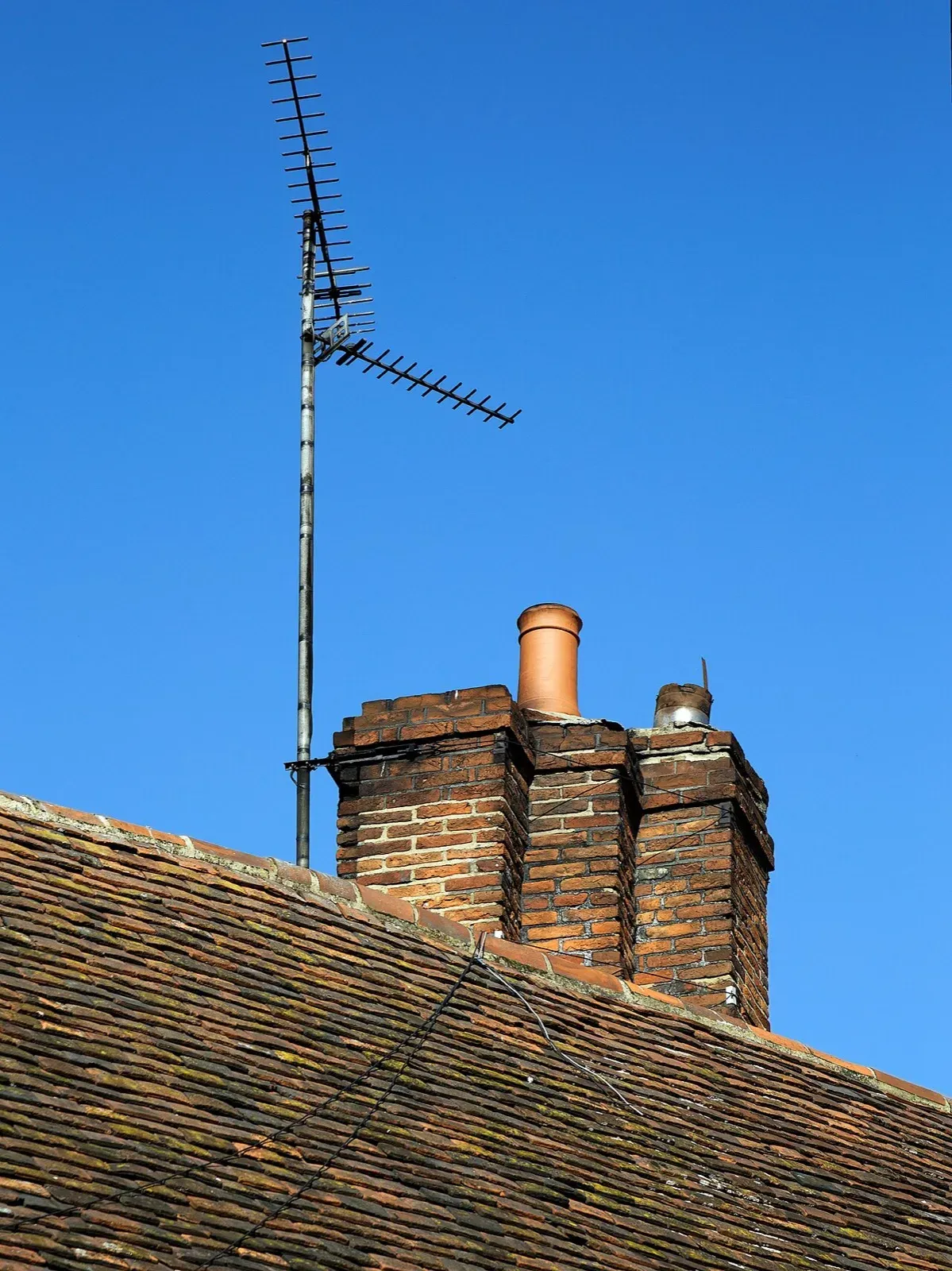
What doesn’t work is half a system. LPI warns that a single grounded weather vane, antenna or cupola gives lightning one path that can’t carry the current, and that this partial protection can be more dangerous than none at all (LPI FAQ). A lone rod bought online and wired to a stake falls into the same category.
Which houses should have lightning rods?
No single rule decides it. NFPA 780 includes a risk assessment method that weighs the building, its surroundings and what’s inside, and our lightning risk assessment guide walks through it. In plain terms, these are the conditions that move a house toward “yes”:
| Condition | Why it matters |
|---|---|
| High lightning density | Oklahoma had 253 lightning events per square mile in 2025, second only to Florida, and Texas logged 47 million events, the most of any state (Vaisala) |
| Taller than its surroundings | A house on a ridge, a hilltop or open land is the high point the way an old barn was (Prairie Public) |
| Tall trees close to the walls | Side-flash from the tree, and current that follows roots onto incoming lines (LPI FAQ) |
| A grounded antenna, mast or weather vane with no system | Partial protection that LPI calls more dangerous than none (LPI FAQ) |
| Long fire response time | Lightning fires in homes cause most of the losses (NFPA), and a rural house waits longer for help |
| Expensive electronics or a home office | Surges come in on power, phone and data lines; the NWS recommends surge protection on all of them (NWS) |
On cost, LPI says systems generally run less than 1% of a structure’s value, and that insurers often consider them for credits, so ask your agent (LPI FAQ). Our lightning rod installation cost guide has typical ranges.
What if your house already has old lightning rods?
Keep them, but get them checked. Decades of roof work, rewiring and dish installs can disconnect parts of an old system without anyone noticing, which is why LPI recommends a maintenance inspection after roof work, electrical updates, satellite dish installations, HVAC changes, or service work on the cable or phone lines (LPI FAQ). If your rods carry colored glass balls, those were mostly decoration, and the rod under them needs the same checks as any other.
Talk to Site Safe Lightning Protection
Site Safe Lightning Protection designs and installs lightning protection for homes, detached garages and other outbuildings, and inspects systems that are already on the roof. If you’re deciding whether your house needs one, or want an old system checked, contact Site Safe Lightning Protection or read about our residential lightning protection services.
FAQ
Are lightning rods still used on houses?
Yes. They’re less common on houses than they were on 19th-century farms, but they are still installed on new and existing homes. Modern rods are small and the conductors can be hidden inside new construction, so many people don’t notice them.
Why don’t new houses come with lightning rods?
Building codes don’t require a lightning protection system on an ordinary house, so builders leave it out unless the owner asks. It’s easiest and cheapest to add during construction, when conductors can run inside the walls.
Do lightning rods attract lightning to a house?
No. LPI says rods intercept a strike that was going to hit the house anyway and carry it to ground. They don’t make a strike more likely.
Is a whole-house surge protector a substitute for lightning rods?
No. A surge protector handles surges that arrive on wires. It does nothing for a direct strike to the roof. LPI treats surge protection as one part of a complete lightning protection system.
Will lightning rods lower my homeowners insurance?
Sometimes. LPI says insurers often consider lightning protection systems for credits, but policies vary by company. Ask your agent before you install.
Talk to Site Safe Lightning Protection about your property.
Frequently asked questions
Are lightning rods still used on houses?
Yes. They're less common on houses than they were on 19th-century farms, but they are still installed on new and existing homes. Modern rods are small and the conductors can be hidden inside new construction, so many people don't notice them.
Why don't new houses come with lightning rods?
Building codes don't require a lightning protection system on an ordinary house, so builders leave it out unless the owner asks. It's easiest and cheapest to add during construction, when conductors can run inside the walls.
Do lightning rods attract lightning to a house?
No. LPI says rods intercept a strike that was going to hit the house anyway and carry it to ground. They don't make a strike more likely.
Is a whole-house surge protector a substitute for lightning rods?
No. A surge protector handles surges that arrive on wires. It does nothing for a direct strike to the roof. LPI treats surge protection as one part of a complete lightning protection system.
Will lightning rods lower my homeowners insurance?
Sometimes. LPI says insurers often consider lightning protection systems for credits, but policies vary by company. Ask your agent before you install.
Sources
- National Weather Service: Lightning Rods and Lightning Protection Systems
- Lightning Protection Institute: FAQ
- The Ann Arbor Chronicle: In the Archives, Lightning Rod for Swindles (Laura Bien, 2013; quotes Phin 1879, Roe 1904, NFPA Quarterly 1921)
- Prairie Public, Dakota Datebook: Lightning Rods on Barns (Dr. Steve Hoffbeck, MSU Moorhead)
- East Coast Lightning Equipment: Common Questions About Lightning Protection
- Insurance Information Institute: Facts + Statistics, Lightning
- NFPA: Lightning Fires and Lightning Strikes (Ben Evarts, December 2010)
- Vaisala Xweather Annual Lightning Report 2025: U.S. lightning hits eight-year high (Jan 5 2026)
- Wikipedia: Lightning rod (decorative glass balls, 19th century)