What Attracts Lightning? What Really Decides Where It Strikes
By Site Safe Lightning Protection 6 min read
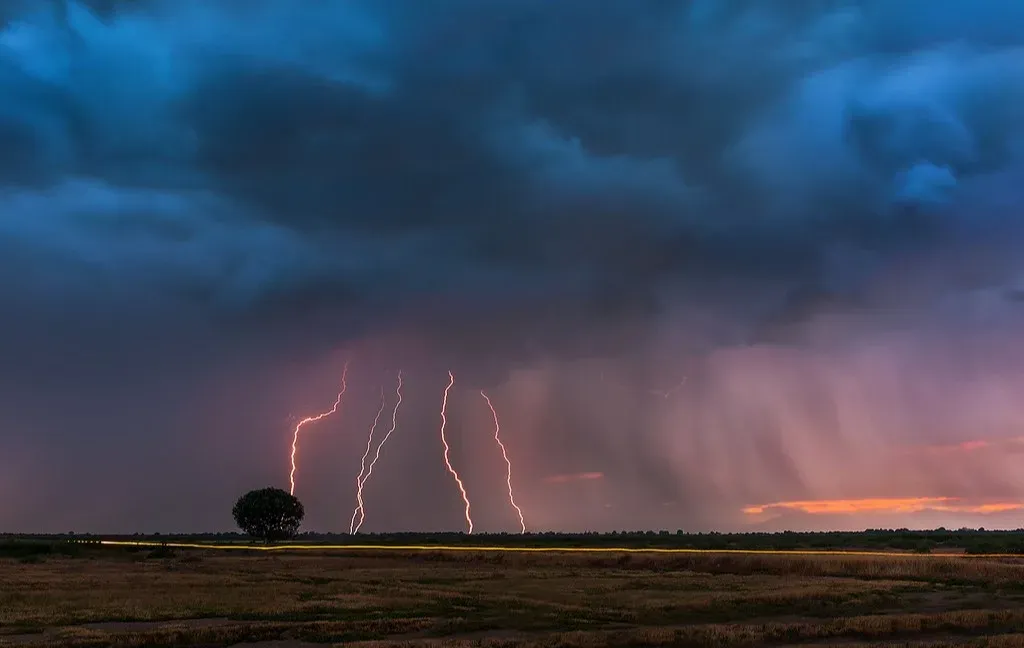
Lightning isn’t drawn to metal, water or any particular roof. What decides where it hits is height, a pointed shape and isolation. The National Weather Service calls those “the dominant factors controlling where a lightning bolt will strike,” and says the presence of metal makes no difference at all (NWS). Tall, pointed things standing on their own get hit, and so do the tallest things in a crowd.
That matters for buildings because the first two factors are hard to change. A farmhouse on a rise, a steeple, a tank on an open lease and an office tower are all tall or isolated by design. What an owner can change is where the current goes once it arrives.
How lightning picks a target
A cloud-to-ground flash starts as a stepped leader, a branching channel of charge that works its way down from the cloud. As it gets close, the electric field at the ground gets stronger. The field is strongest on grounded objects whose tops sit closest to the cloud base, such as trees and tall buildings. When it’s strong enough, those objects send up streamers of opposite charge (Wikipedia). NOAA’s National Severe Storms Laboratory explains it this way: opposites attract, so an upward streamer goes out from the object about to be struck (NSSL).
Several objects can send up streamers at once. The leader connects with one of them, the channel is complete, and the charge rushes to ground. The whole process takes a fraction of a second (NWS). Photographs have caught streamers that never connected (Wikipedia).
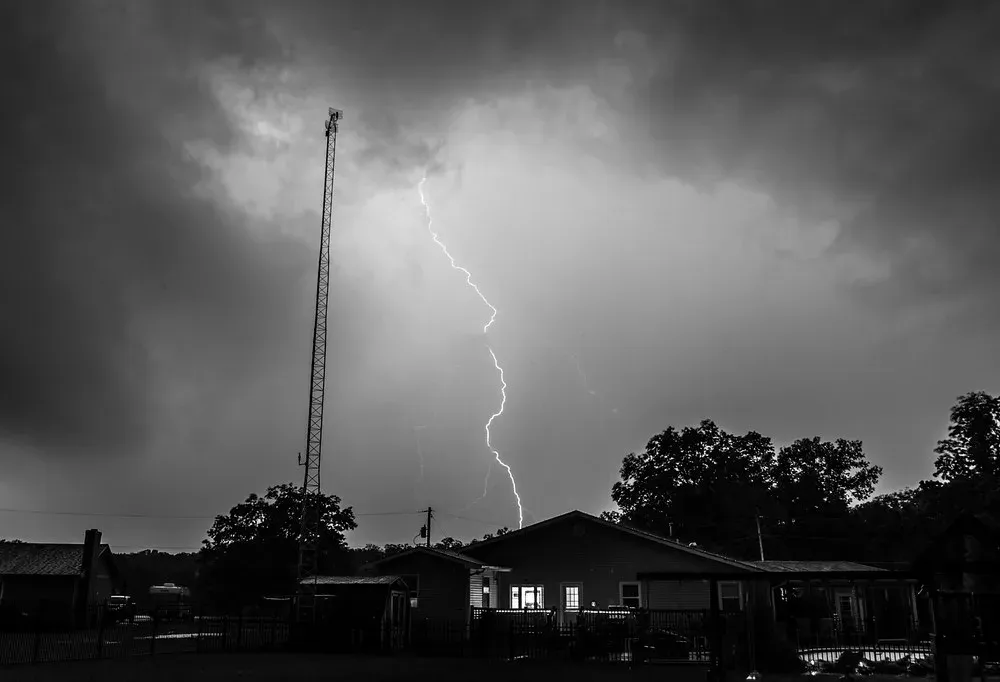
In other words, lightning goes to the object whose streamer meets the leader first. Taller objects are more likely to send up that channel, so the NSSL says lightning usually strikes the tallest object, while warning “never say always” (NSSL). In the photo above, the tower is the tallest thing in the frame and the flash came down somewhere else.
Height, shape and isolation
| Factor | Why it matters | Typical targets |
|---|---|---|
| Height | The top sits closer to the cloud base, where the field is strongest | Towers, tall buildings, steeples, tall trees, homes on ridges |
| Pointed shape | The NWS lists a pointy shape among the dominant factors | Spires, chimneys, antennas, flagpoles, cupolas |
| Isolation | Nothing taller nearby to send up a competing streamer | A lone tree in a pasture, a barn, a tank battery on open ground, a person in an open field |
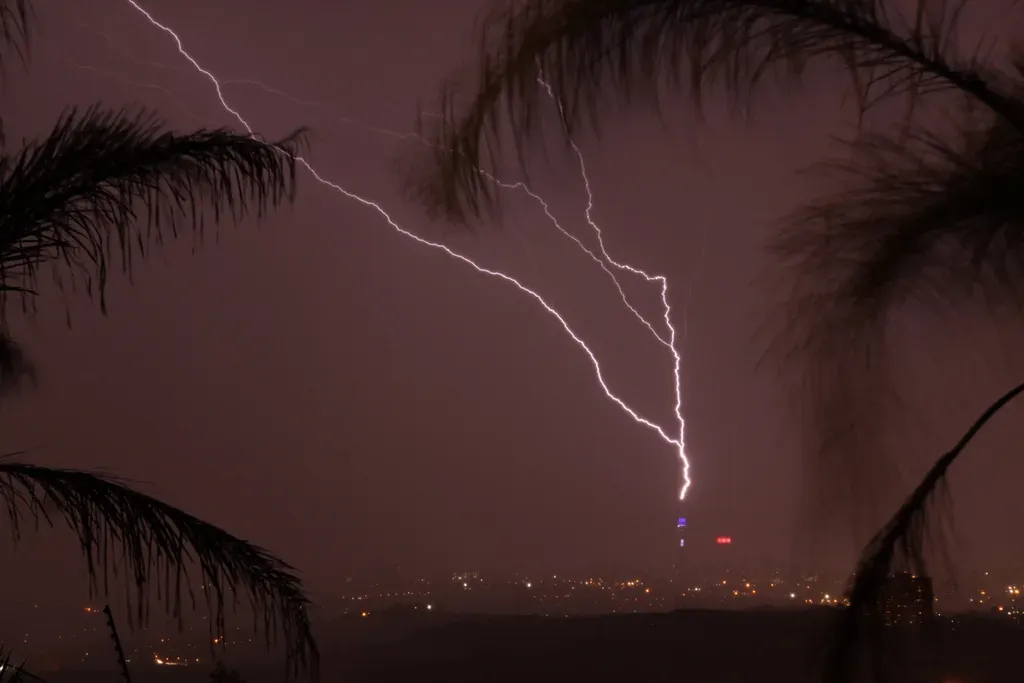
The same targets get hit repeatedly. The NWS says lightning often strikes the same place again and again, especially a tall, pointy, isolated object. The Empire State Building is hit an average of 23 times a year (NWS). Very tall structures can even start the flash themselves. The NWS says upward discharges almost always come from towers, tall buildings or mountaintops (NWS).
Does metal attract lightning?
No. The NWS answer is plain: metal doesn’t attract lightning, and trees and mountains with little or no metal are struck many times a year (NWS). Taking off a watch or a ring won’t change your odds.
Metal does conduct lightning, though, and that’s where it matters. The NWS tells people to stay away from metal fences, railings and bleachers during a storm (NWS). The NSSL notes that lightning current can travel even farther through water, metal fences, power lines and plumbing (NSSL).
Some weather sites still list a metal roof as something that raises a home’s risk. The NWS statement above covers roofs too, and our post on whether metal roofs attract lightning goes through the details. Where a metal roof matters is after a strike, because the current can spread along it to the gutters, pipes and wires it touches.
That’s why bonding is part of every lightning protection design. The National Weather Service’s own grounding manual requires metal bodies to be bonded to the lightning protection system wherever a side flash could jump between the system’s conductors and the metal, following NFPA 780 (NWSM 30-4106).
Does water attract lightning?
Water doesn’t pull lightning in either. The risk on a lake, beach or pool deck comes from isolation. A person standing in open water or on a flat beach is often the tallest thing around. Water also carries current away from the strike point, and the NSSL lists water among the paths that let current travel farther (NSSL). Our post on lightning striking a pool covers what happens next.
Do trees attract lightning?
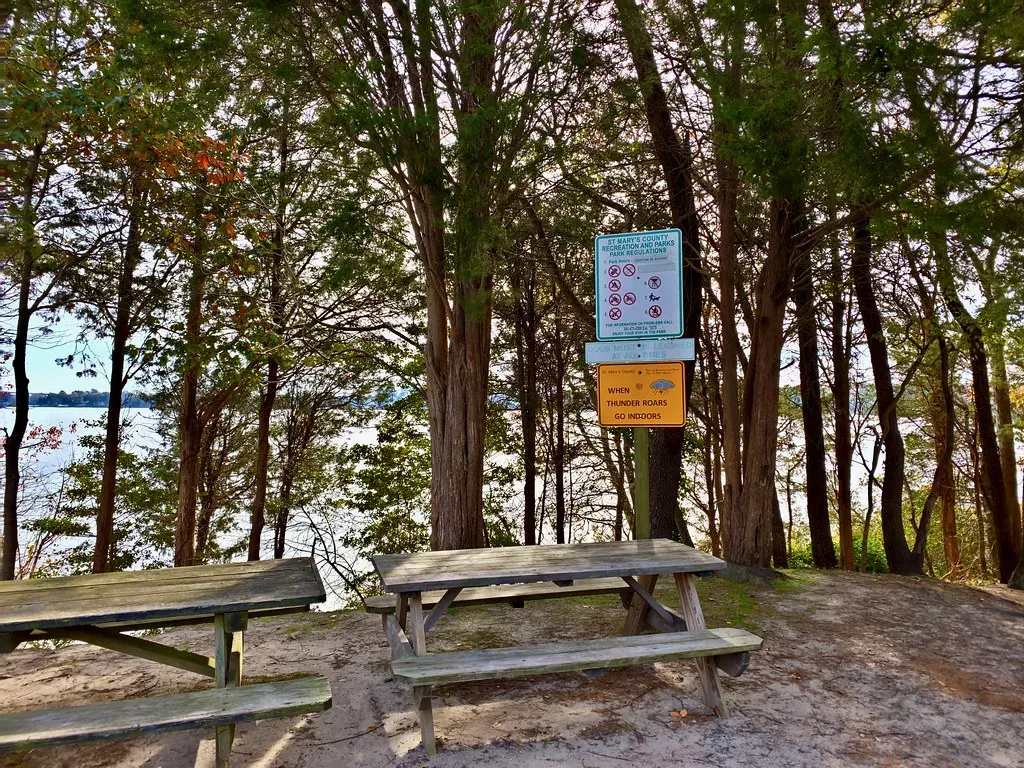
Trees get hit because they’re tall and often stand alone, and they’re a dangerous place to shelter. The NWS says being under a tree is the second leading cause of lightning casualties (NWS). A big tree close to a house is also a building question, which we cover in tree lightning protection.
What attracts lightning to a house
A house gets hit for the same reasons a tower does, just on a smaller scale. These are the questions we’d ask about any building:
- Is it taller than what’s around it, or the only building on open land?
- Does it sit on a hill, ridge or bluff?
- Does it have a tall chimney, cupola, antenna, flagpole or rooftop equipment sticking up above the roofline?
- Is there a tall tree within reach of the walls?
- Is it in a high lightning area?
Flash density is measured. In AEM’s 2025 lightning report, Oklahoma had the highest flash concentration in the country at about 73 flashes per square mile, just ahead of Florida, and Texas had the most lightning in total (AEM). A tall, isolated building in that part of the country is struck more often than the same building somewhere quieter.
None of these questions decides on its own whether a building needs protection. A risk assessment weighs them together with what’s inside and who uses the building. Our lightning risk checklist walks through the same factors.
What a lightning protection system changes
A lightning protection system doesn’t stop a building being struck. The NWS says these systems “do not prevent lightning from striking the structure.” Instead, they intercept the strike, give it a conductive path and disperse the energy into the ground (NWS).
Designers use the same height and shape logic described above to decide where air terminals go. NFPA 780’s rolling sphere method imagines a ball 150 feet in radius rolled over the building. Anywhere the ball touches is a point lightning could reach, so it needs a strike termination device (NWSM 30-4106). In practice, air terminals end up on the ridges, chimneys, corners and other high, pointed spots that would be hit anyway. Our rolling sphere method post works through examples.
A complete system also covers the paths lightning takes into a building besides the roof. The NWS recommends surge protection for incoming power, data and communication lines, and notes that gas piping may need attention too (NWS).
If your home or business stands taller than its neighbors, sits alone on open ground or has tall features above the roofline, contact Site Safe Lightning Protection. We design and install lightning protection systems for homes, commercial buildings and oil and gas facilities, and inspect systems that are already in place. Start with our residential lightning protection page or contact Site Safe Lightning Protection to talk through your building.
Talk to Site Safe Lightning Protection about your property.
Frequently asked questions
What attracts lightning the most?
Height, a pointed shape and isolation. The National Weather Service calls these the dominant factors in where lightning strikes. Tall, pointed objects that stand alone, like towers, steeples and lone trees, are struck most often.
Does metal attract lightning?
No. The NWS says metal makes no difference to where lightning strikes. Metal does conduct lightning, so stay away from metal fences, railings and bleachers in a storm, and make sure metal on a building is bonded to its lightning protection system.
Does lightning always strike the tallest object?
Usually, but not always. NOAA's National Severe Storms Laboratory says lightning usually strikes the tallest object because taller objects are more likely to send up the upward streamer that connects with the descending leader.
What attracts lightning to a house?
Height above the surroundings, an exposed site such as a hilltop or open land, tall features like chimneys and antennas, nearby tall trees and the local flash density. A metal roof doesn't raise the odds of a strike.
Do lightning rods attract lightning?
A lightning protection system doesn't make a strike more likely. The NWS says it can't prevent a strike either. It intercepts a strike that would have hit the building anyway and carries the current safely to ground.
Sources
- National Weather Service: Lightning Myths
- NOAA National Severe Storms Laboratory: Lightning FAQ
- Wikipedia: Lightning (upward streamers and attachment)
- National Weather Service: Lightning Science, Upward Leaders/Discharges
- National Weather Service: Lightning Science, Making a Connection With the Ground
- National Weather Service: Lightning Rods
- National Weather Service Manual 30-4106: Lightning Protection, Grounding, Bonding, Shielding, and Surge Protection Requirements (April 25, 2017)
- AEM: 2025 United States Lightning Report
Image credits
- Cloud-to-ground lightning bolt coming down beside a tall lattice radio tower behind a row of single-story houses. Photo: Eje Gustafsson / Flickr (cropped to remove the photographer's side caption) (source), CC BY 2.0, resized.
- Branching lightning bolt striking the top of the Hillbrow telecommunications tower above the Johannesburg city lights at night. Photo: Derek Keats / Flickr (source), CC BY 2.0, resized.