What Happens When Lightning Strikes a Pool, and When to Get Out
By Site Safe Lightning Protection 8 min read
When lightning strikes a pool, or the ground and pipes around it, the current spreads through the water, along the deck and into metal that connects to the pool. A swimmer doesn’t need to be hit directly to be hurt. The National Weather Service lists ground current and conduction through metal and plumbing among the ways lightning injures people, and says ground current causes the most lightning deaths and injuries (NWS). The rule for pools is simple: get out at the first thunder and stay out until 30 minutes after the last.
Does a pool attract lightning?
No more than the ground around it does. The NWS says water and metal do not attract lightning, but they are excellent conductors of electricity (NWS outdoors). The problem with a pool is everything else about it. An outdoor pool sits in an open area, people in it are wet and in contact with water, and the NWS is blunt that there is no safe place outside when thunderstorms are in the area (NWS outdoors).
A pool is also wired into a much bigger system. The National Lightning Safety Institute points out that pools connect to a large area through underground water pipes, gas lines, and electric and telephone wiring, and a strike anywhere on that metal network may cause shocks somewhere else (NLSI). The bolt can land on the pump house or a nearby tree and still reach the water.
What happens if lightning strikes a pool?
The NWS describes five ways lightning reaches people. Four of them matter at a pool:
| Mechanism (NWS) | What it looks like at a pool |
|---|---|
| Direct strike | Someone on an open deck or in the water becomes part of the main channel. The most deadly type. |
| Side flash | Lightning hits something taller nearby, such as a tree, light pole or lifeguard stand, and part of the current jumps to a person close to it. |
| Ground current | Current spreads outward along the ground and through the water from the strike point. |
| Conduction | Current travels along metal and plumbing and reaches anyone touching a ladder, rail or wet surface tied to it. |
The four mechanisms are the NWS’s (NWS); the pool examples apply them.
So the honest answer to “if lightning strikes a pool, will you die?” is that it depends on where you are and what you’re touching, and nobody can predict it. That’s why the guidance is to be out of the water before the storm arrives.
A Colorado pool that took a hit
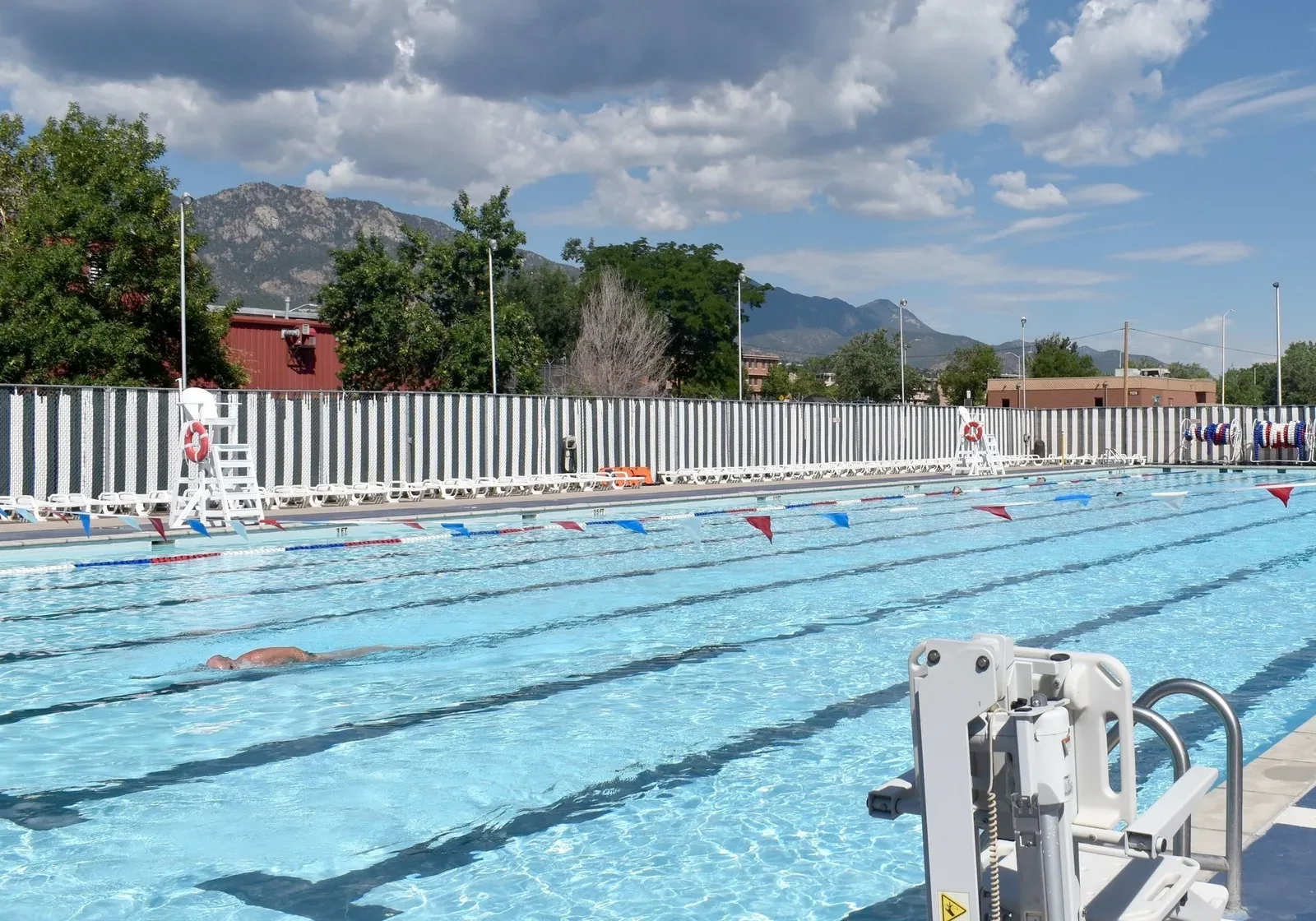
On July 6, 2022, lifeguards at the Ellis Outdoor Pool on Fort Carson, south of Colorado Springs, watched storm clouds come over Cheyenne Mountain. Their weather app showed lightning 15 miles away, and they started getting ready to clear the pool. While one lifeguard was on the phone with the weather center, lightning struck 3 miles away, and they ordered everyone out. They had the area empty within about five minutes. A family that was slow to leave was still in the pool area when lightning struck the pool. Nobody was hurt (Fort Carson Public Affairs via DVIDS).
The storm went from 15 miles out to a strike on the pool in the time it took to clear the deck, and the lifeguards moved on the first nearby strike instead of waiting to see what the storm did. We cover the Front Range storm season in Colorado monsoon season and lightning.
How often are swimmers killed by lightning?
Rarely, but water activities as a group are near the top of the list. The National Lightning Safety Council counted 418 US lightning deaths from 2006 through 2019. Leisure activities accounted for 62% of them, and water-related activities made up 35% of the leisure deaths. Within the water group, fishing was 44%, boating 20%, beach activities about 28% and swimming about 8%. More than 70% of all the deaths happened in June, July and August (NLSC analysis).
The report doesn’t separate pools from lakes and oceans, so it can’t tell you how many of those swimmers were in a backyard pool. What it does show is that people die near water in the same summer months that pools are full.
Is an indoor pool safe in a thunderstorm?
Not automatically. NLSI’s guidance covers indoor and outdoor pools together, because both connect to the same buried network of pipes and wiring (NLSI). The NWS tells people indoors to avoid plumbing during a storm, including showering and washing dishes, because lightning can travel through a building’s electrical, phone and plumbing systems (NWS indoors). An indoor pool is a large body of water tied to that same plumbing. If you wouldn’t take a shower during the storm, the same reasoning applies to the indoor pool. Our article on showering during a thunderstorm explains how lightning gets into plumbing.
When to get out and when it’s safe to swim again
The two common rules differ. The NWS rule is stricter and needs no counting:
- NLSI’s flash-to-bang method: count the seconds between the flash and the thunder. Every five seconds is about a mile. NLSI says to clear the pool at a count of 30, which is about six miles, and to keep it closed until 30 minutes after the last thunder (NLSI).
- The NWS first-thunder rule: if you can hear thunder, you are likely within striking distance. The NWS says bolts from the blue can strike 10 to 15 miles from the storm, and to wait 30 minutes after the last rumble before going back out (NWS myths; NWS outdoors).
NLSI’s slogan covers both: “If you can see it, flee it; if you can hear it, clear it.” For a backyard pool, that means one adult watches the sky and has the authority to call everyone in. For a community or HOA pool, the lifeguards or staff should have the same rule written down.
Pool bonding is not lightning protection
Many owners assume the pool is “grounded” and therefore protected. The bonding the electrical code requires around a pool does a different job. Since the 2008 National Electrical Code, section 680.26(B)(2) has required an equipotential bonding grid under the walking surface, extending at least 3 ft out from the pool. It can be rebar, wire mesh, a grid of No. 8 copper, or a single No. 8 bare copper conductor run 18 to 24 in from the pool edge. North Carolina’s fire marshal explains the purpose: bond all the metal and surrounding surfaces together so there’s no difference in potential between them, giving stray voltage a path to earth (NC OSFM).
That grid is designed around the electrical system’s stray voltage. It isn’t an air terminal system, and it isn’t sized or laid out to carry a lightning strike to ground. For the difference between the two ideas, see grounding vs bonding in lightning protection.
Protecting the buildings around a pool
A lightning protection system protects buildings, not swimmers. It can still matter around a pool. Pool houses, cabanas and equipment sheds are outbuildings, and a strike to one can start a fire or send current into the pipes and wiring that run to the pool.
When a house or outbuilding has a lightning protection system, UL’s application guide calls for its grounds to be bonded to the electrical service grounding electrode system and to metal water piping, gas piping and other underground metal, including well casings within 25 ft of the structure (UL guide). That bonding keeps the systems at the same potential so current doesn’t jump between them. Pumps, heaters and control boards are on the home’s electrical service, and the NWS notes that a complete system also needs surge protection on power, data and communication lines (NWS).
A short list for pool owners and operators:
- Make someone responsible for watching the weather whenever the pool is in use.
- Clear the water and the deck at the first thunder, and move people indoors, not under a patio umbrella or a pool shelter.
- Keep the pool closed until 30 minutes after the last thunder, and restart the clock if it thunders again.
- Treat an indoor pool like any other plumbing during a storm.
- Have an electrician check that the pool’s bonding is intact after any work on the deck or equipment.
- If the pool house, cabana or main house is tall, isolated or holds expensive equipment, ask about a lightning protection system for those buildings.
Ask us about the buildings around your pool
Site Safe Lightning Protection designs and installs lightning protection systems for homes, detached garages and other outbuildings, and inspects and maintains existing systems. If you want to know whether your house or pool house needs a system, or whether an existing one is still bonded correctly, contact Site Safe Lightning Protection. Our residential lightning protection page explains how a home system is planned. Pool bonding and equipment wiring are electrical work for a licensed electrician.
Talk to Site Safe Lightning Protection about your property.
Frequently asked questions
If lightning strikes a pool, will you die?
Not necessarily, but you can be badly hurt or killed without a direct hit. Current spreads through the water and ground and along connected metal. The NWS says ground current causes the most lightning deaths and injuries. Get out of the water at the first thunder.
Can lightning strike an indoor pool?
Lightning can reach an indoor pool through the building's plumbing and wiring, which connect to the pool. The NWS advises avoiding plumbing indoors during a storm, and NLSI's pool guidance covers indoor pools as well as outdoor ones.
How long after thunder can you go back in the pool?
Wait 30 minutes after the last thunder you hear. Both the NWS and the National Lightning Safety Institute use that rule. If you hear thunder again, start the 30 minutes over.
Does pool bonding protect against lightning?
No. The NEC 680.26 bonding grid ties the pool's metal and deck together so there's no difference in potential from stray electrical voltage. It isn't designed to carry a lightning strike. A lightning protection system on nearby buildings is a separate system.
How far away does lightning have to be before swimming is safe?
There's no safe distance you can count on while you can hear thunder. The NWS says lightning can strike 10 to 15 miles from the storm, and if you hear thunder you are likely within striking distance.
Sources
- National Lightning Safety Institute: Indoor/Outdoor Swimming Pool Safety, Section 4.7 (March 5, 2012; copy hosted by the City of Lincoln, NE)
- DVIDS / Fort Carson Public Affairs: Weather safety at pool (Norman Shifflett, 2022)
- National Weather Service: How Lightning Strikes People
- National Weather Service: Lightning Safety Outdoors
- National Weather Service: Lightning Myths
- National Weather Service: Lightning Safety When Inside
- National Lightning Safety Council (J. Jensenius): A Detailed Analysis of Lightning Deaths in the United States from 2006 through 2019
- NC Office of the State Fire Marshal: Swimming Pool Equipotential Bonding Grid, NEC 680.26(B)(2) interpretation (2009)
- UL: Lightning Protection Marking and Application Guide (2016, archived copy)
- National Weather Service: Lightning Rods and Lightning Protection Systems
Image credits
- Outdoor lap pool at Fort Carson, Colorado, with lifeguard stands and clouds building over the mountains behind it. Photo: Norman Shifflett, Fort Carson Public Affairs Office / DVIDS (source), Public domain (US gov).