Ufer Ground and Lightning Protection: What a Footing Can Do
By Site Safe Lightning Protection 7 min read
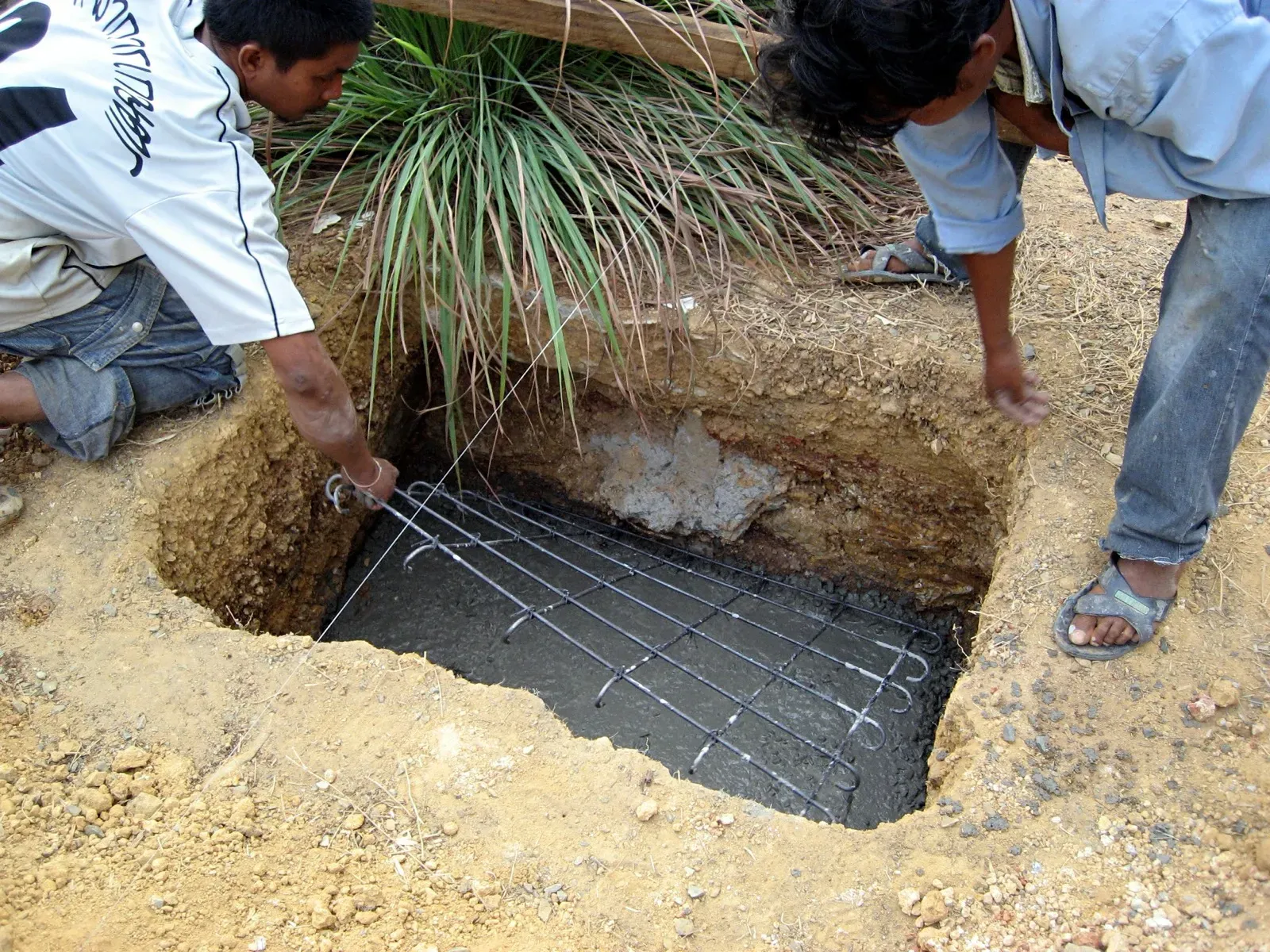
A Ufer ground is a grounding electrode cast inside a concrete footing or foundation, usually rebar or a length of bare copper. It earned its name from Herbert Ufer, who developed it during World War II. For lightning protection it is a legitimate option, but only in new construction, only if it meets the length and cover rules, and only if someone plans it before the concrete truck arrives.
Most guides to the Ufer ground are written for electricians who are grounding a service panel. This one covers the other side: what a footing electrode does for a lightning protection system, what the standards say about it, and what to settle with your builder before the pour.
What is a Ufer ground?
A Ufer ground is a concrete-encased electrode. The National Electrical Code uses that name and does not use “Ufer.” Wikipedia’s history says Ufer was a consultant to the US Army in 1942, tasked with grounding bomb storage vaults in the Arizona desert, where dry soil made ordinary rods impractical. Concrete turned out to conduct better than most soil, and the method was written into the NEC in 1968. In 1978 the NEC began allowing 1/2 inch rebar as the electrode (Wikipedia: Ufer ground).
Concrete works because it is alkaline and holds moisture. That gives it a supply of ions, and the soil right around a buried slab picks up some of that alkalinity too, which lowers its resistance. The concrete also gives the steel a much larger contact area with the earth than a bare rod has.
Wikipedia adds one habit worth knowing: on slab foundations the builder often brings one end of the rebar up out of the concrete as an easy connection point.
Does a Ufer ground count as lightning protection?
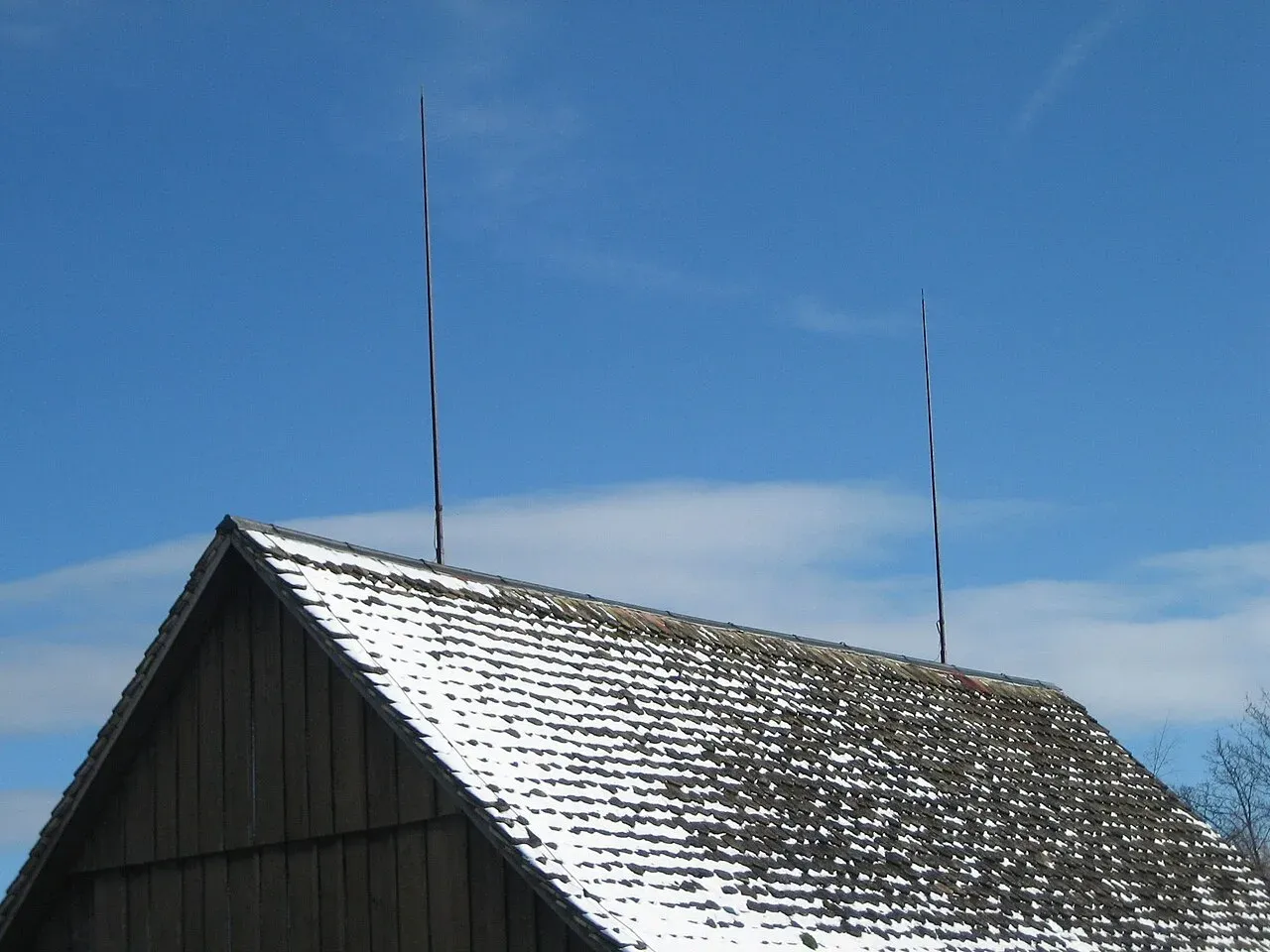
Not by itself. A lightning protection system is air terminals on the roof, conductors that carry current down the structure, and a grounding electrode at the bottom of each down conductor. A footing electrode is one possible answer to that last piece. It is not the system.
UL’s Lightning Protection Marking and Application Guide lists the grounding electrodes a lightning system may use. The concrete-encased option comes with conditions (UL guide):
- It can only be used in new construction.
- It is either 20 feet of conductor the same size as the main conductor, or at least 20 feet of #4 (1/2 inch) rebar.
- It sits in at least 2 inches of concrete.
- Rebar pieces that are spliced in the footing must overlap at least 20 rod diameters, tied with wire or welded.
NFPA 780 says nearly the same thing. The 2023 text of section 4.12.3.2, as quoted in a public comment on the standard, calls for at least 20 feet of bare copper conductor, or at least 20 feet of one or more bare or conductive-coated steel bars of 1/2 inch diameter or more. The bars must be effectively bonded together by welding, a structural mechanical coupling, or overlapping 20 diameters and wire tying (NFPA 780 public comment report). Confirm the section number against the edition your jurisdiction has adopted.
The electrical code’s rule and the lightning rule overlap, but they have different jobs. The electrical grounding electrode is sized for fault current on household circuits. The lightning electrode serves a down conductor. Penn State’s engineering course describes the two as separate systems that are bonded together, not shared (Penn State AE 868). We explain that bond in grounding vs bonding in lightning protection.
How a footing electrode fits one down conductor
Every structure needs at least two down conductors, and each needs its own ground termination (LPI model specification). On a house with a continuous footing, rebar in the footing near each down conductor can serve as that termination, if it meets the length and cover rules above.
That is where the plan has to match the drawings. A down conductor on the northeast corner needs rebar at the northeast corner. If the only qualifying steel is on the south wall, the electrode is in the wrong place. The same LPI specification says ground terminations must suit the soil conditions, so a footing electrode is judged against the lot, not just the footing.
Two practical limits apply:
- Aluminum can’t go in the concrete. Both UL and LPI say aluminum lightning protection materials must not be embedded in concrete or masonry. The conductor that connects to footing steel is copper.
- The connection point has to survive the build. A stub of rebar or a copper tail cast into the wall has to be exposed where the down conductor will land, and it has to be protected from the framing crew.
Four things the electrical guides skip
The footing is hidden once it is poured. LPI’s sample specification says its certification requires an owner’s representative to sign off on the concealed in-ground system, plus photo documentation of the buried parts. If the rebar electrode will be photographed and checked, that has to happen before the concrete covers it.
Steam can crack concrete. Wikipedia notes the drawback that moisture in concrete can flash to steam during a lightning strike or a similar high-energy fault, cracking the surrounding concrete. It is one reason a design should not rest on a single footing corner. Engineers differ on how much the risk matters, so ask your designer how the footing electrode is meant to share current with the other grounds.
Steel in concrete carries current inside the house. The National Weather Service says lightning can travel through metal wires or bars in concrete walls or flooring, and that ground current can travel in garage floors with conductive material in them (NWS Lightning Indoors, NWS five ways lightning strikes people). A footing electrode that is properly bonded to the lightning system and the service ground helps keep everything at the same potential. Rebar that nobody bonded leaves a gap in that protection.
Concrete-encased is a new-construction option only. If you own an existing home, the rod, ring, radial and plate options in the UL guide are the ones in play. The footing is already buried.
Ufer ground vs ground rod
| Concrete-encased electrode | Driven ground rod | |
|---|---|---|
| When it is installed | During the footing pour | Any time the soil lets you drive it |
| New or existing buildings | New construction only (UL guide) | Both |
| Minimum per UL guide | 20 ft of conductor or #4 rebar in 2 in. of concrete | 1/2 in. by 8 ft, extending 10 ft into the earth |
| Strength | Large contact area; steel is already there | Simple to inspect and replace |
| Weak point | Hidden; cannot be fixed without breaking concrete | Dry or rocky soil can stop it short |
The UL guide allows combinations where topsoil is shallow, so a footing electrode plus a ring or radial is not unusual. Buried electrodes are checked by measurement later.
What to settle before the footing pour
Bring these to the builder, the electrician and the lightning protection contractor while the drawings are still open:
- Which footing or foundation steel will serve as the lightning electrode, and where it sits relative to each planned down conductor.
- Whether the rebar is continuous for 20 feet or more, and how splices are joined (welded, coupled, or overlapped 20 diameters and tied).
- How much concrete cover the steel will have. The UL guide calls for at least 2 inches.
- Where the connection stubs come out of the concrete and who protects them.
- Who bonds the lightning system to the electrical service ground, water and gas piping, and who documents it.
- When the in-ground work will be inspected and photographed, before the pour.
Local rules vary. Some jurisdictions require a concrete-encased electrode for electrical service on new homes, and the edition of the NEC and NFPA 780 in force differs by city and county. Check with your local building department.
Planning grounding on a new build
If you are building a home, an addition or a commercial building and want lightning protection designed with the foundation, contact Site Safe Lightning Protection early, ideally before footings are formed. Our residential lightning protection page describes what a home system includes, and the grounding a house for lightning guide covers the other electrode types in more depth.
Talk to Site Safe Lightning Protection about your property.
Frequently asked questions
What is a Ufer ground?
A Ufer ground is a grounding electrode encased in concrete, usually rebar or bare copper in a footing or foundation. The National Electrical Code calls it a concrete-encased electrode. It was developed by Herbert Ufer during World War II for dry-soil sites in Arizona.
Does a Ufer ground work for lightning protection?
It can serve as the grounding electrode for a down conductor, but only in new construction and only if it meets the rules. UL's guide calls for 20 feet of main-size conductor or at least 20 feet of 1/2 inch rebar in at least 2 inches of concrete. A footing electrode is one part of a lightning protection system, not a system by itself.
How much rebar does a Ufer ground need?
At least 20 feet of one or more 1/2 inch (#4) bars. Spliced bars must overlap at least 20 diameters and be tied with wire or welded, according to UL's guide and the 2023 text of NFPA 780 section 4.12.3.2.
Can you add a Ufer ground to an existing house?
No. UL's guide says concrete-encased electrodes are for new construction only. Existing buildings use rods, rings, radials or plates.
Do you still need a ground rod with a Ufer ground?
For the electrical service, that depends on the NEC edition and local rules, so ask your building department. For lightning protection, the UL guide allows combinations of electrode types where topsoil is shallow, and each down conductor needs its own ground termination.
Sources
- Wikipedia: Ufer ground
- Lightning Protection Marking and Application Guide (UL, 2016)
- NFPA 780 (A2025 cycle) Public Comment report, quoting 2023 text of section 4.12.3.2
- Lightning Protection Systems Specification (Lightning Protection Institute)
- Grounding and Lightning, AE 868 (Penn State)
- National Weather Service: Lightning Indoors
- National Weather Service: Five Ways Lightning Strikes People
Image credits
- Two workers lowering a rebar mesh into a footing excavation filled with wet concrete. Photo: Khaosaming / Wikimedia Commons (source), CC BY-SA 3.0, resized.