Signs Your House Was Struck by Lightning, and What to Check Next
By Site Safe Lightning Protection 6 min read
The clearest signs your house was struck by lightning are a deafening crack with a flash at the same instant, a burning or acrid smell, tripped breakers, and several electronics dying at once. The sign that matters most is one you can’t see from the living room: smoke or heat in the attic. The Lightning Protection Institute passes on a state fire marshal’s advice to check enclosed spaces like the attic and basement right away, even if no smoke alarm is sounding (LPI).
If you smell smoke or gas, get everyone out and call 911 before you do anything else. Everything below can wait until the fire department has cleared the house.
Why a strike can be hard to spot
Lightning doesn’t always blow a hole in the roof. The National Weather Service says it can enter a home three ways: by striking the building directly, through wires or pipes that run outside the structure, or through the ground. Once inside, it can travel through the electrical, phone, plumbing and cable or antenna systems, and through metal in concrete walls and floors (NWS). That means the damage can show up rooms away from where the strike hit, or in a device plugged into a line that runs out to the street.
It’s also why a strike can start a fire that smolders unseen in the attic or inside a wall. NFPA data shows that from 2002 to 2005, only 16% of reported lightning fires were in homes, but those home fires caused nearly all of the related civilian deaths, 90% of the injuries and 58% of the direct property damage (NFPA, Ahrens). The same report found lightning fires peak in summer and in the late afternoon and early evening.
What a nearby strike sounds and looks like
A close strike is different from ordinary thunder. The NWS describes a sequence: someone very close first hears a click from the nearby upward streamer, then a loud crack from the strike itself (NWS Dr. Lightning guide). NOAA’s storm lab adds that very close thunder has a tearing sound because it still has its high frequencies, while distant thunder is a low rumble (NSSL).
If the flash and the bang came together, with no gap you could count, the strike was very close. Treat it as a possible hit and go through the checks below.
Outside checks
From the ground and with binoculars if you have them (stay off the roof until the storm has passed and someone qualified can go up):
- Roof: missing or blown-off shingles, scorch marks, holes, or debris in the yard. LPI lists debris falling from damaged chimneys or shingles as a warning sign.
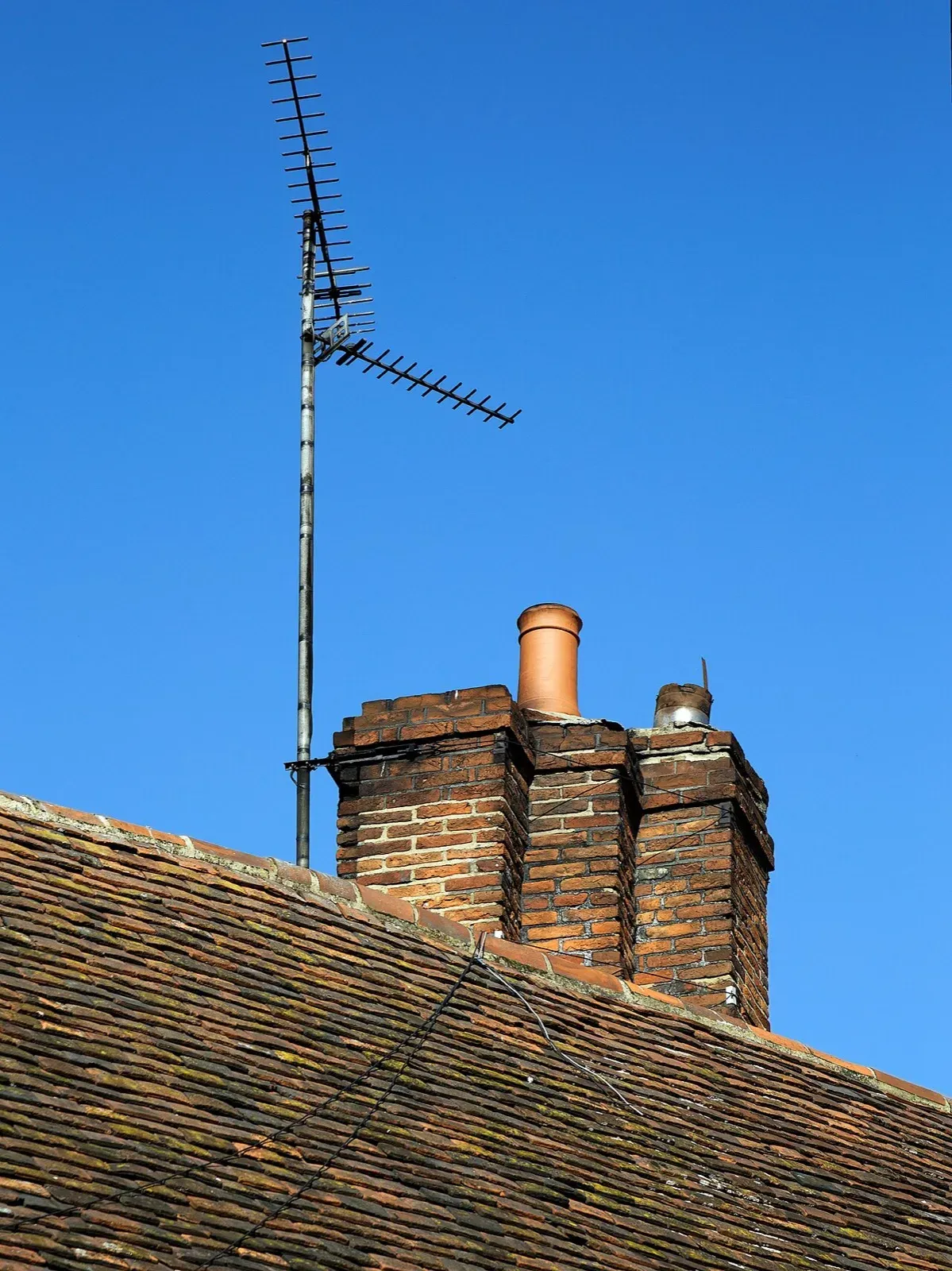
- Chimney: cracked or missing brick, a displaced cap, mortar on the roof or the ground.
- Roof projections: antennas, satellite dishes and weather vanes that are bent, scorched or knocked off. LPI names roof projections as a common entry point.
- Trees near the house: a fresh strip of bark blown off, split trunk or scorched wood. A strike to a tree can jump to a house as a side flash.
- Siding, gutters and downspouts: scorching or melted spots, especially where they meet a wire or pipe.
- Electric meter and service line: scorch marks or damage. Call the utility if you see any.
Inside checks, starting with the attic
| Where | What to look and smell for | Why |
|---|---|---|
| Attic | Smoke, haze, heat, burning or acrid smell, scorched framing or insulation | Strikes often attach at the roof peak or chimney; LPI and fire marshals say check here first |
| Basement and crawlspace | Smoke, burning smell, scorch at the main water or gas line, the panel or the ground connection | Current exits to ground through piping and electrical grounds |
| Electrical panel | Tripped main or several tripped breakers, scorching, a hot panel cover | Surge or direct current through the wiring |
| Outlets, switches, GFCIs | Scorch marks, melted covers, warm plates, GFCIs that won’t reset | Surge damage in the branch circuits |
| Electronics and appliances | Several devices dead at once, especially TVs, routers, garage door openers, HVAC controls | Surges come in on power, cable and phone lines |
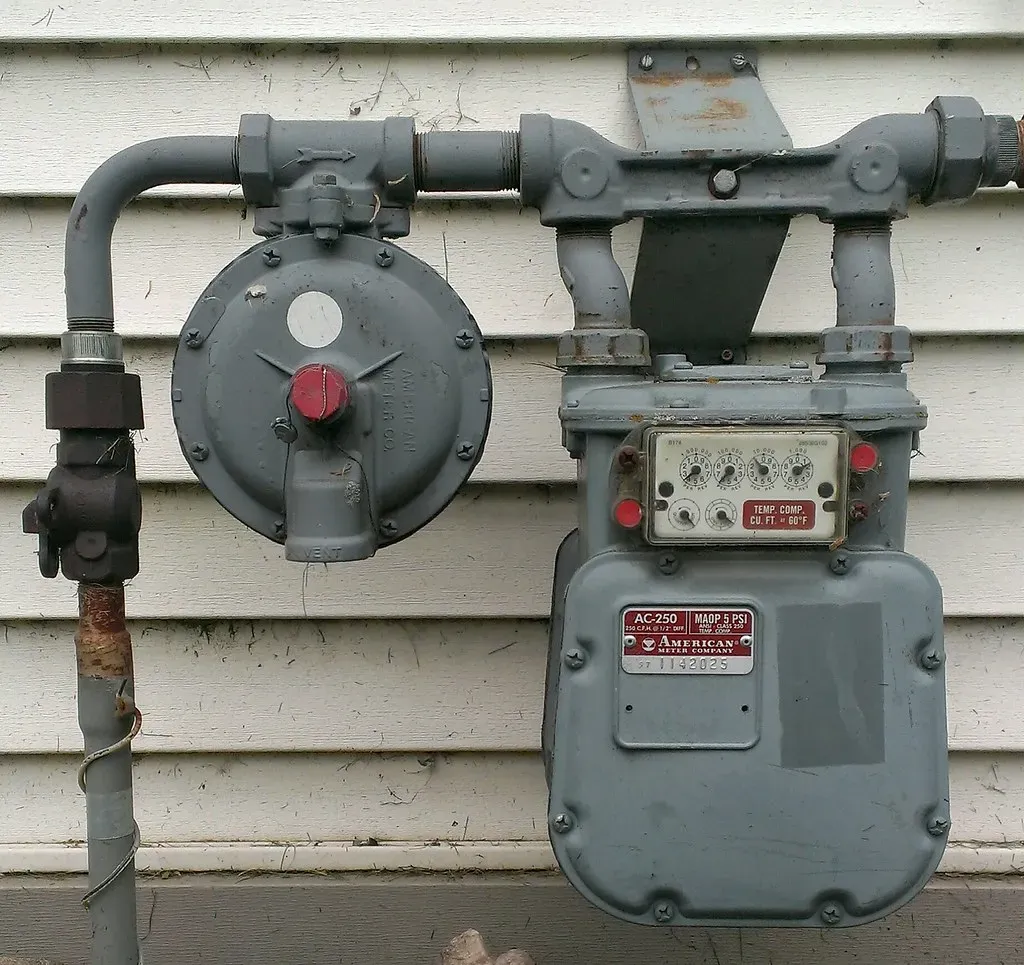
| Gas lines and appliances | Gas odor, hissing near a gas line or appliance | LPI lists metallic piping, including CSST gas piping, among lightning’s paths into a home |
| Well pump, irrigation, invisible fence, electric gate | Controllers or pumps not working | LPI lists these as entry paths too |
If you smell gas, don’t touch light switches. Leave the house and call 911 and the gas utility from outside.
Who to call, and in what order
- 911 or the fire department for any smoke, heat, burning smell or gas odor, even if you can’t find a flame.
- The gas utility if you smell gas or think a gas line was hit.
- A licensed electrician for tripped mains, scorched outlets or a damaged panel. Don’t keep resetting breakers that trip again.
- Your insurance agent or company to start a claim. Our guide to whether homeowners insurance covers lightning strikes includes a documentation checklist.
- A roofer for visible roof or chimney damage.
- A lightning protection contractor, if your house has a system, to inspect it, or if it doesn’t, to talk about protection while the roof and attic are open.
Document before you clean up
Lightning claims are expensive. The Insurance Information Institute reports an average US homeowners lightning claim of $26,616 in 2025, and $60,382 in Texas (III). Before you clean up, photograph everything, write down the exact time of the strike, list the damaged devices, and keep them until your adjuster has seen them. Triple-I notes that some homeowners policies cover power surges that are the direct result of a lightning strike (Triple-I), so documenting that a strike happened matters.
If your house has a lightning protection system
A system that took a strike did its job, but that doesn’t mean it’s ready for the next one. Conductors, clamps and bonds can loosen, melt or crack, and a ground connection can be damaged. Look for:
- Air terminals that are bent, scorched or missing
- Conductors pulled loose from their fasteners or burned at a connection
- Damage near ground rods or down conductors at grade
Then have it inspected. A strike is one of the standard triggers for re-inspection; see when to have your system re-inspected for the others. If your house has no protection, our post on what happens when lightning strikes a house without protection explains what you’re up against next time.
Have your house or system checked
If lightning hit your home or something close to it, contact Site Safe Lightning Protection. We can inspect an existing lightning protection system after a strike, document what we find for your insurer, and explain what a new system would involve. Learn more about our residential lightning protection services.
Talk to Site Safe Lightning Protection about your property.
Frequently asked questions
How do you know if lightning struck your house?
A simultaneous flash and very loud crack, a burning or acrid smell, tripped breakers and several electronics failing at once are the usual signs. Check the attic and basement for smoke or heat even if no alarm sounds, and look outside for roof, chimney or antenna damage.
Can lightning strike a house and you not know it?
Yes. Lightning can enter through utility lines or the ground and damage electronics without visible roof damage. A strike can also start a smoldering fire in the attic or inside a wall, which is why fire officials say to check enclosed spaces right away.
What should you do right after lightning strikes your house?
Get everyone out and call 911 if you smell smoke, burning or gas. Once it's safe, check the attic, panel and electronics, document the damage, call an electrician and your insurer, and have any lightning protection system inspected.
What does it sound like when lightning hits your house?
Very loud and instant, with no gap between flash and bang. The NWS says a person very close may hear a click from the nearby streamer and then a sharp crack. Close thunder also has a tearing quality.
Can lightning cause a fire in the attic hours later?
A strike can ignite materials that smolder before flames appear, so the danger isn't always immediate. Check the attic right after the strike and again later, and call the fire department if you notice any smoke, heat or smell.
Sources
- Lightning Protection Institute: What Homeowners Need to Know About Lightning and Its Fire Risk
- National Weather Service: Lightning Safety When Inside
- NFPA: Lightning Fires and Lightning Strikes (Ahrens, 2008)
- National Weather Service: Dr. Lightning's Guide to Lightning and Thunder
- NOAA NSSL: Severe Weather 101, Lightning Basics
- Insurance Information Institute: Facts + Statistics, Lightning
- Triple-I press release: Lightning caused $1.04B in US homeowners claim payouts in 2024
Image credits
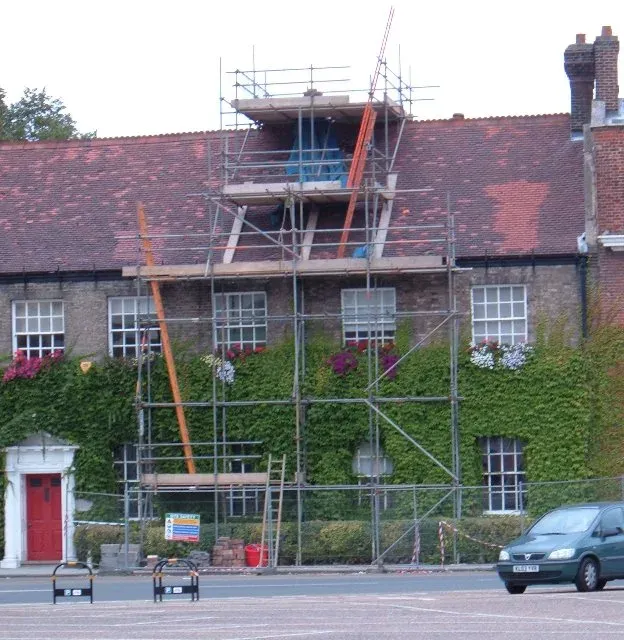
- Scaffolding around the chimney of a brick building being repaired after it was struck by lightning. Photo: Martin Pearman / geograph.org.uk via Wikimedia Commons (source), CC BY-SA 2.0, resized.