.svg)

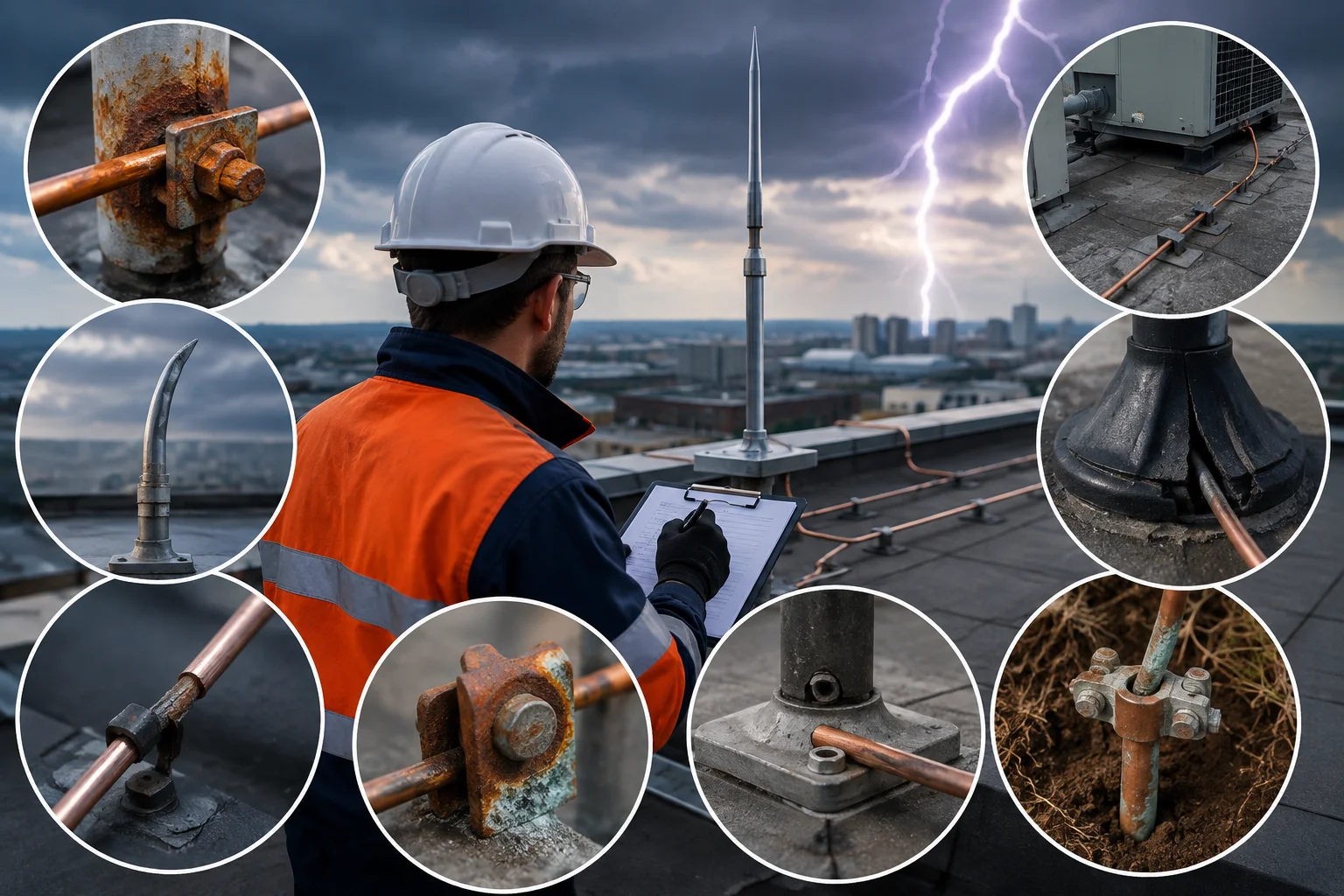
A professionally installed lightning protection system is one of the most effective ways to help protect commercial buildings, industrial facilities, manufacturing plants, critical infrastructure, and residential properties from the destructive effects of lightning. However, installation alone is not enough.
Over time, exposure to weather, building modifications, corrosion, and normal wear can affect the condition of system components. Without regular inspections, these issues may go unnoticed until the system is called upon during a lightning event.
Professional lightning protection inspection services help identify potential problems early, allowing property owners to address deficiencies before they impact system performance.
Lightning protection systems are exposed to harsh environmental conditions every day.
Common factors that may affect the system include:
Routine inspections help verify that all components remain securely connected and capable of performing as intended.
Conductors carry lightning energy safely from the air terminals to the grounding system.
During inspections, technicians often discover:
Any interruption in the conductor network may reduce the effectiveness of the system.
Lightning protection components are constantly exposed to the elements.
Inspectors frequently find corrosion on:
Corrosion may weaken electrical continuity and should be addressed promptly.
Air terminals are designed to intercept lightning strikes before they contact the structure.
Common inspection findings include:
Any damaged air terminal should be evaluated and repaired or replaced.
The grounding system is one of the most important parts of any lightning protection system.
Inspections may reveal:
An ineffective grounding system can compromise the overall performance of the installation.
Roof renovations frequently impact lightning protection systems.
Examples include:
These modifications may unintentionally disconnect or alter lightning protection components if the system is not properly updated afterward.
Proper bonding helps eliminate dangerous differences in electrical potential during a lightning event.
Inspectors often identify:
These deficiencies can increase the risk of side flashes.
Routine building maintenance sometimes results in accidental damage.
Examples include:
Professional inspections help locate physical damage before it becomes a larger issue.
Many facilities expand over time.
Building additions may require updates to the lightning protection system to maintain complete coverage.
Examples include:
Inspections verify that the protection system still adequately covers the modified structure.
Texas experiences frequent severe weather that can affect lightning protection systems.
Storm-related inspection findings often include:
Facilities should consider having their systems evaluated after significant storms or suspected lightning strikes.
One of the most common issues inspectors encounter is simply a lack of scheduled maintenance.
Without regular inspections:
A preventive maintenance program helps keep systems operating as intended year-round.
Regular inspections provide numerous advantages, including:
Routine inspections are an investment in protecting your facility and maintaining the effectiveness of your lightning protection system.
Property owners should consider scheduling a professional inspection:
A qualified lightning protection specialist can recommend an inspection schedule based on your facility and applicable standards.
Your lightning protection system is a critical safety investment—but like any protective system, it should be inspected and maintained regularly. Professional lightning protection inspection services help identify loose connections, corrosion, grounding issues, storm damage, and other problems before they affect system performance.
Whether you manage a commercial building, industrial facility, manufacturing plant, oil and gas site, or other critical infrastructure, routine inspections help keep your system ready when severe weather strikes.
Don't wait until the next storm to discover hidden problems with your lightning protection system.
Contact Site Safe Lightning Protection today to schedule a professional inspection. Our experienced team provides thorough evaluations, maintenance recommendations, and dependable lightning protection solutions to help keep your facility protected, reliable, and prepared year-round.