How to Protect Your House From Lightning: A Homeowner's Plan
By Site Safe Lightning Protection 7 min read
The only thing that protects the house itself from a direct strike is a complete lightning protection system: air terminals on the roof, conductors, grounding and bonding, built to NFPA 780 or UL 96A. Surge protectors, unplugging things and good storm habits protect your electronics and the people inside, but they won’t stop a strike from setting the attic on fire. A sound plan does both, in this order: work out your risk, put in the system, bond the metal that enters the house, add surge protection, deal with tall trees, keep the system intact when the house changes, and know what to do indoors.
US insurers paid $1.65 billion on 61,986 lightning claims in 2025, an average of $26,616 per claim. In Texas the average was $60,382 (Triple-I).
Step 1: Work out how much protection your house needs
Some houses are far more exposed than others. Before you get quotes, look at what you have:
- Is the house on a hilltop, a ridge or open ground, or taller than the buildings and trees around it?
- Are there tall trees within striking distance of the roof?
- Do you live where storms are frequent? Texas, Colorado and Oklahoma all see plenty.
- Does the house have a metal chimney, antenna, satellite dish or solar array on the roof?
- Is there yellow CSST gas tubing in the attic or crawlspace?
- Would a fire be hard to reach, such as a rural house a long way from the nearest station?
The more of these apply, the stronger the case for a full system. They won’t predict a strike, but they show how exposed the house is and how bad a strike could get.
Step 2: Put in a complete lightning protection system
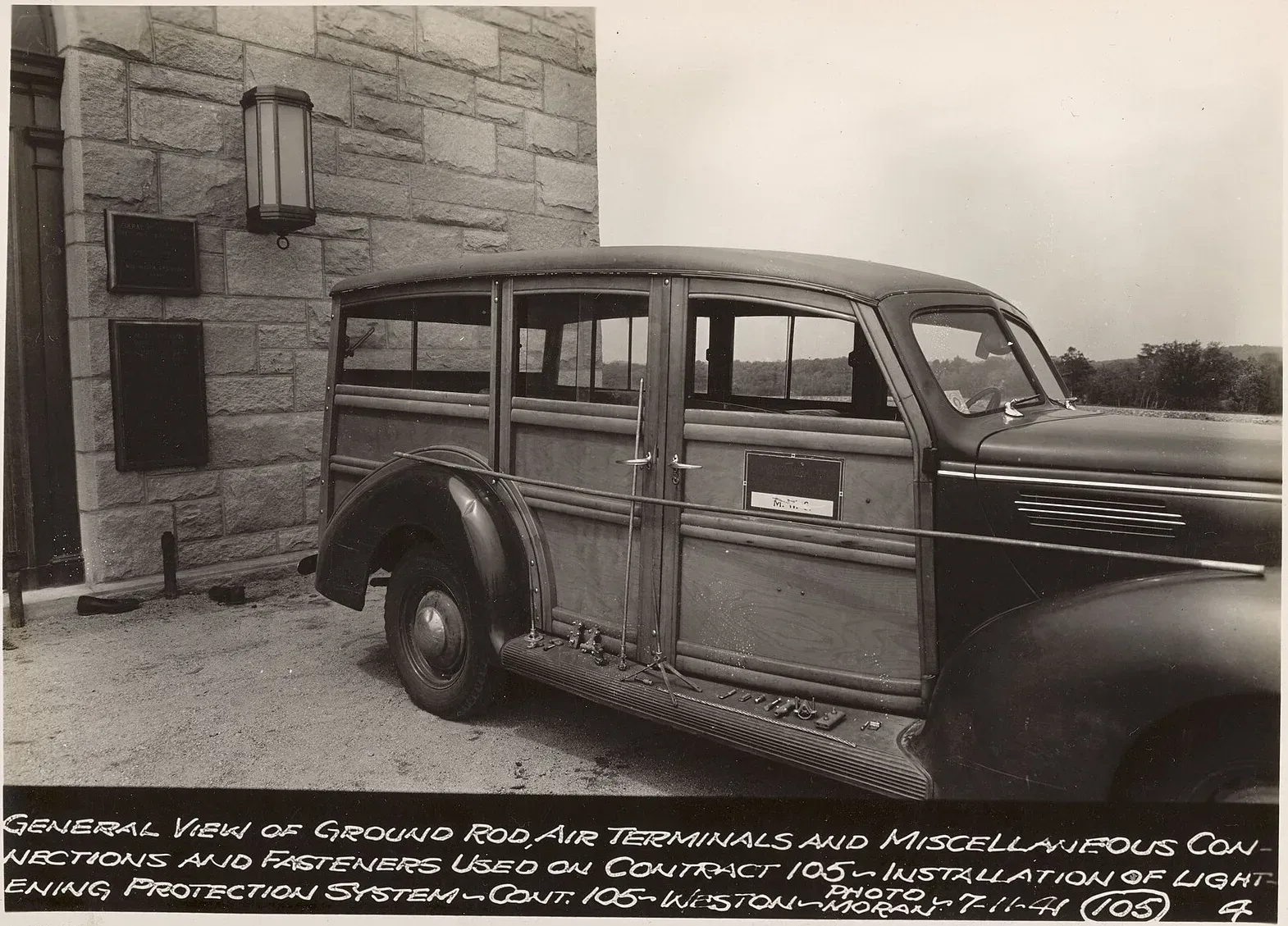
A lightning protection system doesn’t keep lightning from striking. It intercepts the strike, gives the current a conductive path along UL-listed copper or aluminum cable, and disperses it into the ground. The National Weather Service stresses that the parts have to be properly bonded together to cut the chance of sparks and side flashes (NWS).
On a house, that means:
- air terminals along the ridge and on chimneys, dormers and other high points;
- a roof conductor linking them;
- at least two down conductors running to ground, since even the smallest building needs two paths (LPI);
- grounding electrodes at the bottom of each down conductor;
- bonds tying the system to the home’s electrical, water and gas grounds.
NFPA 780 is the national design guide for these systems, and its Chapter 4 covers ordinary structures such as houses. Components are listed to UL 96. UL can field-inspect a finished system to UL 96A and issue a Master Label, and the Lightning Protection Institute runs its own LPI-IP inspection program (LPI). Ask any installer which standard they’re designing to and whether the finished job can be third-party inspected.
A single rod with one wire to a stake in the yard doesn’t count. It gives the strike one path with nothing to share the current and nothing bonding the rest of the house to it. Our walk-around of lightning rods on a house shows what each part looks like and where it goes.
Step 3: Bond the metal that enters the house
Lightning doesn’t need to hit the roof to get inside. The NWS lists three ways in: a direct strike, wires or pipes that run outside the structure, and the ground. Once inside, it can travel through the electrical, phone, plumbing and antenna systems (NWS). The fix is bonding: connecting those metal systems to a common ground so a surge can’t jump between them.
Gas piping gets special attention. Where a house has corrugated stainless steel tubing (CSST), the fuel gas codes (IFGC 310.2, IRC G2411.2) allow it to be protected with an extra bonding connection. The bonding conductor has to be at least 6 AWG copper, or the aluminum equivalent, and no longer than 75 feet. The ICC explains that bonding reduces arcing when the piping is energized by a lightning strike on or near the property (ICC). The NWS also notes that lightning protection may be needed for gas piping (NWS). Our article on CSST bonding explains yellow versus black CSST and why the bonding jumper alone isn’t the whole answer.
The NWS also counts surge protection on incoming power, data and communication lines as part of a complete system (NWS). If a satellite dish or antenna went up after the house was built, have its cable checked where it enters the house.
Step 4: Add surge protection at the panel and at the equipment
Surge protection handles the energy that comes in on the wires. Since the 2020 edition, the National Electrical Code (230.67) has required a Type 1 or Type 2 surge-protective device on every service supplying a dwelling unit, built into the service equipment or right next to it. The rule also kicks in when existing service equipment is replaced (NEC 230.67 text, via Leviton). Whether your area has adopted that edition is up to your local building department, so check with them and use a licensed electrician for the panel work.
Point-of-use surge strips for TVs, computers and network gear add a second layer, with limits. The NWS says typical surge protectors “will not protect equipment from a lightning strike” (NWS). They handle the smaller surges that travel in from strikes nearby. The rod system and bonding handle the direct hit.
| Measure | What it protects | What it doesn’t protect |
|---|---|---|
| Lightning protection system (air terminals, conductors, grounds) | The structure, from fire and blast damage in a direct strike | Electronics, from surges on incoming lines |
| Bonding of gas, water, electrical and data systems | Against arcing between metal systems, including CSST | The roof and framing, from a direct strike |
| Service-entrance SPD (NEC 230.67) | Wiring and appliances, from surges on the power lines | Phone, cable and data lines unless those are protected too |
| Point-of-use surge strips | Individual devices, from smaller surges | Anything during a direct strike |
| Indoor safety habits | People | Property |
Step 5: Deal with tall trees near the house
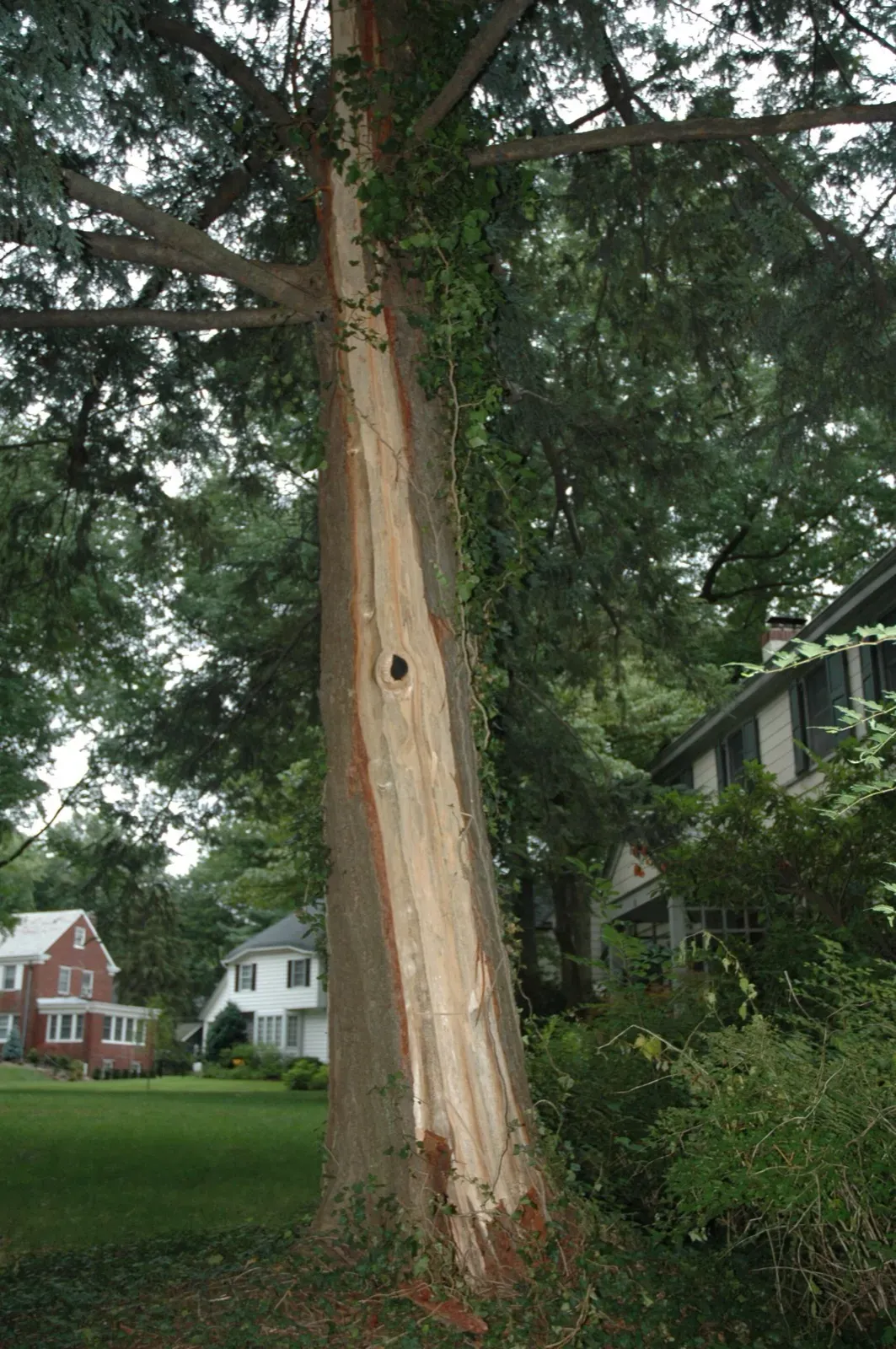
A tall tree beside the house is a likely strike point, and it brings two risks. A strike can blow apart the trunk or limbs onto the roof, and the current can jump from the tree to the house or a person nearby. That jump is called side flash (NPS).
Valuable trees can get their own lightning protection system. The National Park Service follows ANSI A300 Part 4 for the trees it protects. A typical tree system has a blunt air terminal, copper conductors run up the trunk and out the main branches, and a ground rod. The NPS trenches the cable at least 10 feet from the trunk, drives the ground rod 8 feet down, and tests the system every five years (NPS). Tree systems are arborist work. Coordinate them with the house system so the two don’t create a new side-flash path between them.
Step 6: Keep the system intact when the house changes
Later work on the house can quietly break a lightning protection system. Re-roofing can leave conductors disconnected or air terminals reattached in the wrong places. A new solar array, satellite dish or antenna adds metal on the roof that has to be bonded in. An addition can push part of the roof outside the protected zone. Siding and landscaping crews can cut down conductors or damage ground connections.
Have the system inspected after any of those jobs, and after any strike on or near the house. An inspection checks continuity, connections, bonding and ground condition against the standard it was built to.
Step 7: Protect the people inside during a storm
The house is the safe place to be, as long as you stay out of the paths lightning uses. The NWS advises (NWS):
- Stay off corded phones. Cell and cordless phones are fine.
- Don’t touch computers, TVs or cords. Remote controls are safe.
- Avoid plumbing. Don’t shower, bathe, wash dishes or wash your hands.
- Stay away from windows and exterior doors, and off porches and balconies.
- Don’t lie on concrete floors or lean against concrete walls.
One point where advice differs: some preparedness guides tell you to unplug electronics. The NWS says not to unplug equipment during a thunderstorm, because you could be struck while doing it. If you want things unplugged, do it before the storm arrives.
Talk to us about your house
Site Safe Lightning Protection designs and installs lightning protection systems for homes, detached garages and outbuildings, and inspects and maintains existing systems. If you want to know what your house would need, or whether an older system on the roof still works, contact Site Safe Lightning Protection. Our residential lightning protection page explains how a home system is planned and installed.
Talk to Site Safe Lightning Protection about your property.
Frequently asked questions
Can you prevent lightning from hitting your house?
No. Nothing can stop lightning from striking a house. The NWS is clear that lightning protection systems don't prevent strikes. They intercept the strike and carry the current safely to ground, so it doesn't pass through the framing, wiring or gas piping.
Do surge protectors protect a house from lightning?
Only partly. A service-entrance surge-protective device, required for homes by NEC 230.67 since the 2020 edition, and point-of-use strips protect equipment from surges on the wires. The NWS says typical surge protectors won't protect equipment from a direct strike, and they do nothing for the structure.
Should I unplug electronics during a thunderstorm?
Not once the storm has started. The NWS advises against unplugging equipment during a thunderstorm because you could be struck. Unplug anything you're worried about before the storm reaches you.
What is the best way to protect a house from lightning?
A complete lightning protection system built to NFPA 780 or UL 96A, with the gas, water, electrical and data systems bonded to it and surge protection at the electrical service. That combination covers both the direct strike and the surges that come in on the wires.
Sources
- National Weather Service: Lightning Rods and Lightning Protection Systems
- National Weather Service: Lightning Safety When Inside
- Insurance Information Institute: Facts + Statistics, Lightning (2025 data)
- Lightning Protection Institute: Lightning Protection Overview
- ICC Building Safety Journal: CodeNotes, Bonding of corrugated stainless steel tubing gas piping systems (IFGC 310.2 / IRC G2411.2)
- Leviton technical note: 2020 NEC 230.67 Surge Protection (code text)
- National Park Service: Tree Lightning Protection Systems in National Cemeteries
Image credits
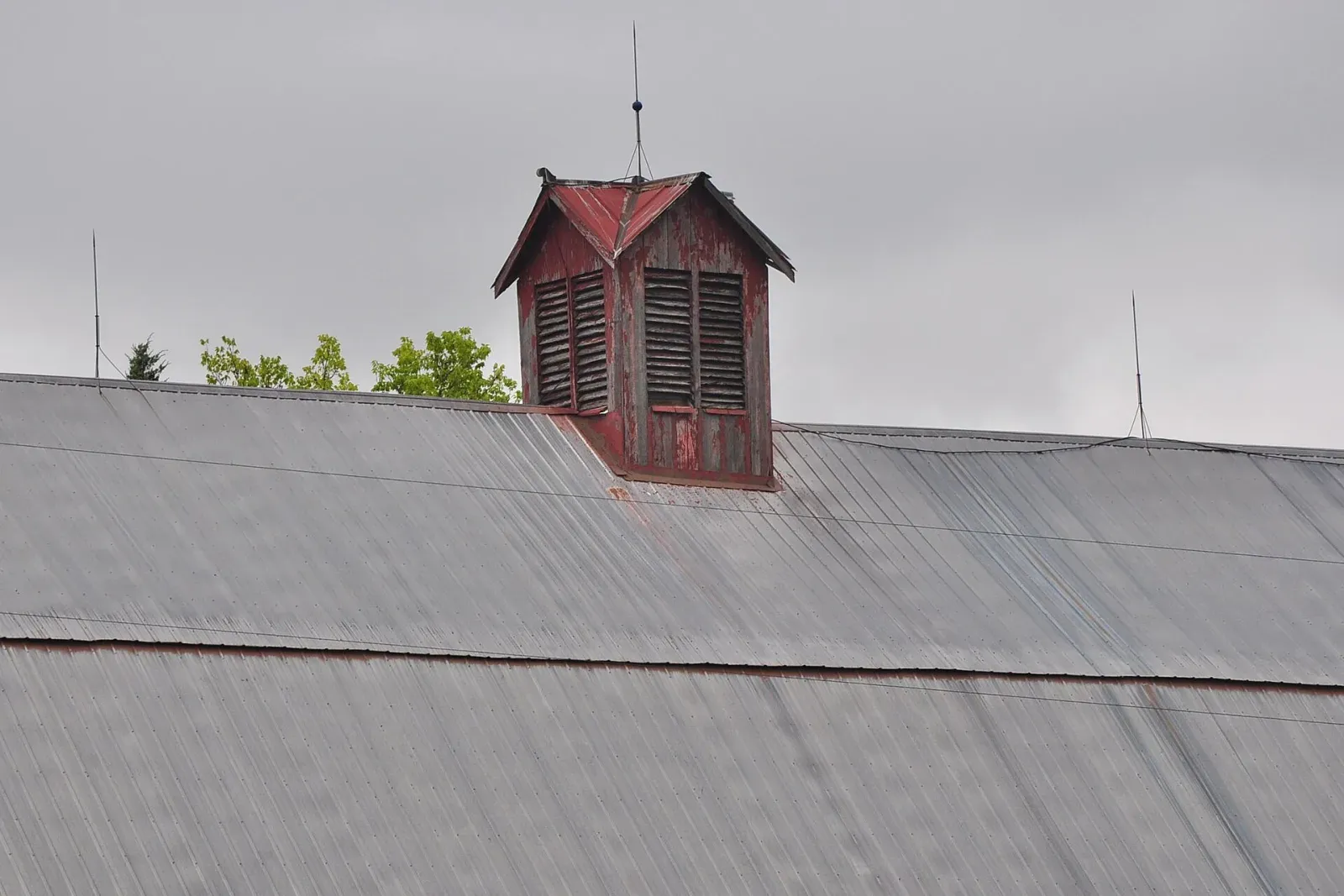
- Air terminals standing along the metal roof ridge of a Kansas barn with a conductor running between them. Photo: SharonPapierdreams / Wikimedia Commons (source), CC BY-SA 4.0, resized.