Lightning Rod Kits: What's in the Box and What a House Actually Needs
By Site Safe Lightning Protection 7 min read
A lightning rod kit usually contains one air terminal, a short length of cable, a ground rod and a few clamps. That’s enough to put one point on a flagpole or a shed peak. A house is another matter. UL’s application guide for lightning protection calls for air terminals at every roof corner and ridge end, no more than 20 ft apart, at least two paths to ground, cable of a specific size, ground rods at least 8 ft long, and bonds to the home’s electrical, water and gas grounds (UL guide). A single-rod kit covers almost none of that.
So before you buy, decide what you’re trying to protect. A flagpole, a weather station mast and a house each call for a different setup.
What comes in a lightning rod kit?
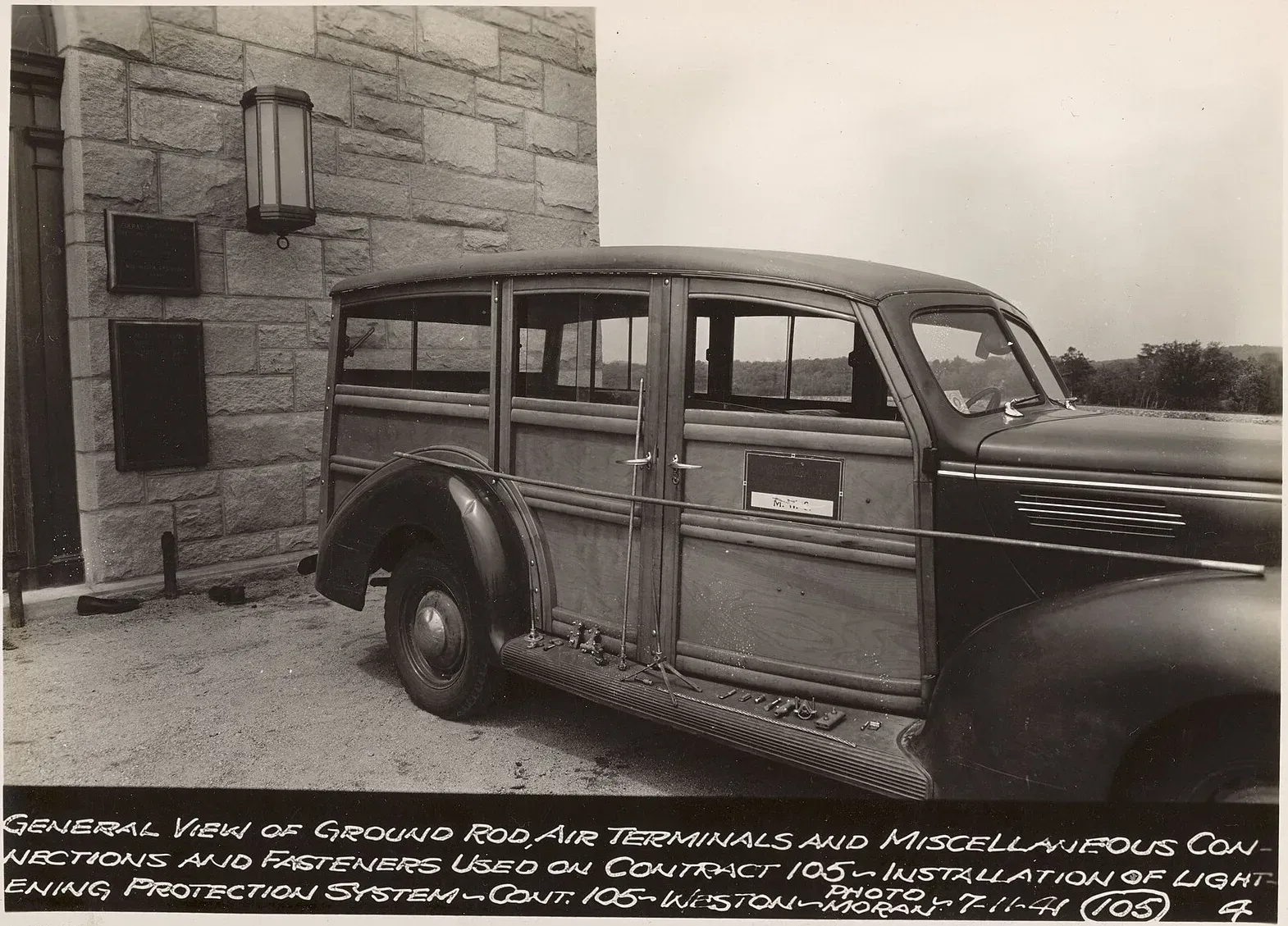
Most of the results for “lightning rod kit” are flagpole kits. A typical example is the Concord American LRK-9019, which pairs a 1/2 in, 7-strand aluminum cable 6 ft long with a 5/8 in by 5 ft copper-clad ground rod, plus a drill-and-tap kit and hardware for mounting it to the pole (Flag Desk listing). Rooftop kits sold online follow a similar pattern: one rod or a multi-point spire, a base, a clamp, and sometimes a ground rod and cable. Some leave out the cable, so read the parts list rather than the title.
What a kit can’t include is the layout. The kit doesn’t know your roof’s length, how many ridges and chimneys it has, where the electrical service enters or where the gas meter sits. The Lightning Protection Institute’s FAQ says plainly that lightning protection is not a do-it-yourself project, and that only certified lightning protection contractors should install it (LPI FAQ).
Kit contents vs what a house system needs
The UL Lightning Protection Marking and Application Guide summarizes what a UL field inspector checks on an ordinary building. The table puts those items next to a typical single-rod kit.
| Item | Typical kit | What UL’s guide calls for on a house |
|---|---|---|
| Air terminals | One rod or one spire | Terminals at least 10 in tall, no more than 20 ft apart along ridges and perimeters (25 ft if they’re 24 in or taller), within 2 ft of ridge ends and roof edges, plus chimneys and other projections |
| Paths to ground | One cable, one rod | At least two paths to ground from each air terminal |
| Main conductor | A few feet of cable, size often unstated | Class I copper of at least 57,400 circular mils (about 187 lb per 1,000 ft), or aluminum of at least 98,600 circular mils |
| Ground electrode | Often a 5 ft rod | A rod at least 1/2 in diameter and 8 ft long, extending at least 10 ft into the earth and below the frost line where possible |
| Bonding | Not included | Main-size bonds from the lightning ground to the electrical service grounding electrode system, metal water piping and gas piping (customer side of the meter) |
| Listing | Varies by product | Every component listed to UL 96, except ordinary screws and bolts |
| Materials | Mixed metals are common | Copper kept off aluminum and galvanized steel; aluminum kept out of the soil, with bimetallic fittings at least 18 in above grade |
| Fastening | A clip or two | Cable secured at no more than 3 ft intervals, with bends of at least 8 in radius |
All figures in the right-hand column come from the UL guide (UL guide).
Run a simple ranch house through those rules. A 40 ft ridge needs a terminal within 2 ft of each end and no gap over 20 ft, so it takes three terminals before you count the chimney or any dormers. Each of those terminals needs two routes to ground, which means at least two down conductors on opposite sides of the house, each ending in its own ground rod. Then come the bonds to the service ground and the metal piping.
Why one rod can be worse than none
People buy a kit because they assume some protection beats no protection. LPI says the opposite about partial systems. Its FAQ warns that installing partial protection can be more dangerous than providing no protection at all, and it names grounded weather vanes, antennas, cupolas and steeples as examples. After lightning hits one of those, it can side-flash to the structure (LPI FAQ).
The FAQ also says a single path to ground isn’t adequate to carry the current in a lightning discharge. When the current can’t get to earth quickly through the path you gave it, it looks for others: gutters, wiring, plumbing, the gas line. That’s the side flash the full system is designed to prevent with multiple down conductors and bonding.
The National Weather Service makes the same point from another angle. It says the system’s components must be properly connected (bonded) to reduce sparks and side flashes, and that a complete system also needs surge protection on power, data and communication lines (NWS). A kit doesn’t include those.
Flagpole and antenna kits are a different job
A flagpole kit is built for one tall, isolated metal object, and that’s how it should be used. The same goes for kits sold for weather station masts and radio towers. If you have a flagpole in the yard, a kit sized for the pole is reasonable to discuss with whoever installs the pole.
Problems start when a flagpole kit gets mounted on a house, or when a pole stands close enough to the house that its ground and the house’s grounds should be tied together. Aluminum cable is another thing to check. UL’s guide keeps aluminum out of direct contact with the earth and requires the switch to copper through a bimetallic fitting at least 18 in above grade (UL guide). A kit that runs aluminum cable straight into the soil to a copper-clad rod doesn’t match that.
How to check a kit before you buy
If you still want to buy parts, whether to keep on hand or to hand to an installer, check these:
- The UL mark on the component itself, not only “UL” in the listing title. UL’s guide notes that NFPA 780 requires a listed component to be used wherever one exists for that part (UL guide).
- The cable’s size in circular mils or weight per 1,000 ft, so you can compare it with the Class I minimums in the table.
- The ground rod’s length. A 5 ft rod is shorter than the 8 ft minimum in UL’s guide.
- Metal compatibility: copper parts for copper systems, aluminum for aluminum, and the right fitting where they meet.
- Whether the kit includes the cable and the ground rod at all.
- What the seller says the kit is for. A flagpole kit says so in its product description.
Passing these checks tells you the parts are usable. It doesn’t turn a kit into a house system.
What a professional install includes that a kit can’t
A contractor starts with a survey of the roof and the lot, draws a layout, and places terminals, conductors and grounds to suit the building. We walk through each step in lightning rod installation. The grounding gets its own design, because rocky, shallow and dry soils each need a different electrode setup. Our guide to grounding a house for lightning explains how.
Paperwork is the other thing a kit can’t give you. UL issues a Master Label Certificate only after an installer listed with UL completes the system and UL inspects it, and UL’s guide says the certificate has a 5-year lifespan (UL Solutions; UL guide). A homeowner-built system can’t be certified that way. If an insurer or a future buyer asks what’s protecting the house, a certificate or an inspection report answers the question. Our UL 96A and Master Label guide explains what that paperwork covers.
Already put a kit on your roof?
Don’t leave it as the only thing up there. Have the system looked at, and ask whether the existing pieces can be built into a full layout or should come down. A single rod tied to a short ground next to the house is the partial installation LPI warns about.
Site Safe Lightning Protection designs and installs lightning protection systems for homes, detached garages and other outbuildings, and inspects and maintains existing systems. If you’ve been pricing kits, or you already installed one and want to know where it stands, contact Site Safe Lightning Protection. Our residential lightning protection page explains how a home system is planned.
Talk to Site Safe Lightning Protection about your property.
Frequently asked questions
Can I install a lightning rod kit myself?
The Lightning Protection Institute says lightning protection is not a do-it-yourself project and should be installed by certified lightning protection contractors. A single rod with one ground gives lightning one path, which LPI says isn't adequate, and a partial system can side-flash into the house.
What is in a lightning rod kit?
Usually one air terminal or spire, a base or clamp, and sometimes a short cable and a ground rod. A common flagpole kit, for example, has a 6 ft aluminum cable and a 5 ft copper-clad rod. Check the parts list, because some kits leave out the cable or the rod.
How many lightning rods does a house need?
It depends on the roof. UL's guide puts air terminals within 2 ft of ridge ends and roof edges and no more than 20 ft apart (25 ft for terminals 24 in or taller), plus chimneys and other projections. A simple 40 ft ridge already needs three, and every terminal needs two paths to ground.
Are lightning rod kits UL listed?
Some components are. Look for the UL mark on each part. A listed part doesn't make the installation certified: UL's Master Label Certificate requires an installer listed with UL and a UL field inspection of the finished system.
Is a flagpole lightning rod kit enough for my house?
No. A flagpole kit is sized for one metal pole. A house needs terminals across the roof, at least two down conductors, ground rods at least 8 ft long and bonds to the electrical, water and gas grounds.
Sources
- UL: Lightning Protection Marking and Application Guide (2016, archived copy)
- Lightning Protection Institute: Frequently Asked Questions
- National Weather Service: Lightning Rods and Lightning Protection Systems
- Flag Desk: Concord American LRK-9019 Lightning Rod Kit (product listing)
- UL Solutions: Lightning Protection Installer and Master Label Certificate Program
Image credits
- 1941 photo of a ground rod, air terminals and fittings laid along a station wagon before a lightning protection installation. Photo: John B. Moran, Massachusetts Metropolitan District Water Supply Commission / Wikimedia Commons (via DPLA) (source), Public domain.