Tree Struck by Lightning: What to Check and What to Do Next
By Site Safe Lightning Protection 8 min read
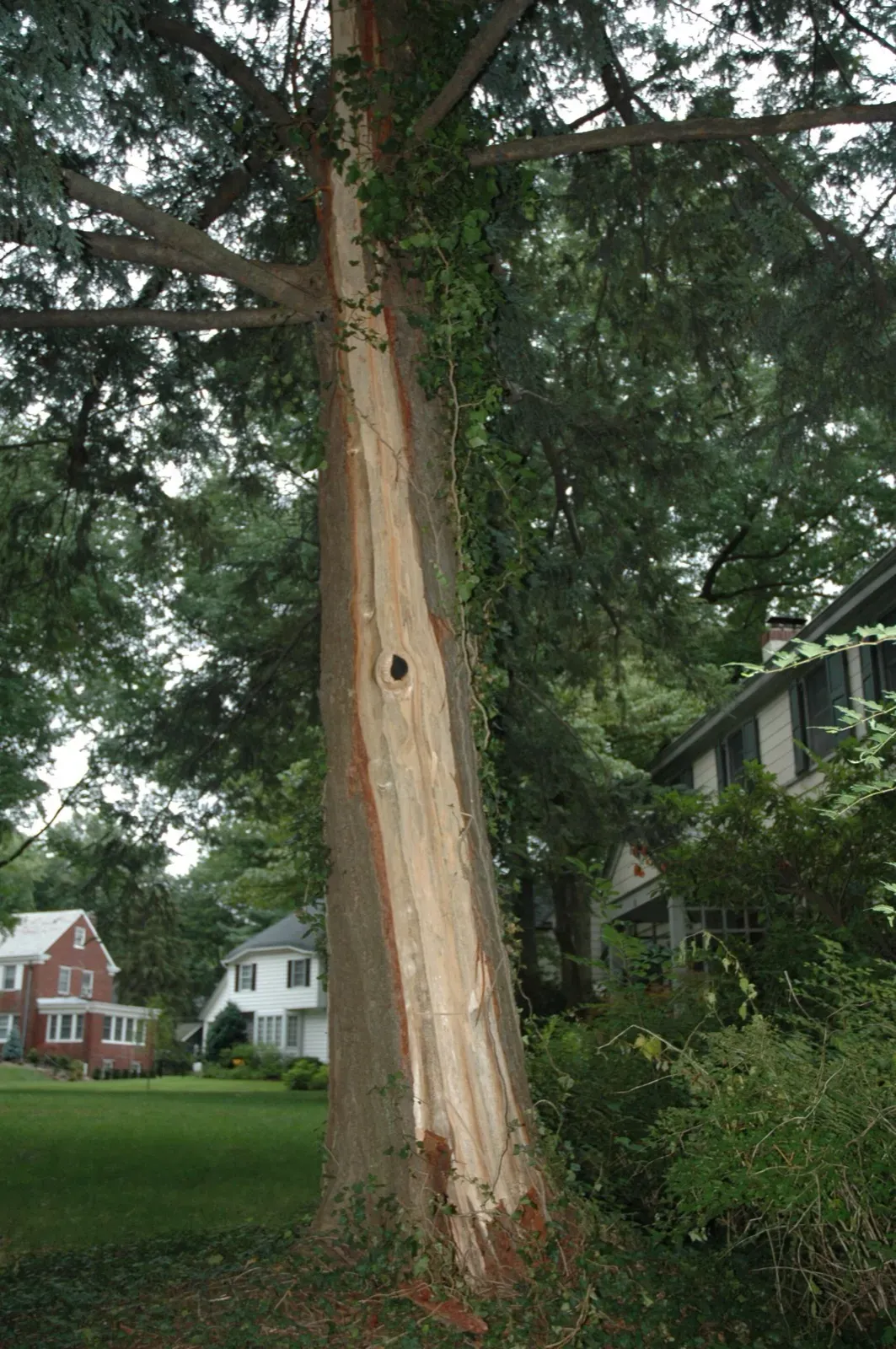
A tree struck by lightning usually shows it: a strip of bark blown off from the crown toward the ground, a long crack in the trunk, or bark and splinters scattered around the base. Whether it lives depends on how deep and how wide the wound goes. Extension foresters in Nebraska and Alabama use the same rough line: a narrow scar covering less than a third of the trunk is worth watching, while a split trunk or a crack a third of the way through means the tree should come down if it stands near the house, the drive or the street.
If the tree stands close to the house, the strike may have reached the building too, through the ground, the roots or a side flash, so walk the house as well as the tree.
What does a tree struck by lightning look like?
Lightning heats the channel to about 50,000°F. Inside a tree, that turns sap and water to steam so fast that bark and wood fibers burst outward (UNL Extension; Alabama Extension). Look for:
- A vertical strip of missing bark, sometimes inches wide, running from a high branch down the trunk. It may run straight or spiral around the trunk.
- Pale, freshly exposed wood in the strip, often with a dark or scorched edge.
- Bark chunks and long splinters on the ground, sometimes thrown several yards.
- A crack or split along the trunk, or a large limb torn off.
- Leaves that wilt and brown over the next days or weeks, with no obvious mark at all.
Hidden damage is common. Alabama Extension notes that the super-heated current can damage a larger part of the trunk or roots than the visible scar, so a tree can look fine for a week and then die (Alabama Extension). The reverse also happens. UNL describes trees that look wrecked and keep growing (UNL Extension).
The first few hours after the strike
Stay away from the tree until the storm has passed. Being under a tree is the second leading cause of lightning casualties, according to the National Weather Service (NWS). The NWS describes side flash as current jumping from a struck object to a person usually within a foot or two of it, and ground current spreading outward from the base. Ground current causes the most lightning deaths and injuries (NWS). Lightning often strikes the same tall object more than once.
Once the storm is gone:
- Look up before you walk under it. Cracked and hanging limbs drop without warning.
- Check for smoke or smoldering at the wound, at the base and in mulch or dry grass nearby. Call the fire department if anything is burning.
- Keep kids and pets back if the trunk is split or leaning.
- Take photos of the scar, the debris and the distance to the house. You’ll want them for the arborist and possibly the insurer.
- Then walk the house (more on that below).
Will a tree struck by lightning survive?
About half of all trees struck by lightning die immediately, according to the US Forest Service (USDA Forest Service). For the rest, the extension services give a practical way to sort them. This table follows the Alabama Extension and UNL guidance.
| What you see | What it means | Usual call |
|---|---|---|
| Trunk split, partly or fully | Structure is gone and decay will follow | Remove |
| Crack in the main trunk at least one-third of its diameter deep | Strike reached the inner wood; structural defects likely | Remove if near the house, garage, drive or street |
| Crack in a large branch, one-third of its diameter or deeper | Limb is weakened | Shorten or remove the limb |
| Bark stripped from more than one-third of the trunk’s circumference | Big wound, water flow damaged, decay and pests likely | Remove unless the tree is very valuable and nothing is in its fall zone |
| Narrow bark strip, less than one-third of the circumference | Survivable in many trees | Watch it for weeks, keep it watered, consider pest treatment |
| No visible mark but sudden wilting | Hidden trunk or root injury | Have an arborist look |
Alabama Extension adds a detail that’s easy to miss. If there are two scars on the same side of the trunk, assume the bark between them is dead too when you estimate how much of the trunk is damaged (Alabama Extension).
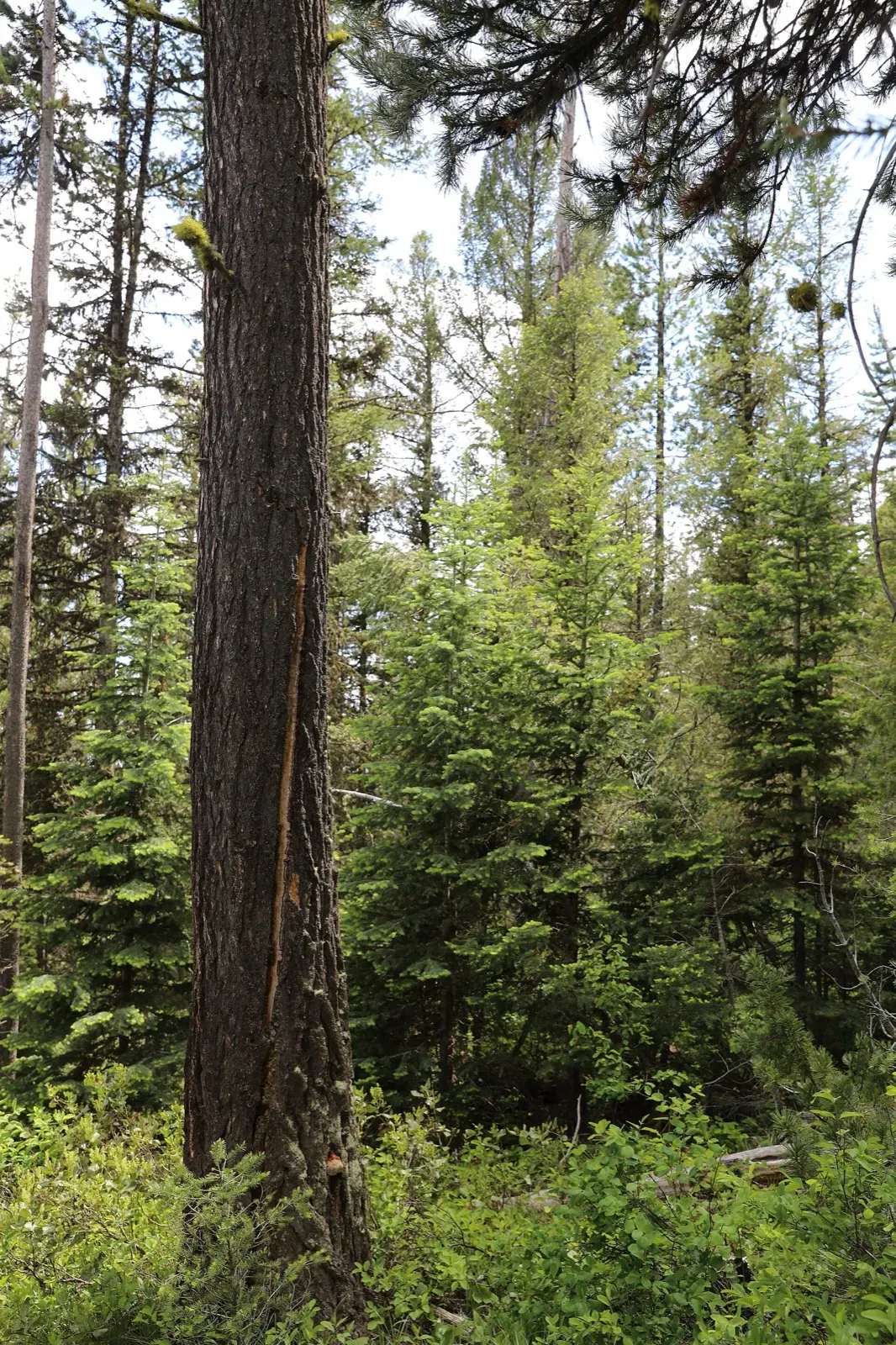
Species and prior health count as much as the scar. UNL contrasts a big, healthy shade tree that was growing well is worth saving, while a half-rotten box elder already leaning toward the garage is a liability before the strike, and more of one after it (UNL Extension).
Why waiting a few weeks is usually right
Unless the trunk is split or broken limbs are hanging over something, both extension guides advise waiting. Alabama says several weeks before removing or even pruning, and UNL says a few months, because the crown will show the inner damage over time (Alabama Extension; UNL Extension).
What to do while you wait:
- Trim loose, ragged bark back to firm tissue with a sharp knife, without making the wound bigger. Alabama calls this bark tracing.
- Water during dry spells. A struck tree moves water poorly, so drought hits it harder.
- Watch for beetles. Stressed trees give off compounds that draw insects. In pines, Alabama names Ips beetles, southern pine beetle and black turpentine beetle. In hardwoods, it’s ambrosia beetles, which leave sawdust or toothpick-like tubes in the bark. Beetles can move in within days, so if you want preventive treatment it has to go on soon after the strike.
Insecticide sprays and trunk injections are options an arborist can walk you through. Alabama notes that there’s some disagreement about how well preventive treatment works on a struck tree, since nobody can see the full damage (Alabama Extension).
Check the house, not only the tree
A tree within a few feet of a house can pass a strike on to the house, and the damage there is harder to spot than a scar on bark. Some of the current flows through the roots and soil, and roots often run under a slab, along a water line or past an irrigation system. Some can jump from the trunk or a limb to the gutter, the siding or anything metal that’s close. Once current is in a building, the NWS says it travels through the electrical, phone, plumbing and cable systems (NWS).
Walk through this list after a strike on a tree near the house:
- Electronics, garage door openers, the irrigation controller, the well pump and anything wired to the outside that stopped working.
- Tripped breakers or GFCI outlets.
- Scorch marks at outlets or along baseboards, and any burning smell.
- The attic, especially on the side facing the tree. Look for scorching near wiring, vents and any gas tubing, and recheck the next day.
- Gutters, downspouts, siding and windows on the tree side for pitting, burn marks or cracks.
- Any existing lightning protection system: loose or damaged conductors, burned connections, a disturbed ground rod.
If you smell smoke or find heat in a wall or attic, call the fire department. Our guide to signs your house was struck by lightning goes through the checks in more detail.
Will insurance pay to remove a tree struck by lightning?
It depends on the policy and on what the tree hit. Read the trees-and-shrubs and debris-removal parts of the policy and ask your agent before you have a healthy-looking tree taken down. If the strike also damaged the house or what’s in it, document that separately. In 2025 US insurers paid an average of $26,616 per lightning claim, and $60,382 in Texas (Triple-I). We cover claims in does homeowners insurance cover lightning strikes.
Can you stop it happening again?
You can’t rule it out. Lightning often hits the same tall object again (NWS), and a tree that was the tallest thing on the lot before the strike usually still is.
Two separate fixes exist, and they protect different things. A tree lightning protection system, a copper conductor run down the trunk to a ground rod away from the roots, protects a valuable tree. We explain how those work in tree lightning protection. A lightning protection system on the house protects the house, including from a strike that would otherwise side-flash from a nearby tree. If a big tree next to your house just took a hit, the house is the one to think about first.
Talk to us about the house next to the tree
Site Safe Lightning Protection designs and installs lightning protection systems for homes, detached garages and other outbuildings, and inspects and maintains existing systems. If lightning hit a tree beside your house and you want to know whether the house needs a system, or whether the one you have still works, contact Site Safe Lightning Protection. Our residential lightning protection page explains how a home system is planned and installed. For the tree itself, call a certified arborist.
Talk to Site Safe Lightning Protection about your property.
Frequently asked questions
What happens when lightning strikes a tree?
The current heats the sap and water inside the trunk so fast that it turns to steam and blows bark and wood outward. Damage ranges from a narrow strip of missing bark to a split or shattered trunk. Some trees show little outside damage and die later from injury inside the trunk or roots.
Can a tree survive a lightning strike?
Often, yes. The US Forest Service says about half of struck trees die immediately. Of the rest, trees with a narrow scar covering less than a third of the trunk are good candidates to keep, if you water them and watch for beetles. Split trunks and deep cracks usually mean removal.
How long should I wait before deciding to remove a struck tree?
Unless the trunk is split or broken limbs threaten something, extension foresters advise waiting several weeks to a few months. Inner damage shows up in the crown over that time.
Is a tree more likely to be struck again after it's been hit?
Lightning often strikes the same tall object repeatedly. A struck tree that is still the tallest thing nearby is still a likely target.
Can lightning hitting a tree damage my house?
Yes. Current can side-flash from the tree to the house or travel through the ground and roots to buried lines and the foundation, then into the wiring and plumbing. Check electronics, breakers and the attic after a strike on a nearby tree.
Sources
- University of Nebraska-Lincoln Extension, Lancaster County: Lightning Strikes, Will My Tree Survive?
- Alabama Cooperative Extension System: Caring for Lightning-Struck Trees
- USDA Forest Service: When lightning strikes
- National Weather Service: Lightning Myths
- National Weather Service: How Lightning Strikes People
- National Weather Service: Lightning Safety When Inside
- Insurance Information Institute: Facts + Statistics, Lightning (2025 data)
Image credits
- Tall tree in a residential street with a wide strip of bark blown off the trunk by lightning, houses behind it. Photo: Leifern (Leif Knutsen) / Wikimedia Commons (source), CC BY-SA 3.0, resized.
- Conifer trunk in a Montana forest with a narrow lightning scar running down one side of the bark. Photo: USDA Forest Service, Northern Region / Wikimedia Commons (source), Public domain (US gov).