Is It Safe to Shower During a Thunderstorm? What Plumbing Has to Do With It
By Site Safe Lightning Protection 7 min read
No. It isn’t safe to shower during a thunderstorm. The CDC and the National Weather Service both say to stay out of the shower and away from all plumbing while a storm is overhead, because lightning that hits a house or the ground nearby can travel through metal pipes and the water in them (CDC; NWS). The odds of getting hurt this way are small, and waiting costs you about 30 minutes.
Can you get struck by lightning in the shower?
The danger in the shower is current arriving through the pipes. A strike to the house, a tree next to it or a buried utility line puts current on the metal systems inside, and you become part of the circuit. The NWS describes three ways lightning gets into a building: a direct strike, through wires or pipes that run outside the structure, and through the ground. Once it’s inside, it can travel along the electrical, phone, plumbing and cable or antenna systems (NWS).
A shower puts you in a bad spot for that. You’re wet, barefoot, and holding or standing near metal fixtures connected to pipe that runs out of the house and underground. The University of Wisconsin’s Weather Guys put it simply: many homes have metal water pipes, lightning travels long distances through metal, and water conducts electricity too (UW-Madison SSEC).
How lightning reaches the bathroom
| Path in | What carries it inside | What puts you in contact |
|---|---|---|
| Direct strike to the house | Roof metal, wiring, pipe runs in the walls | Faucet, shower valve, metal drain, tub |
| Strike to a tree or the ground nearby | Buried water service, well pipe, ground currents | Any fixture fed by that service |
| Strike to a utility line | Electrical service, then bonded metal piping | Plumbing and anything plugged in |
All three paths end at the same places: anything metal you touch, plus the water itself. The NWS Gray, Maine office adds laundry to the list of things to skip, along with washing hands and dishes (NWS Gray). A bath is no better than a shower. The CDC answers “Is it safe to take a shower or bath during a thunderstorm?” with a flat no (CDC).
Does plastic (PEX or PVC) plumbing make it safe?
It may lower the risk, but it doesn’t remove it. The CDC says the risk of lightning traveling through plumbing “might be less with plastic pipes than with metal pipes,” and still tells people to avoid running water during a storm (CDC).
Very few houses are plastic from the street to the shower head. Many have a copper or steel water service, copper stubs at fixtures, brass valves, a metal water heater, a metal tub or drain, or a run of old pipe left from a partial repipe. The water inside the pipe still conducts, and your shower valve, spout and head are usually metal.
If your house runs on a private well, the pump, its wiring and the drop pipe go deep into the ground. That’s one more path from the outside in, and the same rule applies.
How big is the risk?
Lightning injuries indoors are uncommon, and most lightning deaths happen outdoors. The CDC puts the yearly odds of being struck at less than one in a million and says lightning caused an average of 26 deaths a year in the US from 2006 through 2025. Most victims were outdoors for recreation or work (CDC). The NWS fatality list for 2026 tells the same story: parking lots, water, sidewalks, trails, yard work (NWS).
The shower rule guards against a rare accident that is easy to avoid. The NWS says a house is a safe place in a storm as long as you stay away from things that conduct electricity, which includes plumbing (NWS lightning myths).
Timing matters where you live. The CDC notes that most lightning strikes happen in summer, especially July, in the afternoon and evening, and it names Texas among the higher-risk states (CDC). On the Colorado Front Range, summer storms build most afternoons during the monsoon (see our Colorado monsoon season guide). That’s right when a lot of people come in from work or the trail and head for the shower.
How long should you wait to shower after a thunderstorm?
Wait 30 minutes after the last thunder or lightning you notice. That’s the NWS rule for going back outside, and it works just as well for the shower (NWS). If you can hear thunder, the storm is close enough to strike. Start the clock again each time it rumbles.
Other indoor rules from the NWS and CDC, in short:
- Skip the shower, bath, sink, dishwasher and washing machine until the storm passes.
- Stay off corded phones. Cell phones are fine if they aren’t plugged in to charge.
- Don’t touch electrical equipment or cords. If you plan to unplug things, do it well before the storm arrives.
- Stay away from windows and doors, and off porches.
- Don’t lie on concrete floors or lean on concrete walls, since lightning can follow the steel inside them.
Does a lightning protection system make the shower safe?
A system lowers the risk, but you should still wait out the storm. Lightning protection systems don’t stop lightning from hitting a house. They give a strike a planned path to ground through air terminals, conductors and grounding electrodes (NWS).
The part that matters for plumbing is bonding. The Lightning Protection Institute’s design overview says every grounding medium in or on a structure is interconnected so it all sits at a common ground potential. That includes the lightning protection grounding electrodes, the electrical, communication and antenna grounds, and metal piping entering the building such as water, gas and LPG lines (LPI). UL’s inspection guide likewise calls for main-size conductors when bonding a system to metallic water systems, the electric service and other large grounded metal (UL).
Bonding keeps the pipes, the wiring and the lightning system from sitting at very different voltages during a strike. That difference is what causes side flashes and arcing inside walls. Our grounding vs bonding guide explains it in more detail. A complete system also includes surge protection devices on incoming power and communication lines (NWS).
Even in a protected house, current spreading through the ground can still show up on a buried water line, and you’re still wet and touching metal. Our advice matches the CDC’s: wait the 30 minutes.
If your house gets hit while someone is in the shower
Get out of the water and away from the plumbing. Check everyone in the house. People struck by lightning don’t carry a charge, so you can touch them and start first aid right away, and you should call 911 (CDC). If you smell smoke, leave and call 911. Ask the fire department to check the walls for hot spots with thermal imaging, and have a licensed electrician check the wiring (NWS Gray). Our page on the signs your house was struck by lightning covers what to look for over the following days.
Protecting the whole house
Site Safe Lightning Protection installs lightning protection systems for homes, detached garages and outbuildings. Those systems include the grounding and bonding that tie a home’s metal systems together. We also inspect and maintain existing systems. If your house sits high or exposed, has a private well, or has taken a strike before, contact Site Safe Lightning Protection and we’ll look at how lightning would get in and what it would take to give it a better path out. Our residential lightning protection page has more on how we work.
Talk to Site Safe Lightning Protection about your property.
Frequently asked questions
Is it safe to take a bath during a thunderstorm?
No. The CDC treats a bath the same as a shower: lightning can travel through plumbing, so avoid all water, including baths, showers, washing dishes and washing your hands, until the storm has passed.
Can you get electrocuted in the shower during a thunderstorm?
It's rare, but it can happen. A strike to the house or nearby ground can energize metal pipes and the water in them. If you're touching a fixture or standing in water, current can pass through you.
Is it safe to shower during a thunderstorm if I have PEX pipes?
Safer, perhaps, but not safe. The CDC says plastic pipe might lower the risk compared with metal. Most homes still have metal valves, fixtures, water heaters or service lines, and the water itself conducts.
How long after thunder can I shower?
Wait 30 minutes after the last thunder or lightning. Each new rumble restarts the 30 minutes.
Why shouldn't you shower during a thunderstorm?
Because plumbing is one of the main ways lightning gets into and moves through a house. In the shower you're wet and in contact with metal fixtures connected to pipe that runs outside and underground.
Sources
- CDC: Frequently Asked Questions About Lightning (archived 2026)
- National Weather Service: Lightning Indoors
- National Weather Service: Overview, Lightning Safety
- National Weather Service: Lightning Myths
- National Weather Service: Lightning Fatalities in 2026
- National Weather Service Gray/Portland: Lightning Awareness Week, indoor safety
- National Weather Service: Lightning Rods
- UW-Madison SSEC, The Weather Guys: Is it safe to shower or bathe during a thunderstorm? (2024)
- Lightning Protection Institute: Lightning Protection Overview
- UL: Lightning Protection Marking and Application Guide
Image credits
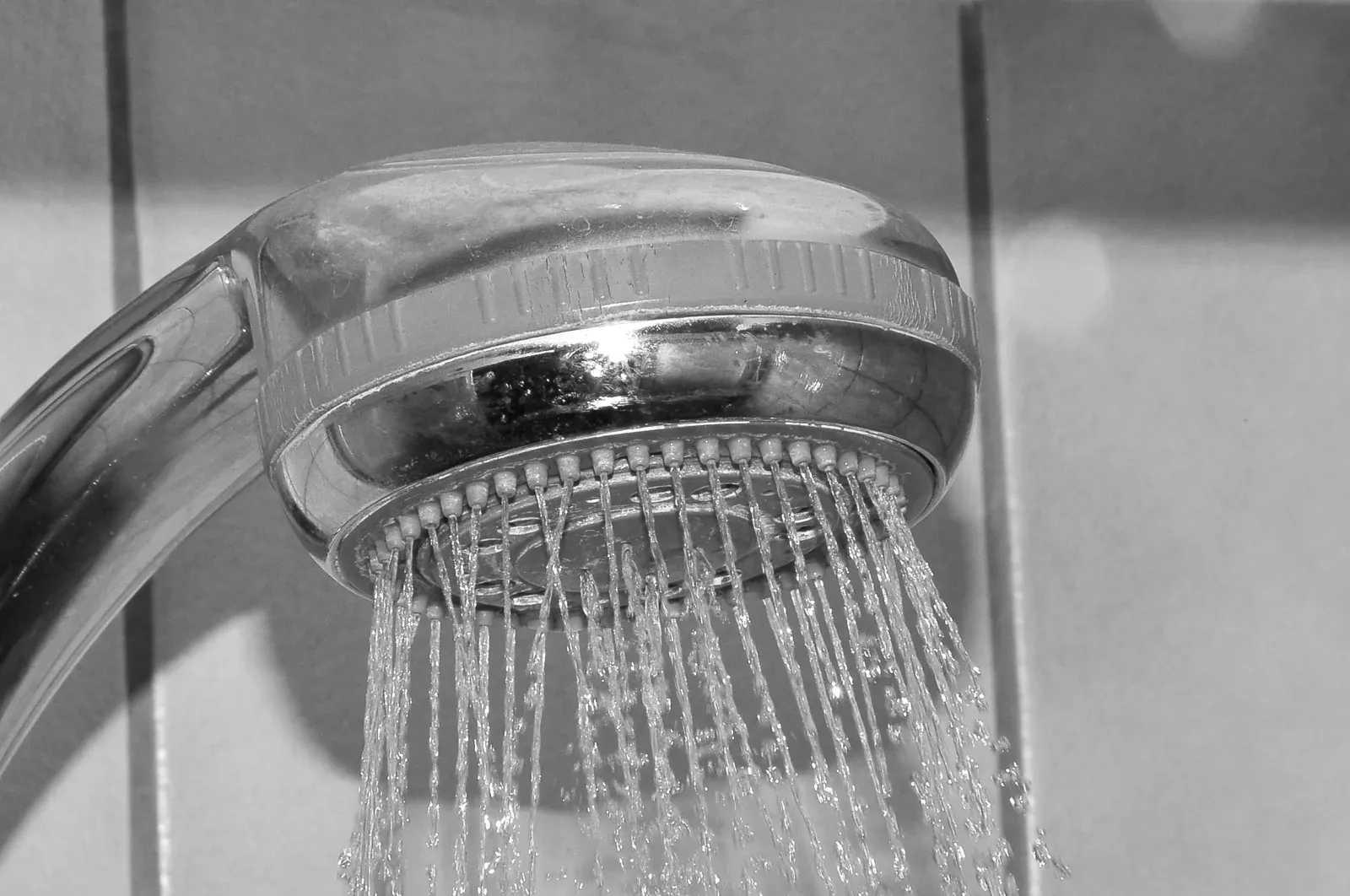
- Water running from a chrome handheld shower head against a tiled wall. Photo: Nicole-Koehler / Wikimedia Commons (source), CC BY-SA 3.0, resized.
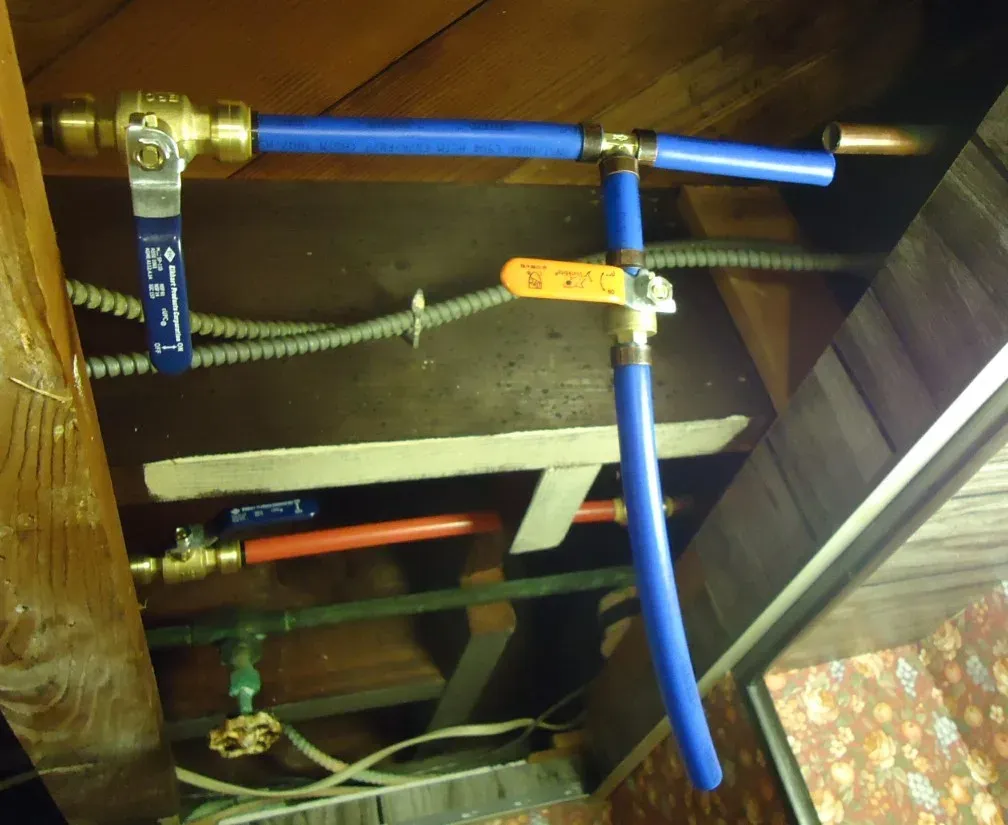
- Blue and red PEX water lines joined to copper pipe and brass valves, with metal-clad electrical cable nearby. Photo: Tomwsulcer / Wikimedia Commons (source), CC0.