Colorado Monsoon Season and Lightning: When the Front Range Is Most at Risk
By Site Safe Lightning Protection 5 min read
Colorado’s monsoon season usually starts around the second week of July and winds down by late August, though it can run into October. It’s the peak of a summer lightning season that starts earlier on the Front Range. On an average July day, the National Weather Service counts about 5,350 lightning flashes across the state. If you own a building in Colorado, mid-summer is when lightning protection gets tested, so late spring is the time to check it.
What the Colorado monsoon actually is
The monsoon isn’t a single storm. It’s a seasonal shift in wind. NWS Grand Junction explains that as summer goes on, high pressure moves and turns the winds, letting moisture flow north from the Pacific and the Gulf of California into the Southwest. The Colorado Climate Center at CSU describes the same pattern. It ramps up in July and lasts through August. You can see it arrive when dewpoints climb from the teens and 20s in June into the 50s by August.
NWS Grand Junction also describes how it behaves. It comes in bursts, when moisture and cooler air aloft produce rounds of thunderstorms, and breaks, when high pressure shuts off the moisture. A week of daily afternoon storms followed by a dry week is normal monsoon behavior.
Front Range vs Western Slope
The monsoon doesn’t hit the whole state the same way. The Colorado Climate Center’s records show:
| Region | Wettest period | Monsoon effect |
|---|---|---|
| Western Slope and southwest Colorado | July, August, September | Strongest. The monsoon drives the wettest months |
| Denver and the Front Range | Spring maximum, with a secondary summer peak | Moderate. It adds to an existing summer storm pattern |
| Northeast plains | Early summer | Minimal |
So on the Front Range, the monsoon extends and intensifies a lightning season that has already started with spring and early-summer storms. It doesn’t create one. Colorado’s Lightning Safety Awareness Week is held the last full week of June every year, ahead of the busiest stretch.
Colorado lightning by the numbers
These figures come from NWS Pueblo’s statewide comparison unless noted:
| Measure | Colorado figure |
|---|---|
| Cloud-to-ground flashes, average year | About 500,000 |
| Average flash density | 4.8 flashes per km² per year (2009–2018) |
| National rank, number of flashes | 19th (2009–2018) |
| National rank, flash density | 32nd (2009–2018) |
| National rank, lightning deaths | 3rd (2006–2024) |
| Average casualties per year (since 1980) | 2 deaths, 12 injuries |
| County with most casualties | El Paso County |
| Flashes on an average July day | About 5,350 (NWS, via KUNC) |
The gap between those rankings is the story. Colorado sees a middling amount of lightning for its size but ranks near the top for deaths. NWS Denver/Boulder explains why: most Colorado lightning deaths and injuries happen in the afternoon, when storms form and people are outside, hiking, golfing, ranching and working on job sites. Quite a few happen with little or no rain falling. Lightning can strike more than 10 miles from the rain area of a storm.
Lightning and wildfire
NWS Denver/Boulder notes that lightning starts around half of Colorado’s forest and rangeland wildfires, and that the state averages around 2,500 wildfires a year. Many lightning-caused fires start with little or no rain, and the storms often bring gusty winds that spread them.
For a property owner in the foothills or on a rangeland parcel, a strike on the building is only part of the risk. A strike that sets the grass or a tree on fire near the house is a concern too, and so is the storm that knocks out power while it happens.
What this means for buildings
People are the reason for the safety rules. Buildings carry the cost. During monsoon and summer storm season, Colorado buildings face:
- Direct strikes on the highest points: chimneys, ridges, rooftop units, flagpoles, silos, antennas.
- Strikes on nearby trees and power lines that send surges in through utilities.
- Ignition in attics, roof decks and hay or feed storage.
- Repeat exposure. The same exposed building on a ridge sees storm after storm in a burst week.
A lightning protection system gives a strike a planned path to ground. The Lightning Protection Institute describes it as five parts working together: strike termination devices, conductors, grounding electrodes, bonding, and surge protection at every service entrance. Our article on why commercial lightning protection matters for Colorado businesses covers the commercial side. For homes, see our residential lightning protection page.
Pre-season checklist for May and June
If you already have a system, walk it before the storms start:
- Air terminals. All still upright and attached? Any bent by snow, hail or roof work?
- Roof work since last summer. LPI calls for the system to be reviewed after re-roofing, additions or new equipment, because roof work can disconnect it.
- New rooftop equipment. Solar, HVAC units, antennas or dishes added since the system went in need to be bonded.
- Down conductors. Still continuous to grade, and guarded where they can be hit?
- Grounds. Any connections at grade dug up, cut by landscaping or buried under new concrete?
- Surge protection. Panel surge devices have status indicators. Check them, since LPI notes these devices can sacrifice themselves over time.
- Paperwork. Know when the last full inspection was. NFPA 780 and LPI-175 recommend a visual check every year and a full inspection with testing every 3 to 5 years.
If you don’t have a system, late spring is the time to get an assessment. That way the work is done before July storms start interrupting roof work. Our post on when to have your system re-inspected covers what triggers a re-inspection.
Talk to us before July
Site Safe Lightning Protection works on lightning protection and inspections for homes, commercial buildings and oil and gas facilities. If you want a system checked or quoted before monsoon season, contact Site Safe Lightning Protection.
Talk to Site Safe Lightning Protection about your property.
Frequently asked questions
When is monsoon season in Colorado?
It generally begins around the second week of July and ends by late August, according to NWS Grand Junction, though it can extend into October. CSU's Colorado Climate Center describes it as ramping up in July and lasting through August.
When is lightning season in Colorado?
Summer, peaking in July. Front Range storms start in late spring, and the monsoon adds moisture in July and August. NWS figures show about 5,350 flashes statewide on an average July day.
Does Denver get monsoon storms?
Yes, to a degree. Denver's precipitation records show a secondary summer peak tied to the monsoon, though its wettest period is spring. The Western Slope and southwest Colorado feel the monsoon most.
Why does Colorado have so many lightning deaths?
Colorado ranks 3rd nationally for lightning deaths (2006–2024) despite ranking 32nd for flash density. Most casualties happen in the afternoon, when storms build and people are outdoors, often in high, exposed terrain.
What time of day is lightning most likely in Colorado?
Afternoon. NWS Denver/Boulder notes most Colorado lightning casualties happen in the afternoon, when lightning is most likely to develop.
Sources
- NFPA 780, Standard for the Installation of Lightning Protection Systems, Annex D: Inspection and Maintenance (NFPA)
- LPI-175, Standard for the Design, Installation and Inspection of Lightning Protection Systems (Lightning Protection Institute)
- Monsoonal Information (NWS Grand Junction)
- Monsoon Season (Colorado Climate Center, Colorado State University)
- Colorado Lightning Statistics as Compared to Other States (NWS Pueblo)
- Colorado Lightning Safety Awareness Week release (NWS Denver/Boulder)
- Colorado Lightning Resource Page (NWS Pueblo)
- At the peak of hiking season, Colorado sees 5,350 lightning strikes a day (KUNC, June 24, 2025)
- Lightning Protection Overview (Lightning Protection Institute)
Image credits
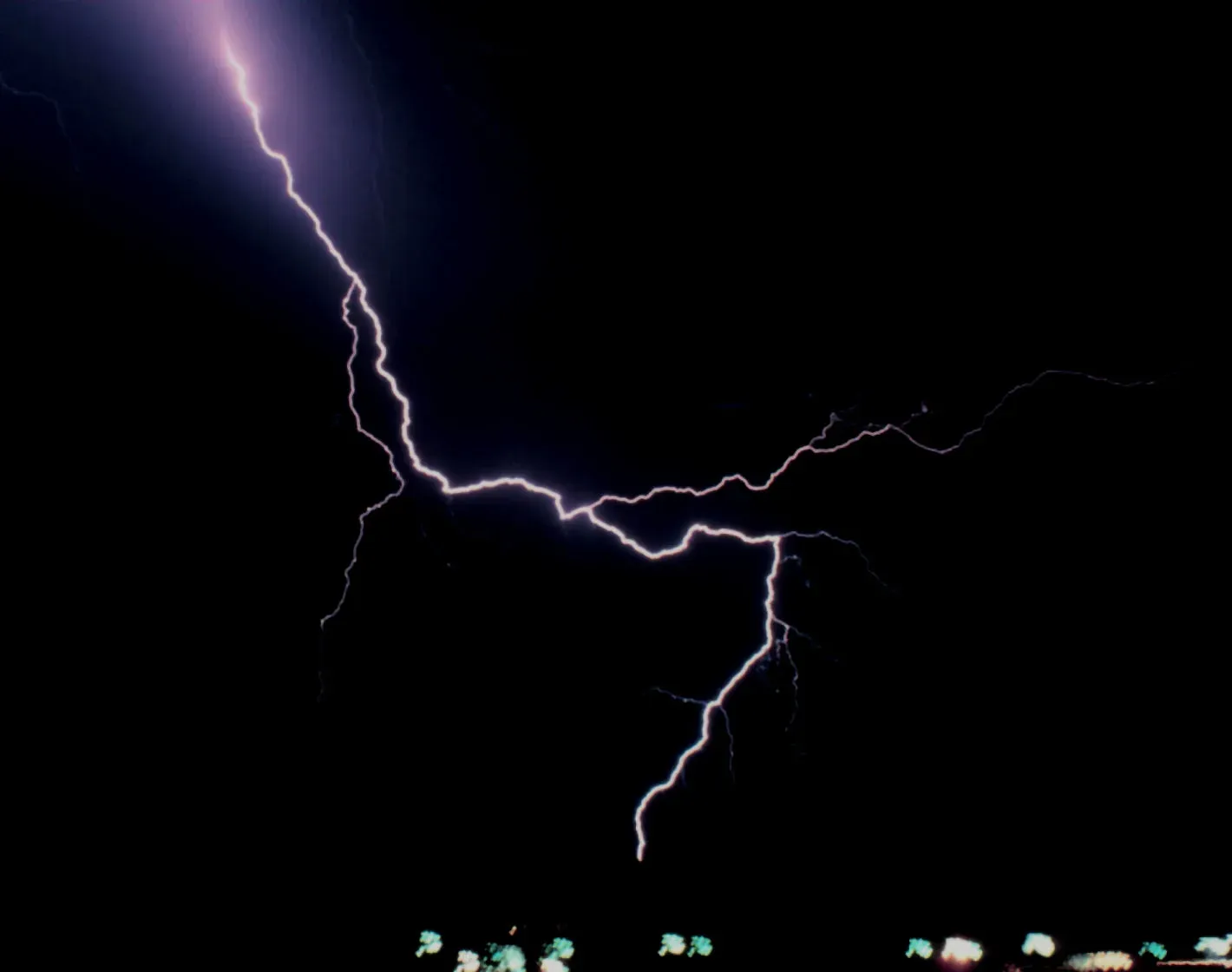
- Branching cloud-to-ground lightning at night near Boulder, Colorado. Photo: Commander John Bortniak, NOAA Corps (ret.) / NOAA Photo Library (source), Public domain (US gov).