Ground Test Wells for Lightning Protection: Specs, Placement and Testing
By Site Safe Lightning Protection 8 min read
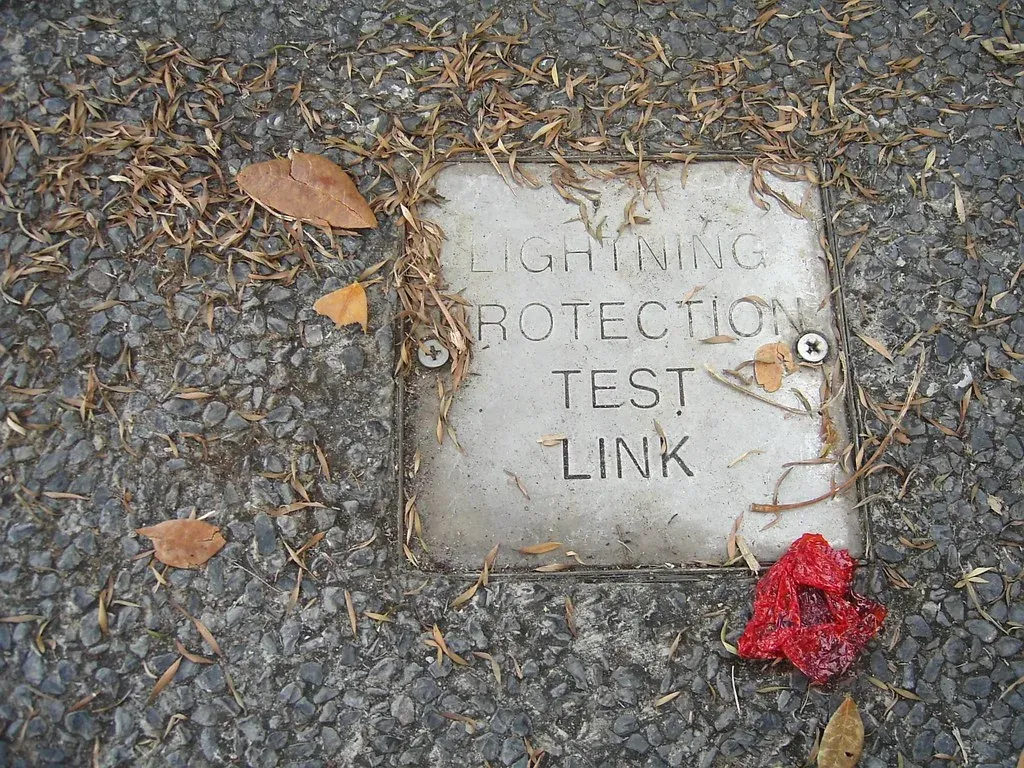
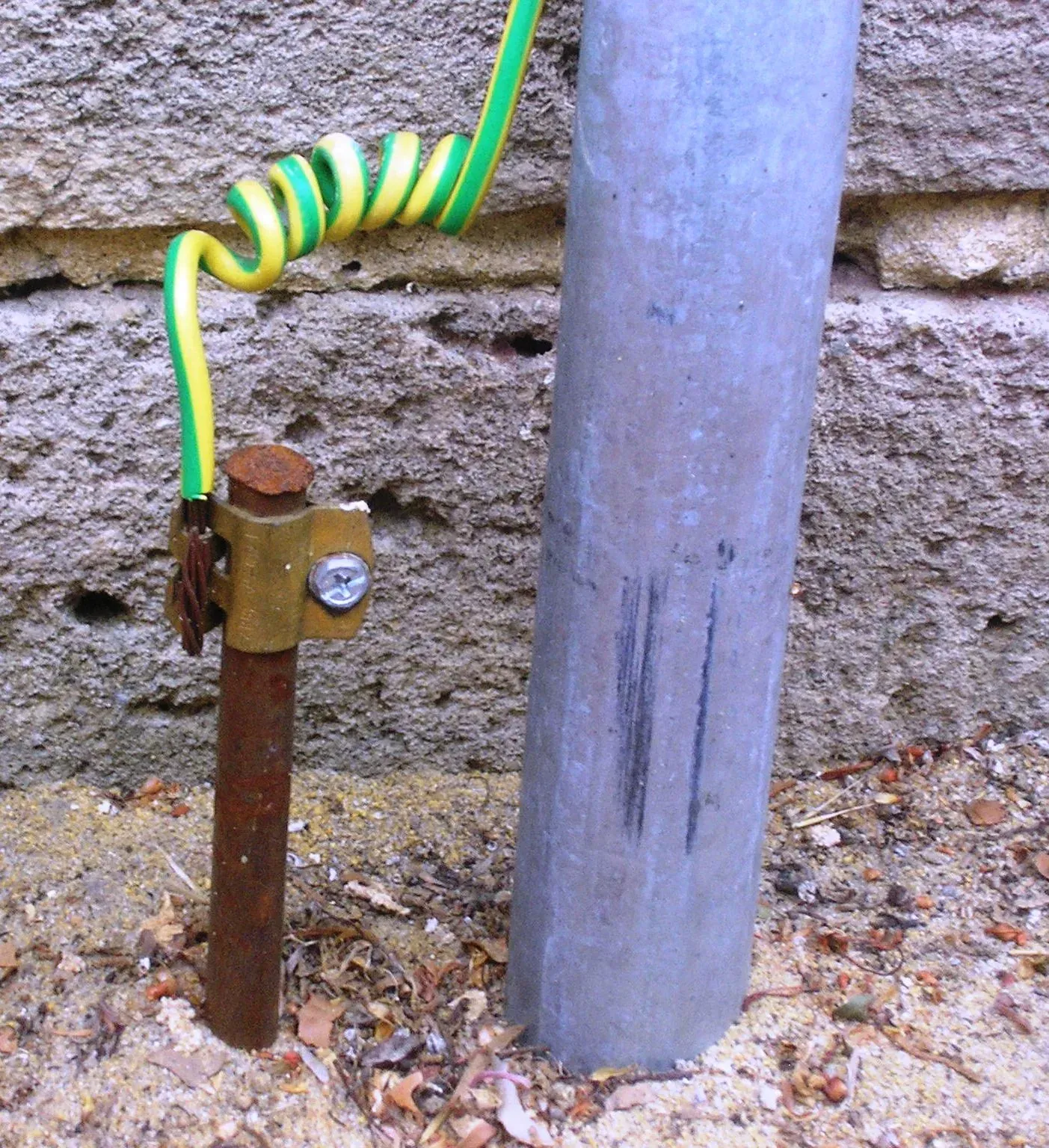
A ground test well is a short pipe or box set into the soil over a ground rod, with a removable cover at grade. It lets an inspector reach the rod and its connection without digging, check the clamp, and disconnect the lightning protection system from that rod long enough to measure it. The National Weather Service’s grounding manual describes the same thing as an access well: a covered opening at a ground rod, placed so the earth electrode system “can be checked once the facility is in use” (NWSM 30-4106).
Without one, the ground rod is the one part of a lightning protection system an inspector can’t see from a ladder, because it’s buried.
What a ground test well looks like
Most wells are a plastic, concrete or clay cylinder about the width of a dinner plate, sunk around the top of the rod with a lid flush to the lawn or pavement. The lid usually reads GROUND. Inside you’ll find the top of the rod, the down conductor or ground ring conductor coming in through the side, and the connection between them.
Manufacturers sell them in duty ratings for where they’ll sit. Harger’s line card, for example, lists a light-duty polyethylene well 9 in across and about 10 in deep, composite wells 12 in square in 12, 18 and 24 in depths, and concrete wells with cast-iron covers rated H-20 for traffic areas (Harger).
| Where the well sits | Typical well | What to check |
|---|---|---|
| Lawn or planting bed | Light-duty plastic well with a twist-lock lid | Lid stays flush so mowers don’t catch it |
| Sidewalk or pedestrian area | Composite or polymer concrete box | Lid rating for foot traffic, trip hazard at the edge |
| Driveway, parking lot, lease road | Traffic-rated concrete or steel well (H-20) | Load rating matches what drives over it |
| Large facility, central tie point | Lockable well at a central ground rod | Lock, marking, room to add future connections |
What the federal manuals specify
There’s no single US rule that says every lightning protection ground must have a test well. Two federal documents treat them in detail, and they’re a good guide to what a well should look like even on private property.
The National Weather Service manual for its own facilities, NWSM 30-4106 (April 2017), says (NWSM 30-4106):
- Access wells are permitted at all NWS facilities and go at a ground rod in an area with access to open soil.
- The wall can be clay pipe, poured concrete or another approved material, with a removable cover.
- The well gives at least 12 in of circular clearance around the ground rod.
- Connections inside the well can use UL-approved pressure connectors. Connections to the rest of the buried electrode system must be exothermically welded.
- Large facilities get a well with a removable, lockable cover at a ground rod near the center of the site, used to tie power and electronic grounds into the earth electrode system and to add future grounding.
The Department of Defense’s lightning protection criteria, UFC 3-575-01 (Change 1, October 2021), go further. They call for each down conductor to end at a grounding electrode inside a test well “for easy access,” or at a ground ring dedicated to the lightning protection system. They also suggest a ground rod in a test well between a down conductor and the ring, so the down conductor stays grounded if the ring is ever cut, and note this matters more at explosives and communications facilities (UFC 3-575-01). We cover the ring itself in ground ring requirements.
One detail neither manual covers but a manufacturer does: frost. Harger’s application note says the well must be longer than the local frost depth, or frost can push it out of place (Harger). A 10 in lawn well is fine where the ground barely freezes. In colder country it can heave and tilt, leaving the lid proud of the grass. Check your local frost depth with the building department.
How an inspector uses the well
The well exists for two measurements. One is resistance to ground: how well that electrode passes current into the soil. The other is continuity: whether the conductor from the roof actually connects to the rod, measured point to point back to a reference (ES Grounding).
For resistance there are two common methods, and the well serves both.
Fall of potential is the classic method: an earth ground tester works with two auxiliary stakes pushed into the soil at set distances. Fluke describes the normal procedure as disconnecting parallel grounding rods and planting auxiliary stakes before measuring (Fluke). The NWS maintenance checklist says the same for its sites: temporarily disconnect the lightning protection system from the ground rod at the test well, then measure, and don’t do it on frozen or saturated ground or with lightning around (NWSM 30-4106). Without a well, “disconnect at the rod” means digging. We explain the method step by step in fall-of-potential testing.
For clamp-on (stakeless) testing, a clamp meter goes around the conductor and reads the loop resistance without stakes and without disconnecting the rod from a live system (Fluke). The jaws need room to close around the conductor, which is the point of the well’s clearance. ES Grounding’s guidance is to build the well so both resistance and continuity can be measured in it (ES Grounding).
The NWS checklist also asks a plain question that’s worth copying: if an access well has been provided, is it properly installed and marked? A well that’s buried under mulch, filled with mud, or has its conductor clamp rusted solid fails before any meter comes out (NWSM 30-4106).
How often the ground gets tested
NFPA 780 and LPI-175 recommend a visual inspection every year and a full inspection with testing every 3 to 5 years, or every 1 to 3 years for critical facilities. The Lightning Protection Institute adds that a maintenance inspection is especially important after a reroof, electrical upgrades, a new satellite dish or HVAC changes (LPI FAQ; NFPA 780). After a lightning strike, have it checked again.
Federal sites can be stricter. The NWS manual sets ground testing every 14 months at its facilities, citing an NFPA 780 annex, and its own target of under 10 ohms, or 5 ohms where electronics operate (NWSM 30-4106). Those are the NWS’s rules for its own buildings. A private owner isn’t bound by them, though they’re a reasonable benchmark to ask for.
The DoD criteria add a records habit that any owner can borrow: keep a sketch of the grounding system that shows each test point, where the probes sat during the resistance test, and the readings, then compare each new reading with the last. If a value changes a lot under the same test conditions, find out why and fix it (UFC 3-575-01). The test wells are what make those repeat readings possible at the same rod every time.
Where test wells earn their keep
Test wells matter most where you’ll test more than once and where digging is expensive or risky.
- On paved commercial sites, rods under parking lots and sidewalks can’t be reached without saw-cutting. A traffic-rated well at each down conductor solves that before the asphalt goes down.
- At oil and gas facilities, tank batteries and production sites have buried lines everywhere, and digging near them is a job in itself. A well at each ground rod lets the inspection happen at the surface. Our tank battery lightning protection guide covers the rest of the grounding on those sites.
- Where there’s a ground ring, the UFC’s rod-in-a-well between down conductor and ring means one damaged section of ring doesn’t leave a down conductor floating (UFC 3-575-01).
- At homes, not every house system needs a well at every rod. Where a rod sits in a lawn and the clamp is reachable with a trowel, some owners skip it. Where a rod ends up under a patio, a walkway or a planting bed, a small well is cheap insurance against future digging.
What to ask for on a new installation
If you’re getting a lightning protection system designed, these are reasonable things to put on the list:
- A test well at each down conductor’s ground rod, or at least at the rods that will end up under paving.
- Well duty rated for the surface: lawn, foot traffic or vehicle traffic.
- A well deeper than local frost depth.
- Lids marked GROUND and set flush with grade.
- Enough room inside for a clamp meter to close around the conductor.
- A drawing that shows where every well is, with the first set of resistance readings recorded on it.
That last item gets lost most often. Two years later, nobody remembers where the wells are, and a landscaper has covered them. Write it down when the system goes in.
When there’s no well
Older systems often have no test wells at all. The ground may be fine, but the inspector has to expose the connection to check it, which takes longer and disturbs the yard or paving. If an inspection already means digging down to a rod, it’s a good time to set a well over it so the next test doesn’t. If the connection at the rod is corroded or loose once it’s exposed, that’s the repair that matters, and it would have stayed hidden without a look.
Site Safe Lightning Protection designs and installs lightning protection systems for homes, commercial buildings and oil and gas facilities, and inspects and maintains existing systems, including the grounding. If you’d like your system’s grounds checked or test wells planned into a new design, contact Site Safe Lightning Protection. Our lightning protection inspection page explains what an inspection covers.
Talk to Site Safe Lightning Protection about your property.
Frequently asked questions
What is a ground test well?
A covered pipe or box set at grade over a ground rod, so the rod and its connection can be checked and tested without digging. The National Weather Service manual calls it an access well and asks for at least 12 in of clearance around the rod and a removable cover.
Is a ground test well required?
No single US rule requires one at every lightning protection ground. The NWS permits them at all its facilities, and the DoD's UFC 3-575-01 calls for each down conductor to end at an electrode inside a test well or at a dedicated ground ring. A project specification can also require them.
How deep should a ground test well be?
Deep enough to expose the top of the rod and its connection, with room to work. Harger's application note says the well must be longer than the local frost depth, or frost can push it out of place.
Can you test a ground rod without a test well?
Yes, but someone has to dig down to the connection first. Fall-of-potential testing usually means disconnecting the rod from the system, and a clamp-on meter needs room to close around the conductor. A well gives both without digging.
How often should lightning protection grounds be tested?
NFPA 780 and LPI-175 recommend a visual inspection every year and a full inspection with testing every 3 to 5 years, or 1 to 3 years for critical facilities, plus a check after a lightning strike or roof or building work.
Sources
- National Weather Service Manual 30-4106: Lightning Protection, Grounding, Bonding, Shielding, and Surge Protection Requirements (April 25, 2017)
- UFC 3-575-01: Lightning and Static Electricity Protection Systems, Change 1 (October 2021) (Whole Building Design Guide)
- Harger: Ground Access Wells line card (2020)
- Fluke: Measuring ground loop resistance without stakes
- ES Grounding Solutions: Grounding Electrode Test Wells
- Lightning Protection Institute: Frequently Asked Questions
- NFPA 780, Standard for the Installation of Lightning Protection Systems (NFPA document page)
Image credits
- Square metal cover set flush in a gravel path, stamped Lightning Protection Test Link. Photo: Tym / Flickr (source), CC BY-SA 2.0, resized.