Lightning Protection for Data Centers: Direct Strikes, Grounding and Uptime
By Site Safe Lightning Protection 6 min read
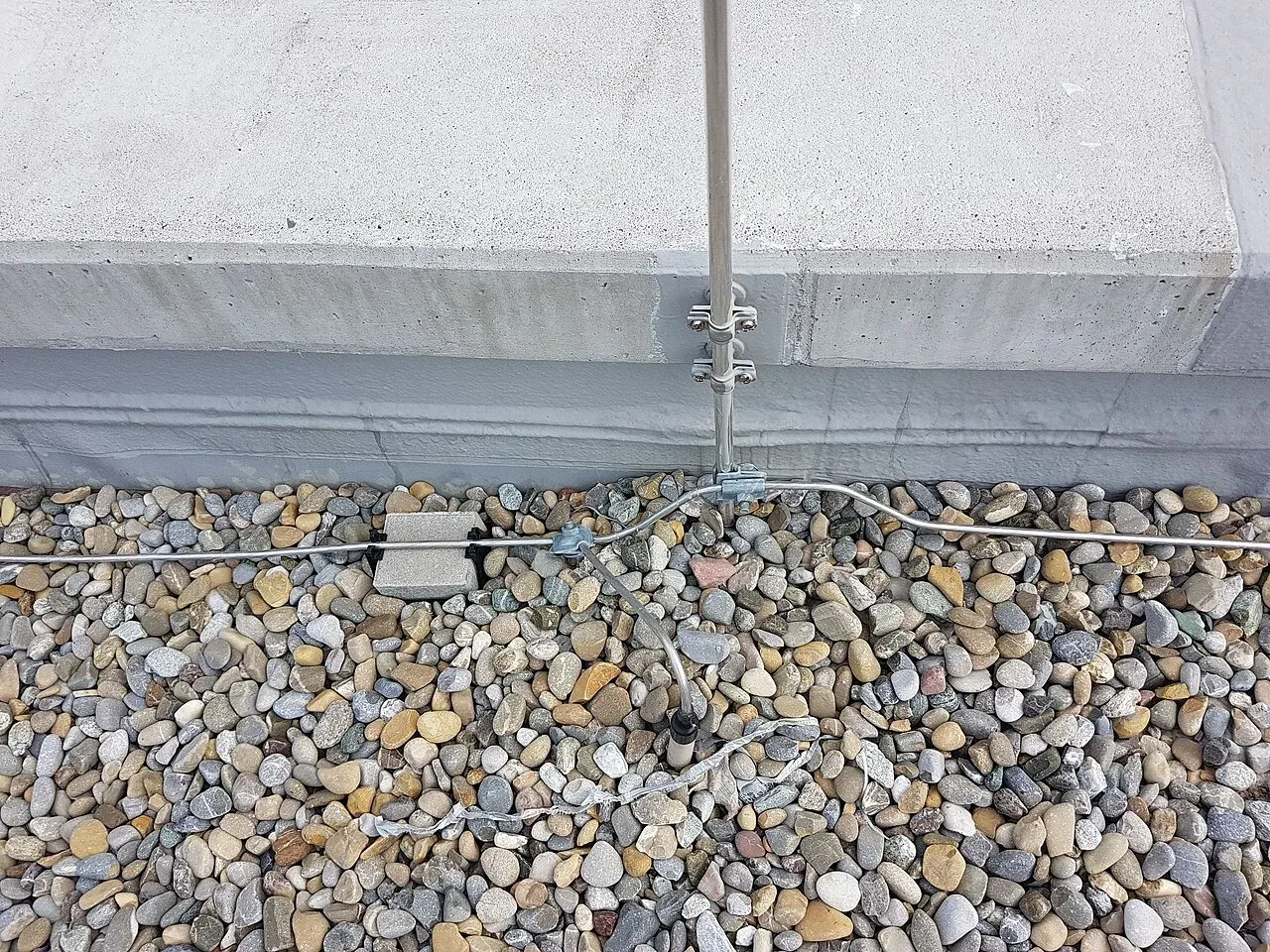
Lightning protection for a data center is a complete external lightning protection system: air terminals, conductors and grounding electrodes. It’s tied into a low-resistance grounding system, every metal system in the building is bonded to it, and surge protection sits at every point where power, data or communications lines enter. Surge protectors alone don’t cover it. The building has to be able to take a direct strike without letting the current find its own way through the racks.
This is written for owners, facility managers and the people who answer to insurers and uptime commitments. Our commercial lightning protection page covers the services side.
Why surge protection alone isn’t enough
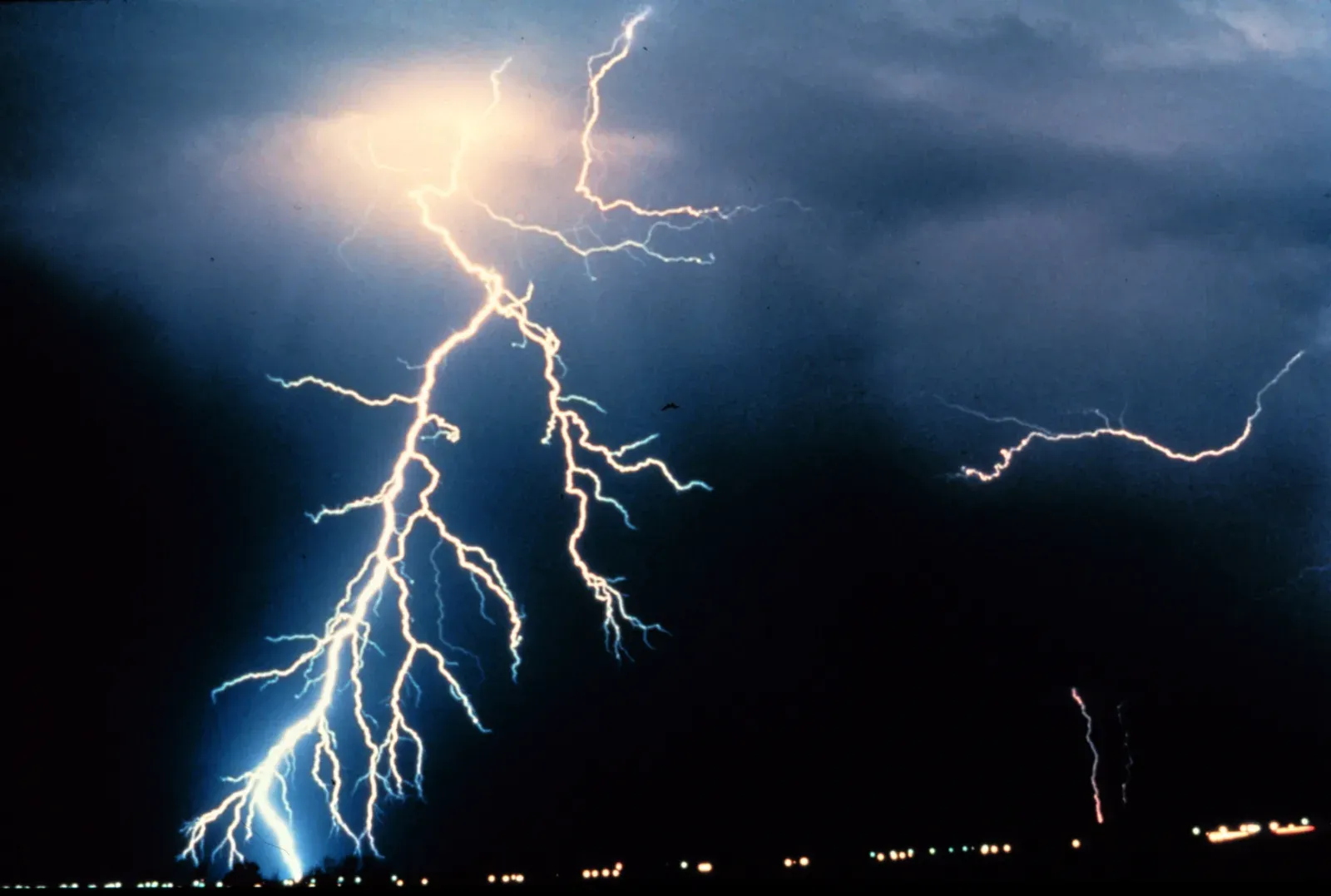
The most common misunderstanding is that a data center is “protected” because it has surge protection on the switchgear and UPS. The Lightning Protection Institute’s FAQ is direct about this: surge protection is only one element of a complete lightning protection system. It also notes that an ordinary electrical ground isn’t designed to handle lightning, which can carry energy in the range of 200 kA. UL’s guide puts some strikes above 300,000 amps.
A direct strike on an unprotected roof doesn’t go through the surge protector. It goes through whatever path it finds: rooftop condensers, cable trays, conduit, structural steel, and then the equipment grounds.
The layers, external to internal
| Layer | What it is | What it does for a data center |
|---|---|---|
| Strike termination | Air terminals, or qualifying metal 3/16 in. or thicker, placed to put the whole roof in a zone of protection | Takes the strike at planned points instead of on rooftop chillers, antennas or the membrane |
| Conductors | Roof and down conductors, or a qualifying structural steel frame, with at least two paths to ground | Carries current down the outside of the building, away from IT space |
| Grounding electrode system | Rods, ground ring and radials sized for the soil, with a ground loop on taller structures | Puts the current into the earth with as little voltage rise as practical |
| Bonding | Main-size bonds between the lightning protection system and the electrical service ground, telecom ground, piping and structural steel. Rooftop metal bonded in | Keeps everything at the same potential so current doesn’t arc between systems |
| Surge protective devices | SPDs at every service entrance (power, data, communications), then at critical equipment | Limits voltage that comes in on utility lines from nearby strikes |
| Signal reference and single-point grounding | A grid or reference plane under equipment, bonded to the building ground at a defined point | Keeps electronics at a common reference during a surge |
The LPI model specification requires surge suppression at every system entrance to the structure. It leaves additional surge protection for internal equipment to a cost-benefit analysis by an engineer. The LPI overview adds that SPDs are self-sacrificing and can burn out over time, which is why they need checking.
How the NFPA 780 risk method treats a data center
NFPA 780’s simplified risk assessment (Annex L) compares expected strikes with a tolerable level. Two coefficients matter most for data centers:
- Contents (C3): “exceptional value, flammable liquids, computer or electronics” carries a value of 3.0.
- Consequence (C5): “continuity of facility services required” carries a value of 5.0, compared with 1.0 for a building that can simply close.
A steel-framed building with a metal roof (C2 = 0.5), normal occupancy (C4 = 1.0), electronics (C3 = 3.0) and required continuity (C5 = 5.0) has a combined coefficient of 7.5. That puts the tolerable strike frequency at 0.0002 per year, or one strike in 5,000 years. A building of any real size in Colorado, Texas or Oklahoma will exceed that by a wide margin, so the method lands on “protection recommended.” Our article on lightning risk assessment walks through the full calculation.
Grounding targets: what “low resistance” means in practice
The ground resistance target for a data center belongs in the owner’s design standard, and it should be written down before design starts. The National Weather Service’s facility standard is a useful public example of what a critical-facility owner asks for:
- An earth electrode system with less than 5 ohms resistance to earth, and a design goal under 1 ohm to limit ground potential rise.
- Ground rods at least 10 feet long and ¾ inch in diameter, spaced at two to three times the rod length.
- A buried 4/0 copper loop interconnecting the rods at least 30 inches deep, with structural steel bonded at intervals not over 60 feet.
- Bonds to the earth electrode system at 1 milliohm or less each.
- A soil resistivity survey before design, and a fall-of-potential test of the finished system.
- For equipment rooms, a signal reference grid of copper strips on a 2-foot grid under the access floor, bonded to a perimeter conductor.
Your design team sets your facility’s own targets. The NWS figures show the level of detail a critical facility usually puts on paper.
Rooftop equipment is where data centers get caught
Data center roofs carry a lot of metal: condensers, cooling towers, exhaust fans, antennas, satellite dishes, and sometimes solar. The NWS standard lists exhaust pipes, fans, metal cooling towers, HVAC units, ladders, railings, antennas and large louvers as metallic bodies that can take a direct strike and must be tied into the lightning protection system. The LPI specification allows metal 3/16 inch or thicker to serve as a strike termination device itself, if it’s bonded with main-size conductor and proper fittings.
The usual failure is a later addition: a new condenser set or antenna installed by another trade, never bonded. Make lightning protection review a line item on every rooftop change order.
Generators, fuel and outbuildings
Standby generators, fuel tanks, cooling yards and fiber huts are part of the uptime chain. The UL guide’s common-bonding requirement covers underground metallic piping, conduits and LP-gas piping. Treat the yard as part of the design, not an afterthought, and make sure buried feeders and conduits are bonded where they enter the building.
Documentation insurers and clients ask for
| Record | Why it matters |
|---|---|
| Risk assessment | Shows how the protection decision was made |
| Design drawings and bill of materials | Shows what’s installed and where |
| Third-party certification (UL Master Label or LPI) | Independent proof the system met the standard at completion |
| Ground resistance test results | Baseline for future comparisons |
| Annual visual inspection reports | Catches damage and unbonded additions |
| Full inspection and testing every 3 to 5 years | NFPA 780 and LPI-175 recommend it, or every 1 to 3 years for critical facilities |
| Change log for rooftop and grounding work | Shows the system was reviewed after each change |
UL’s guide notes that a UL Master Label certificate has a five-year life and the system must be re-inspected to renew it. The cycle is built around damage, maintenance traffic and building changes. Our posts on inspection benefits for industrial facilities and how often commercial systems should be inspected go further.
Talk to us about your facility
Site Safe Lightning Protection works on lightning protection and inspections for commercial buildings and industrial facilities. If you’re planning a data center, adding to one, or need an existing system inspected and documented, contact Site Safe Lightning Protection.
Talk to Site Safe Lightning Protection about your property.
Frequently asked questions
Do data centers need lightning protection?
Under NFPA 780's simplified risk assessment, a facility with valuable electronics that must stay in service has a very low tolerable strike frequency. Most data centers come out as "protection recommended." Owners, insurers and clients often require it as well.
Is surge protection enough for a data center?
No. The Lightning Protection Institute describes surge protection as one element of a complete system. A data center also needs strike termination, conductors, grounding and bonding to handle a direct strike.
What ground resistance should a data center have?
It depends on the design standard the owner adopts. As a public example, the National Weather Service requires less than 5 ohms for its facilities, with a design goal under 1 ohm.
How often should a data center lightning protection system be inspected?
NFPA 780 and LPI-175 recommend a visual inspection every year and a full inspection with testing every 3 to 5 years (1 to 3 years for critical facilities), plus an inspection after a lightning strike or any roof, rooftop equipment or grounding change.
What standards apply to data center lightning protection?
NFPA 780 and UL 96A cover the lightning protection system. LPI-175 is based on NFPA 780. The NEC (NFPA 70) governs the electrical service grounding that the lightning protection system bonds to.
Sources
- NFPA 780, Standard for the Installation of Lightning Protection Systems, Annex D: Inspection and Maintenance (NFPA)
- LPI-175, Standard for the Design, Installation and Inspection of Lightning Protection Systems (Lightning Protection Institute)
- Lightning Protection Overview (Lightning Protection Institute)
- Lightning Protection Systems Specification (Lightning Protection Institute)
- Lightning Protection Institute FAQ
- Lightning Protection Marking and Application Guide (UL, 2016)
- NWSM 30-4106 Lightning Protection, Grounding, Bonding, Shielding, and Surge Protection Requirements (National Weather Service, 2017)
- Calculations of Risk Assessment Study as per NFPA 780 (Electrical Knowhow)
- Standards (Lightning Protection Institute)
Image credits
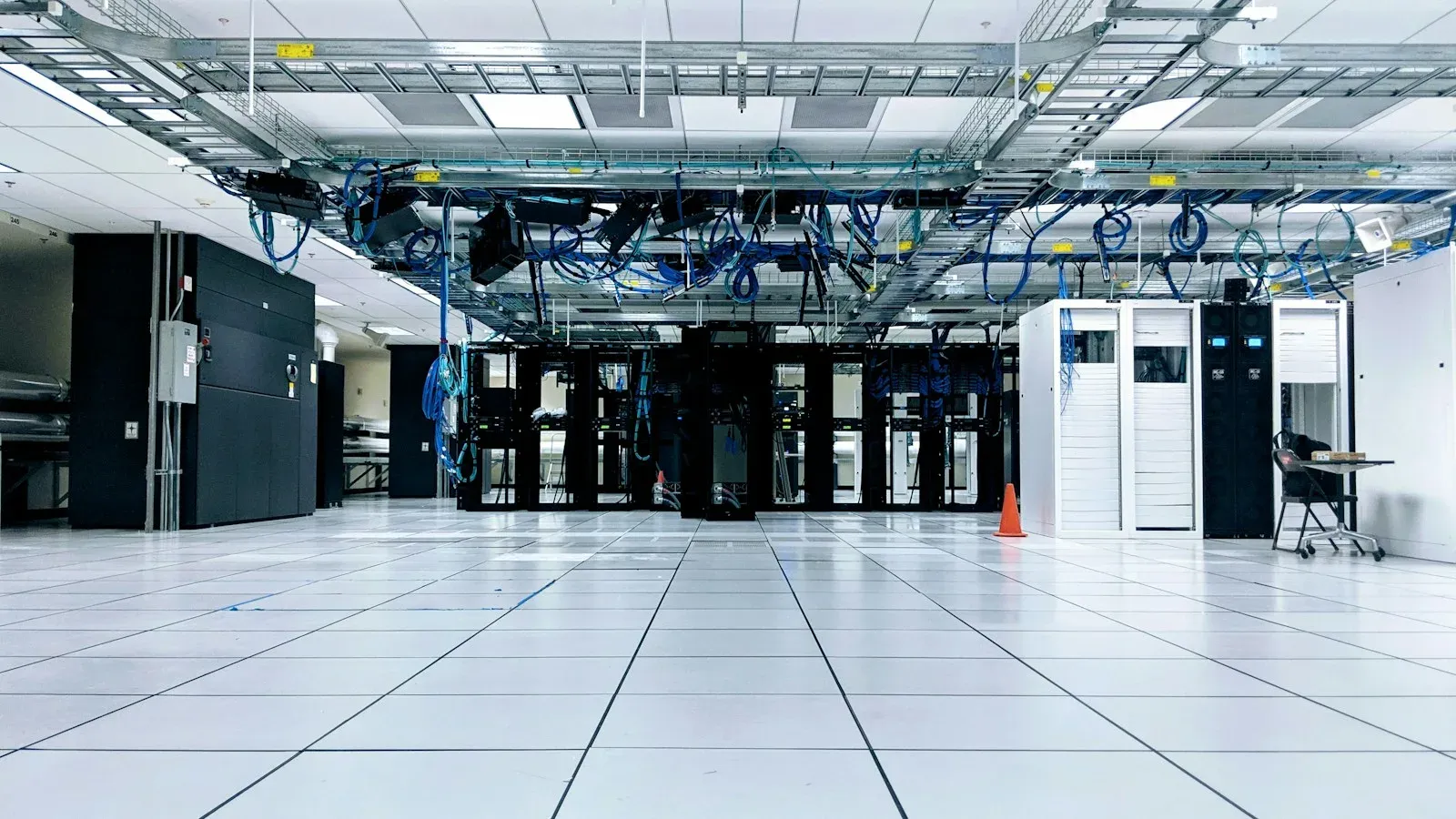
- Data center server room with rows of network cabinets under overhead cable trays. Photo: Taylor Vick / Unsplash (source), Unsplash License.